

 Login
Login

 September 24, 2026
|
Voiced by Amazon Polly |
Planning an AI Landing Zone requires more than deploying AI services. This guide explains the six areas organizations should evaluate before building an AI Landing Zone: strategy, planning, readiness, governance, security, and management. These areas help organizations establish a standardized foundation for deploying and operating enterprise AI workloads across Azure subscriptions and environments.
Start Learning In-Demand Tech Skills with Expert-Led Training
- Industry-Authorized Curriculum
- Expert-led Training
What Is an Azure AI Landing Zone?
An Azure AI Landing Zone is a standardized cloud foundation for deploying and operating enterprise AI workloads. It extends the capabilities of a traditional Azure Landing Zone with AI-specific requirements for governance, security, data, networking, model operations, and responsible AI.
Organizations can use an AI Landing Zone to establish consistent controls before deploying AI applications into production.
An AI Landing Zone can include:
- Governance policies for Azure resources and AI services
- Identity and access controls
- Network isolation and private connectivity
- Data storage and lifecycle controls
- Compute resources for model training and inference
- Monitoring and cost-management controls
- Responsible AI and model-governance practices
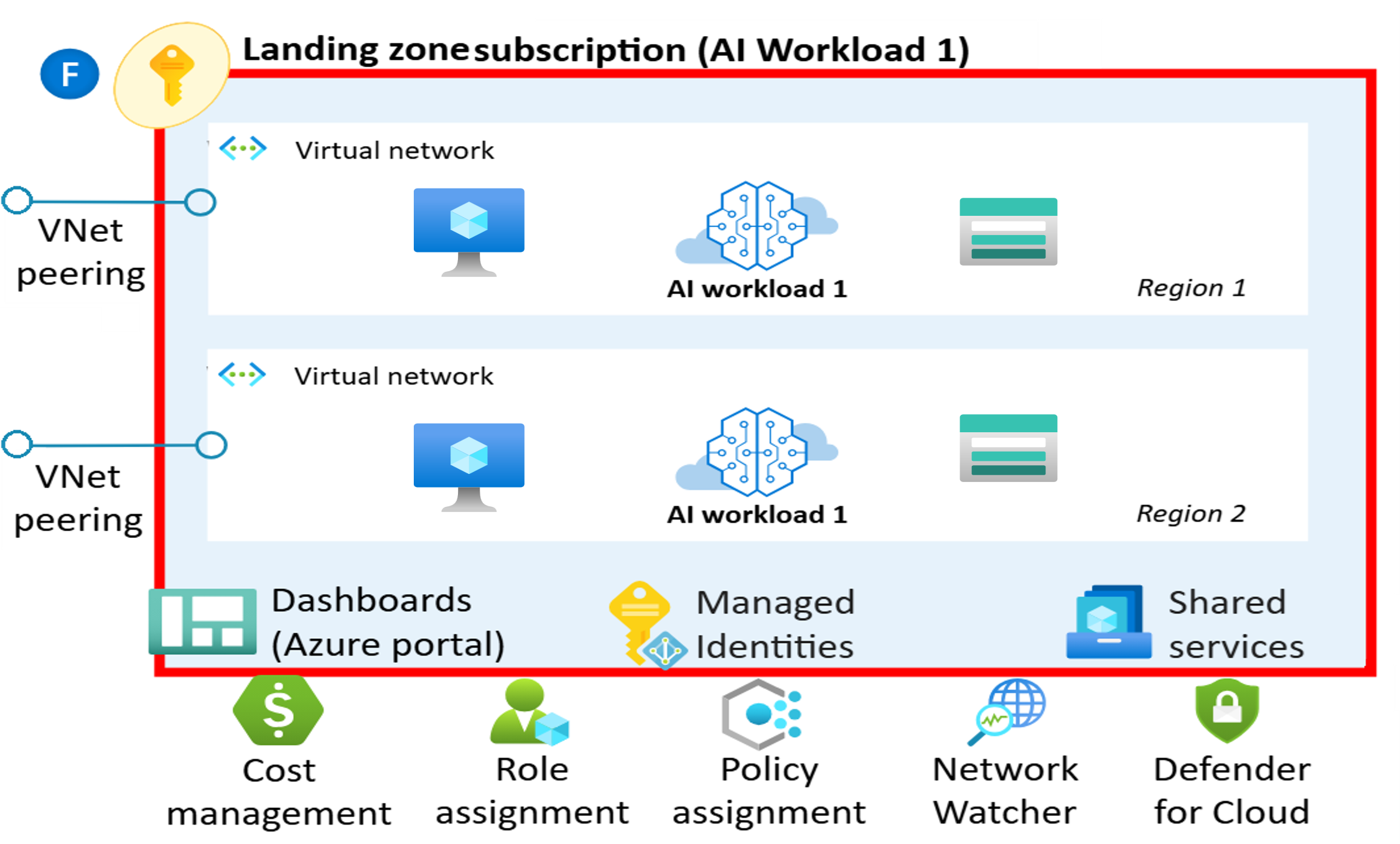
Fig 1: Azure AI Landing Zone architecture showing strategy, planning, governance, infrastructure, security, and operations layers.
Why Do AI Workloads Need an Azure AI Landing Zone?
An Azure AI Landing Zone provides a standardized foundation for applying controls across AI environments.
Enterprise AI workloads require more than model deployment infrastructure. Organizations also need controls for identity, networking, data, security, governance, cost management, and ongoing operations, and an Azure AI Landing Zone helps with these.
Organizations should address at least these five areas:
- Data: Define where AI training, validation, and operational data will reside.
- Security: Control identities, network access, secrets, and sensitive data.
- Governance: Establish policies for resources, models, data, and compliance.
- Operations: Monitor performance, availability, resource usage, and costs.
- Responsible AI: Define processes to evaluate and manage AI risks.
How Do You Build an Azure AI Landing Zone?
Building an Azure AI Landing Zone starts with business strategy and organizational planning rather than immediately deploying AI services. Organizations should define their objectives, assess readiness, establish infrastructure requirements, implement governance and security controls, and define ongoing management processes.
Follow these six steps:
- Define the AI Strategy
- Plan the AI Foundation
- Assess Organizational Readiness
- Design the AI Infrastructure
- Implement Governance and Security
- Establish Ongoing Management
How Should Organizations Manage an AI Landing Zone?
AI Landing Zone management covers monitoring, cost control, resource lifecycle management, security monitoring, and operational performance. Organizations should define ownership and measurable operating procedures before moving AI workloads into production.
Management practices should include:
- Monitor Azure resource health and application performance.
- Review AI resource consumption and costs weekly.
- Configure budgets and cost alerts for production subscriptions.
- Review access permissions at least quarterly.
- Remove unused resources and subscriptions in accordance with defined lifecycle policies.
- Track model performance and operational incidents.
- Document ownership for AI infrastructure, applications, data, and models.
Assign an owner or responsible team to each management process so operational responsibilities remain clear as AI workloads grow.
How Do You Choose the Right AI Deployment Model?
Organizations should select an AI deployment model based on the required levels of control, customization, operational responsibility, and compliance. SaaS minimizes infrastructure management, PaaS provides managed platforms for custom applications, and IaaS provides the greatest infrastructure-level control.
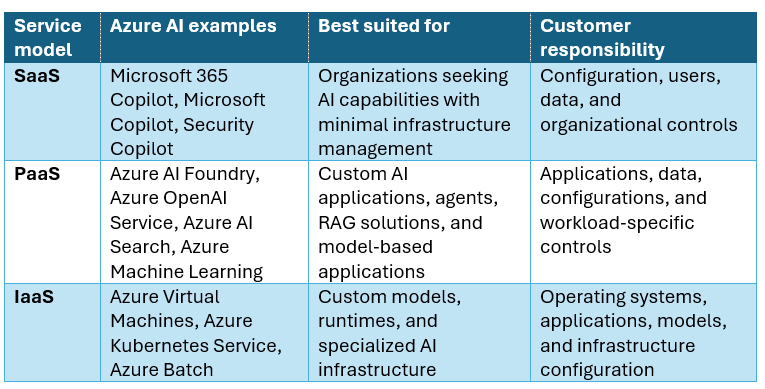
Organizations should document the selected service model and its corresponding management responsibilities before deploying the workload.
How Can Organizations Assess Their Readiness for AI Adoption?
Organizations should assess their people, processes, data, technology, and governance capabilities before investing in AI infrastructure. A readiness assessment identifies gaps that could delay deployment or increase security, compliance, and operational risks.
Evaluate these four areas:
- Skills: Do teams have the required AI, machine learning, cloud, security, and data expertise?
- Data: Is high-quality, accessible data available for the intended AI workloads?
- Governance: Are policies defined for data protection, AI risk, access, and compliance?
- Leadership: Has an executive sponsor been assigned to the AI initiative?
Document each gap, assign an owner, and define a target completion date before moving the workload into production.
What Infrastructure Is Required for an Azure AI Landing Zone?
An Azure AI Landing Zone should address three core infrastructure areas: compute, storage, and networking. The required configuration depends on workload requirements such as model size, training duration, data volume, latency, availability, and budget.
Organizations should document infrastructure requirements before selecting specific Azure resources.
What Compute Resources Are Needed for AI Workloads?
According to Microsoft’s Cloud Adoption Framework, AI workloads require governance, networking, and security controls to support enterprise-scale deployments. Compute choices should align with workload scale and performance expectations.
Organizations commonly use:
- GPU-enabled virtual machines
- Azure Machine Learning is a managed Azure service for building, training, deploying, and managing machine learning models.
- Azure Container Apps is a serverless container platform for running microservices, APIs, and AI applications without managing infrastructure.
- Containerized AI services
- Model training and inference: the process of using a trained AI model to generate predictions, classifications, or responses.
What Storage Architecture Supports Enterprise AI?
Enterprise AI workloads often use both structured and unstructured data for training, evaluation, retrieval, and application operations. The storage architecture should therefore address data access, security, lifecycle management, availability, and cost.
Organizations should define:
- Where the training and validation datasets will reside.
- Where application and operational data will reside.
- Which Azure Storage services and access tiers meet workload requirements.
- How data will be protected and accessed.
- How lifecycle policies will move or delete data.
- Which teams or applications can access each dataset.
Azure Blob Storage can support large-scale unstructured data, while storage access tiers can help align costs with data-access patterns.
Why Is Networking Important in an Azure AI Landing Zone?
Networking controls how AI applications, data sources, Azure services, users, and external systems communicate. A well-designed network architecture can reduce unauthorized access and provide controlled connectivity between AI components.
Key networking considerations include:
- Virtual Networks: Isolate and organize network resources.
- Private Endpoints: Provide private connectivity to supported Azure services.
- Network security controls: Restrict unauthorized traffic between resources.
- Connectivity: Define requirements for connections between on-premises networks, Azure, and other environments.
- Resource placement: Place dependent resources in appropriate regions and network segments.
- Traffic control: Define permitted communication paths between applications, data stores, and AI services.
Document the required network flows before deploying production AI workloads.
How Should Organizations Govern AI Workloads in Azure?
AI governance establishes the policies and controls organizations use to manage AI resources, data, models, security, costs, and compliance. A governance framework should define who can deploy AI resources, which configurations are permitted, how risks are assessed, and how workloads are monitored.
Organizations should establish governance for:
- Azure resources and subscriptions
- Identity and access
- AI models and model lifecycle
- Data protection and access
- Security controls
- Cost management
- Responsible AI
- Compliance requirements
Use Azure Policy, role-based access control, resource organization standards, and documented ownership to enforce governance requirements.
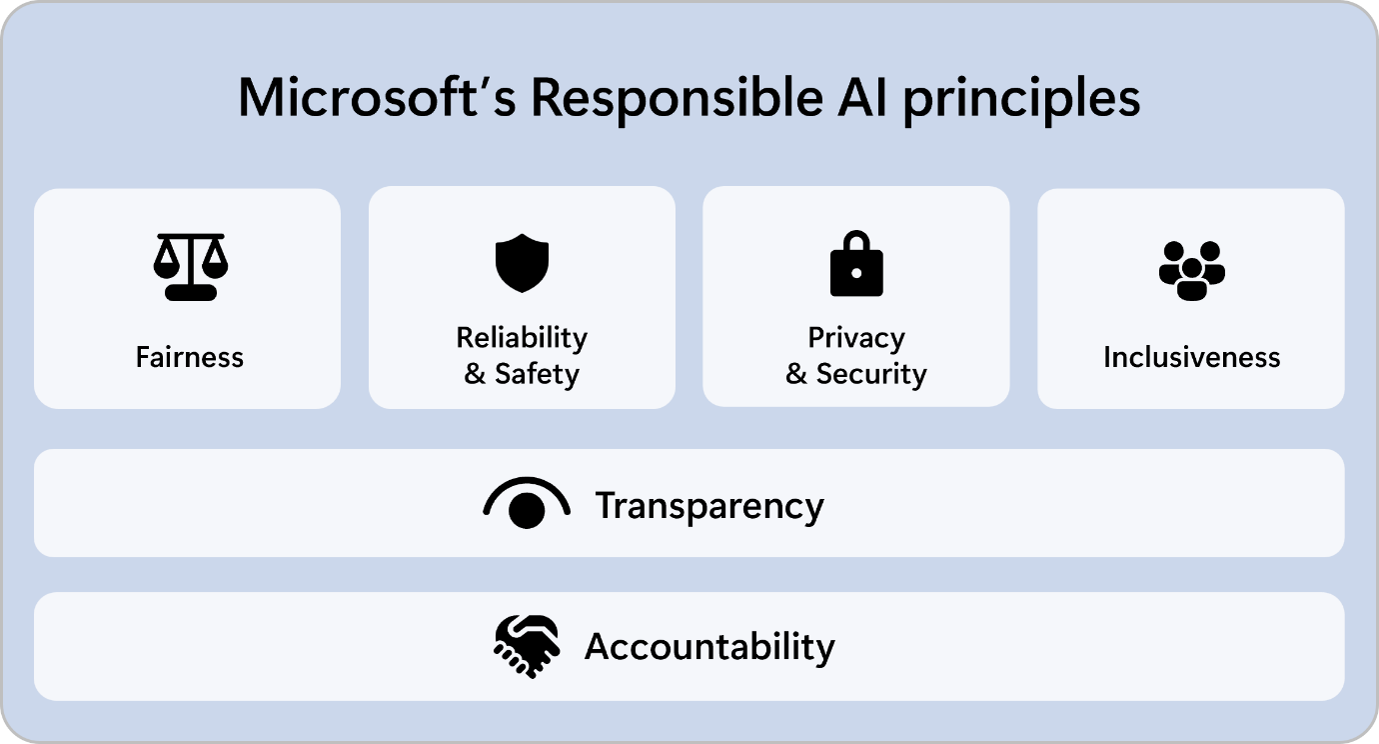
Fig 2: Azure AI governance enables secure, compliant, and responsible AI adoption.
How Should Resource Governance Be Implemented?
Resource governance creates consistent standards for Azure subscriptions, resource groups, services, identities, and configurations. Organizations can use policy-based controls to prevent or detect configurations that violate their standards.
Implement:
- Azure Policy assignments for required configurations
- Resource naming conventions
- Mandatory resource tags, such as environment and application owner
- Subscription and resource-group organization standards
- Separate development, testing, and production environments
- Role-based access control for authorized users and applications
Define the required policies before onboarding production AI workloads.
How Can Organizations Control AI Costs in Azure?
AI workloads can incur high costs for compute, storage, and services. Cost governance helps organizations identify resource consumption, establish spending limits, and optimize workloads based on actual usage.
Recommended controls include:
- Configure budgets for each production subscription.
- Set cost alerts at defined spending thresholds.
- Review AI resource consumption weekly.
- Identify idle or underutilized resources.
- Evaluate Azure savings plans or reservations for workloads with predictable usage.
- Track cost by application, environment, and owner using resource tags.
- Review high-cost AI services monthly.
Assign cost ownership to a specific team or application owner so spending issues have a clear escalation path.
How Should Organizations Govern AI Models?
Model governance defines how organizations approve, deploy, monitor, and retire AI models. It helps teams maintain visibility into model ownership, performance, risks, and changes throughout the model lifecycle.
Key practices include:
- Maintain an inventory of production AI models.
- Assign an owner to each production model.
- Define approval criteria before deployment.
- Record model versions and significant changes.
- Conduct risk assessments for applicable AI workloads.
- Monitor model performance after deployment.
- Define conditions that require model review or retirement.
Build a Strong AI Foundation
An Azure AI Landing Zone provides a standardized foundation for deploying and managing enterprise AI workloads. It brings infrastructure, security, governance, networking, data, and operational controls into a consistent architecture.
Organizations should address six areas when planning the environment:
- AI strategy
- Planning
- Organizational readiness
- Infrastructure
- Governance and security
- Ongoing management
Addressing these areas before production deployment can give AI teams a clearer operating model and a consistent foundation for future workloads.
Upskill Your Teams with Enterprise-Ready Tech Training Programs
- Team-wide Customizable Programs
- Measurable Business Outcomes
About CloudThat
FAQs
1. What should I consider before building an AI Landing Zone?
ANS: – Organizations should evaluate six areas before building an AI Landing Zone: AI strategy, planning, organizational readiness, infrastructure, governance and security, and ongoing management. These areas help teams identify requirements and establish controls before deploying production AI workloads.
2. What infrastructure does an AI Landing Zone need?
ANS: – An AI Landing Zone should address three core infrastructure areas: compute, storage, and networking. Compute supports AI applications and model workloads, storage manages training and operational data, and networking controls communication between users, applications, and services.
3. How is an AI Landing Zone different from a traditional cloud landing zone?
ANS: – A traditional Azure Landing Zone establishes foundational cloud capabilities, including identity, networking, governance, and subscription organization. An AI Landing Zone extends those capabilities with AI-specific considerations, including model governance, AI security, responsible AI, and AI data and compute requirements.
4. Why is governance important for AI workloads?
ANS: – AI governance helps organizations control resources, data, models, access, costs, security, and compliance. A governance framework should define policies, ownership, approval processes, monitoring requirements, and lifecycle controls for production AI workloads.


WRITTEN BY Kuino Dalstia
S. Kuino Dalstia is a Subject Matter Expert and MCT at CloudThat, specializing in Microsoft Azure. With 17 years of experience in training and academics, she has trained over 5,000 professionals to upskill in Architect, Administrator and Security. Known for simplifying complex concepts through real-world analogies, she brings deep technical knowledge and practical application into every learning experience. Kuino’s passion for teaching reflects in her unique approach to learning and development.


 PREV
PREV











Comments