

 Login
Login


 March 17, 2026
|
Voiced by Amazon Polly |
As enterprises accelerate software delivery, the gap between knowing DevOps and practicing it has become increasingly evident. Many organizations realized that classroom-only learning does not prepare employees for real-world delivery pipelines. This shift has pushed corporate training companies to redesign their programs by embedding DevOps workflows directly into employee training, rather than teaching tools in isolation.
This blog explores how modern training providers are making DevOps practical, hands-on, and aligned with enterprise delivery models, while ensuring learners gain experience that directly maps to workplace expectations.
Learn from Industry Certified DevOps Experts and Become a Certified DevOps Professional with a High Paying Job
- Experienced Authorized Instructor led Training
- Live Hands-on Labs
From Tool-Based Training to Workflow-Centric Learning
Earlier DevOps training often focused on individual tools such as Git, Jenkins, or Docker. While foundational, this approach failed to show how these tools work together across the software lifecycle.
Today, training programs emphasize CI/CD pipelines as a continuous flow, from code commits to production deployments. Learners are guided through realistic scenarios in which changes to the source code automatically trigger builds, tests, security checks, and deployments. This approach helps employees understand not only how a tool works but also why it exists in the pipeline.
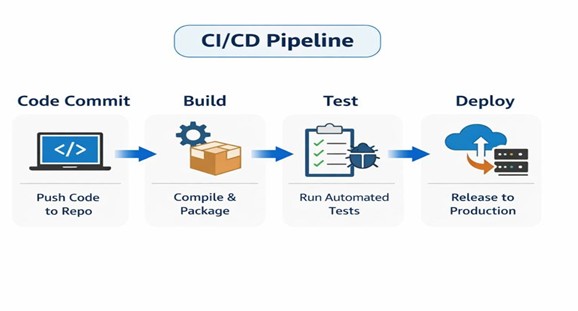
Fig 1: Architecture that maps to a real enterprise workflow.
Infrastructure Learning Beyond Theory
Infrastructure is no longer managed manually, and training programs reflect that reality. Corporate training companies now integrate infrastructure-as-code practices into hands-on labs, enabling learners to provision cloud resources repeatedly and consistently.
Instead of explaining templates in slides, learners deploy environments using Terraform or ARM/Bicep templates, modify configurations, and observe the impact in real time. This exposure prepares employees to handle infrastructure changes safely in production environments.
This model closely aligns with enterprise expectations, where auditability and repeatability matter more than one-time deployments.
Cloud-Native Platforms as Training Environments
Modern applications rely heavily on cloud-native platforms. Training companies increasingly use cloud-native DevOps environments so learners can work with managed services instead of simulated systems.
For example, labs often include:
- Source control in managed repositories
- Pipeline execution using cloud-hosted runners
- Containerized workloads deployed to managed Kubernetes services
This ensures that employees gain experience in environments that closely resemble what they will encounter at work, reducing onboarding friction.
A good reference for structured cloud-based DevOps learning is Microsoft Azure DevOps Engineer (AZ-400) Certification Training, which focuses heavily on real pipeline and release scenarios.
Continuous Feedback Through Monitoring and Security Integration
Another major shift is the inclusion of feedback loops inside training programs. Learners are now taught how deployments are monitored, how logs are analyzed, and how security gates affect release decisions.
This is where DevSecOps training becomes critical. Instead of treating security as a separate topic, modern programs introduce:
- Static code analysis in pipelines
- Secrets management
- Vulnerability scanning during builds
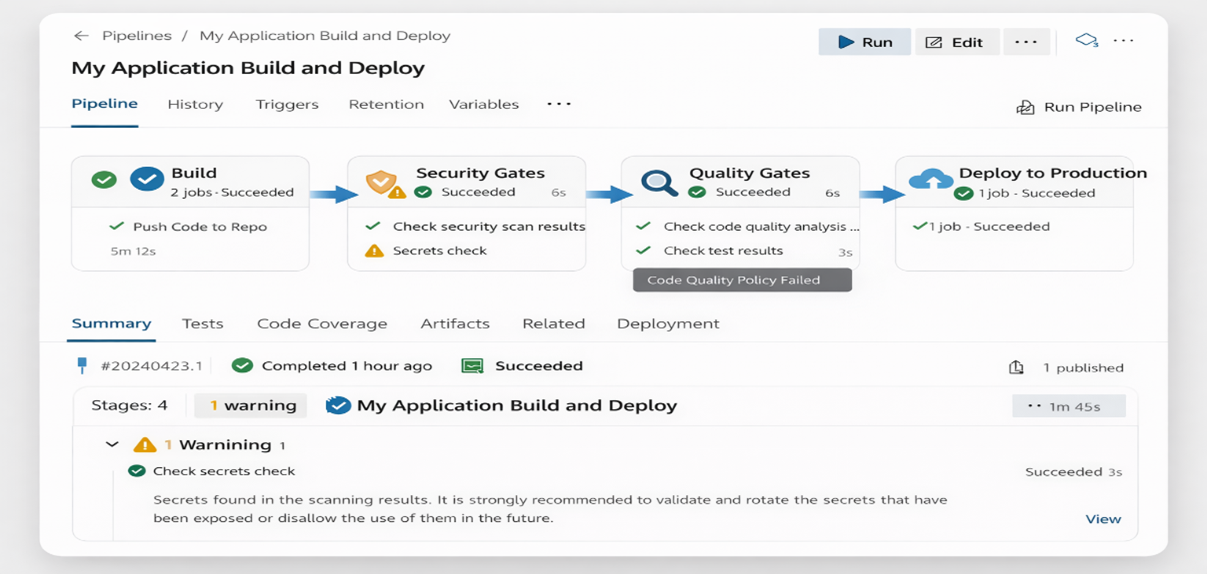
Fig 2: Screenshot of a pipeline with security and quality gates enabled.
This approach helps employees understand accountability and shared ownership, key cultural aspects of DevOps that cannot be learned solely from theory.
Role-Based and Scenario-Driven Learning Models
Corporate environments include developers, testers, operations teams, and site reliability engineers. Training companies now design DevOps programs around realistic, role-based scenarios rather than generic exercises.
Participants may troubleshoot failed pipelines, roll back deployments, or optimize pipeline performance based on business constraints. These scenarios mirror production challenges and encourage collaborative problem-solving.
CloudThat’s DevOps Master’s Program is a good example of how scenario-driven learning prepares teams for cross-functional DevOps responsibilities.
Measuring Training Success Through Delivery Outcomes
One noticeable trend is how organizations evaluate training success. Completion certificates alone are no longer sufficient. Instead, training programs are aligned with measurable outcomes such as:
- Reduced deployment failures
- Faster release cycles
- Improved collaboration across teams
By embedding workflows directly into training, employees leave with muscle memory, not just conceptual understanding. This reduces dependency on post-training support and speeds up real project execution.
Workflow-Driven Training Evolution
Corporate training companies are no longer teaching DevOps as a collection of tools. By embedding DevOps workflows, CI/CD pipelines, infrastructure-as-code, and cloud-native DevOps practices into training programs, they are preparing employees for real-world delivery environments.
This shift benefits both organizations and learners; employees gain practical confidence, while businesses see faster adoption of DevOps practices with fewer production surprises. As enterprise delivery models continue to evolve, workflow-driven training will remain central to building capable and resilient engineering teams.
About CloudThat


WRITTEN BY Madhuri Abhijeet Joshi
Dr. Madhuri Joshi is a Microsoft Certified Trainer (MCT) and a renowned Subject Matter Expert with a Doctorate in Computer Science and Engineering. With over 23 years of experience in training and consulting, she has established herself as a trusted expert in DevOps and Cloud Computing technologies. She has worked extensively on a wide range of industry projects and has played a key role in designing custom training programs and project-based course outlines for enterprise technologies such as SAP and Red Hat OpenShift. As a technical coach for the Government of Maharashtra's Women Empowerment Program, Dr. Joshi has contributed significantly to upskilling and mentoring women in technology. Having trained over 7,000 professionals across the globe, she is highly respected for her clear, simple, and example-driven teaching style, especially when explaining complex technical concepts.


 PREV
PREV












Comments