

 Login
Login


 June 17, 2026
|
Voiced by Amazon Polly |
In today’s data-driven world, organizations need more than just storage; they need intelligent, scalable, and secure ways to manage and use their data. This is where Microsoft Dataverse steps in. As part of the Power Platform, Dataverse provides a powerful foundation for building business applications, automating workflows, and gaining actionable insights.
Start Learning In-Demand Tech Skills with Expert-Led Training
- Industry-Authorized Curriculum
- Expert-led Training
What is Dataverse?
Microsoft Dataverse is a cloud-based data platform that allows users to securely store and manage data used by business applications. It enables organizations to create structured data models without needing deep database expertise. Formerly known as the Common Data Service (CDS), Dataverse has evolved into a robust ecosystem that integrates seamlessly with tools like Power Apps, Power Automate, and Power BI.
At its core, Dataverse organizes data into tables (entities), columns (fields), and rows (records), similar to traditional databases, but with enhanced capabilities tailored for business use.
Key Features of Dataverse
- Secure and Scalable Data Storage
Dataverse is built on Microsoft Azure, ensuring enterprise-grade security and scalability. Role-based access control allows administrators to define who can access or modify specific data.
- Rich Data Types
From simple text and numbers to complex relationships and file storage, Dataverse supports a wide variety of data types. This flexibility makes it suitable for diverse business scenarios.
- Business Logic Integration
One standout feature is the ability to embed business rules and workflows directly into the data layer. This ensures consistency and reduces the need for repetitive manual processes.
- Seamless Integration with Power Platform
Dataverse works effortlessly with the Power Platform, enabling users to:
- Build apps with Power Apps
- Automate processes with Power Automate
- Visualize data with Power BI
- Standard and Custom Tables
Dataverse comes with prebuilt standard tables (such as Accounts and Contacts) and allows users to create custom tables tailored to specific business needs.
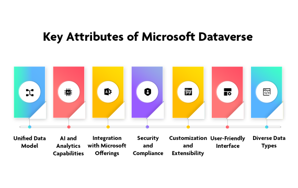
Fig 1: Core capabilities of Microsoft Dataverse.
Why Use Dataverse?
Organizations are increasingly adopting Dataverse because it bridges the gap between technical and non-technical users. Here are a few reasons why it stands out:
- Low-code development: Users can build apps without extensive coding knowledge.
- Centralized data management: All data resides in a unified, structured environment.
- Improved productivity: Automation reduces manual tasks and errors.
- Interoperability: Works seamlessly with Microsoft tools and third-party services.
Dataverse vs Traditional Databases
While traditional databases like SQL Server are powerful, Dataverse offers a more business-friendly approach:
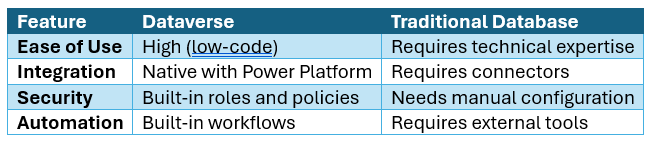
This makes Dataverse particularly appealing for organizations looking to empower business users while maintaining IT governance.
Real-World Use Cases
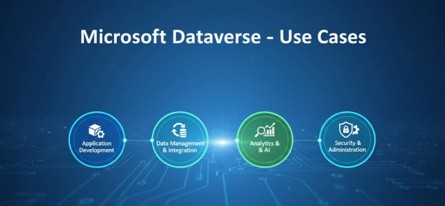
Fig 2: Common Dataverse use cases across business applications.
- Customer Relationship Management (CRM)
Dataverse can store customer data, track interactions, and automate follow-ups—making it ideal for CRM systems.
- Employee Management Systems
HR departments can use Dataverse to manage employee records, onboarding processes, and performance tracking.
- Inventory Management
Businesses can track stock levels, suppliers, and orders in real time, reducing operational inefficiencies.
- Project Tracking
Teams can manage tasks, deadlines, and collaboration workflows using custom-built apps powered by Dataverse.
Best Practices for Using Dataverse
To get the most out of Dataverse, consider the following:
- Design your data model carefully: Plan tables and relationships before implementation.
- Use naming conventions: Maintain consistency across tables and fields.
- Leverage security roles: Ensure proper access control.
- Optimize performance: Avoid unnecessary columns and large data loads.
The Future of Dataverse
As businesses continue to embrace digital transformation, Dataverse is expected to play an even bigger role. With ongoing enhancements in AI integration, automation, and analytics, it is becoming a central hub for intelligent business applications.
The combination of Microsoft Dataverse and the Power Platform is shaping the future of low-code development, enabling organizations to innovate faster and smarter.
Dataverse Business Transformation
Dataverse is more than just a data storage solution—it’s a comprehensive platform that empowers organizations to build, automate, and scale their business processes. Whether you’re a developer or a business user, Dataverse offers the tools needed to turn data into meaningful outcomes.
By leveraging its capabilities, companies can move beyond traditional systems and embrace a more agile, connected, and intelligent way of working.
Upskill Your Teams with Enterprise-Ready Tech Training Programs
- Team-wide Customizable Programs
- Measurable Business Outcomes
About CloudThat


WRITTEN BY Vivek Kumar
Vivek Kumar is a Senior Subject Matter Expert at CloudThat, specializing in Cloud and Data Platforms. With 11+ years of experience in IT industry, he has trained over 2000 professionals to upskill in various technologies including Cloud and Full Stack Development. Known for simplifying complex concepts and hands-on teaching, he brings deep technical knowledge and practical application into every learning experience. Vivek's passion for technology reflects in his unique approach to learning and development.


 PREV
PREV






Comments