

 Login
Login


 June 17, 2026
|
Voiced by Amazon Polly |
Cloud computing is no longer a niche skill; it sits at the center of how modern applications are built, deployed, and scaled. Yet many learners face the same question: How do I move from basic understanding to real, job-ready expertise?
This journey is rarely achieved through theory alone. It is shaped by structured learning, guided practice, and exposure to real-world environments, areas where cloud computing service providers play a critical role.
Start Learning In-Demand Tech Skills with Expert-Led Training
- Industry-Authorized Curriculum
- Expert-led Training
Understanding the Learning Gap in Cloud
Many beginners start with online tutorials or documentation. While these resources are useful, they often lack context. You may learn what a service does, but not how or why it is used in real scenarios.
This gap becomes evident when working on designing scalable applications, managing production workloads, or handling security requirements.
Bridging this gap requires structured, hands-on cloud training that allows learners to experiment, make mistakes, and gradually deepen their understanding.
Role of Cloud Computing Service Providers in Skill Development
Professional training providers do more than just deliver content. They design learning experiences that reflect actual industry use cases.
Instead of isolated lessons, learners are guided through complete workflows, from deployment to monitoring and troubleshooting. This helps build both technical and decision-making skills.
Structured programs such as the Azure Training and Certification Program offer curated learning paths aligned with real job roles, making it easier for learners to progress systematically.
Why Hands-on Cloud Training Makes a Difference
Reading about cloud services is very different from using them in practice. Hands-on experience allows learners to connect concepts with real execution.
When learners work in live environments, they begin to understand system behavior, dependencies, and performance challenges. This builds confidence and improves problem-solving ability.
Hands-on learning also introduces practical considerations like cost optimization, scalability, and security, and key aspects of working in real cloud environments.
Building Real World Cloud Skills
To become job-ready, learners must go beyond guided labs and start working on realistic scenarios.
This includes tasks such as deploying applications, configuring networks, setting up monitoring tools, and automating workflows. These activities help learners gain real-world cloud skills that are directly applicable in professional settings.
For learners interested in AWS, structured programs such as AWS Certification Training by CloudThat provide practical exposure aligned with industry requirements.
Importance of Cloud Certification Training
Certifications help validate knowledge, but their real value lies in the preparation journey.
Well-designed cloud certification training ensures that learners build a structured understanding of services while also practicing real scenarios. This combination improves both exam readiness and practical competence.
When supported by hands-on labs and expert guidance, certification training becomes a strong stepping stone toward career growth.
Learning Through Real Scenarios
To truly understand cloud environments, learners must see how different services interact.
For example, a simple application might involve compute resources, storage, networking, and monitoring tools working together. As learners explore scaling, security, and optimization, they begin to understand how cloud systems operate in real situations.
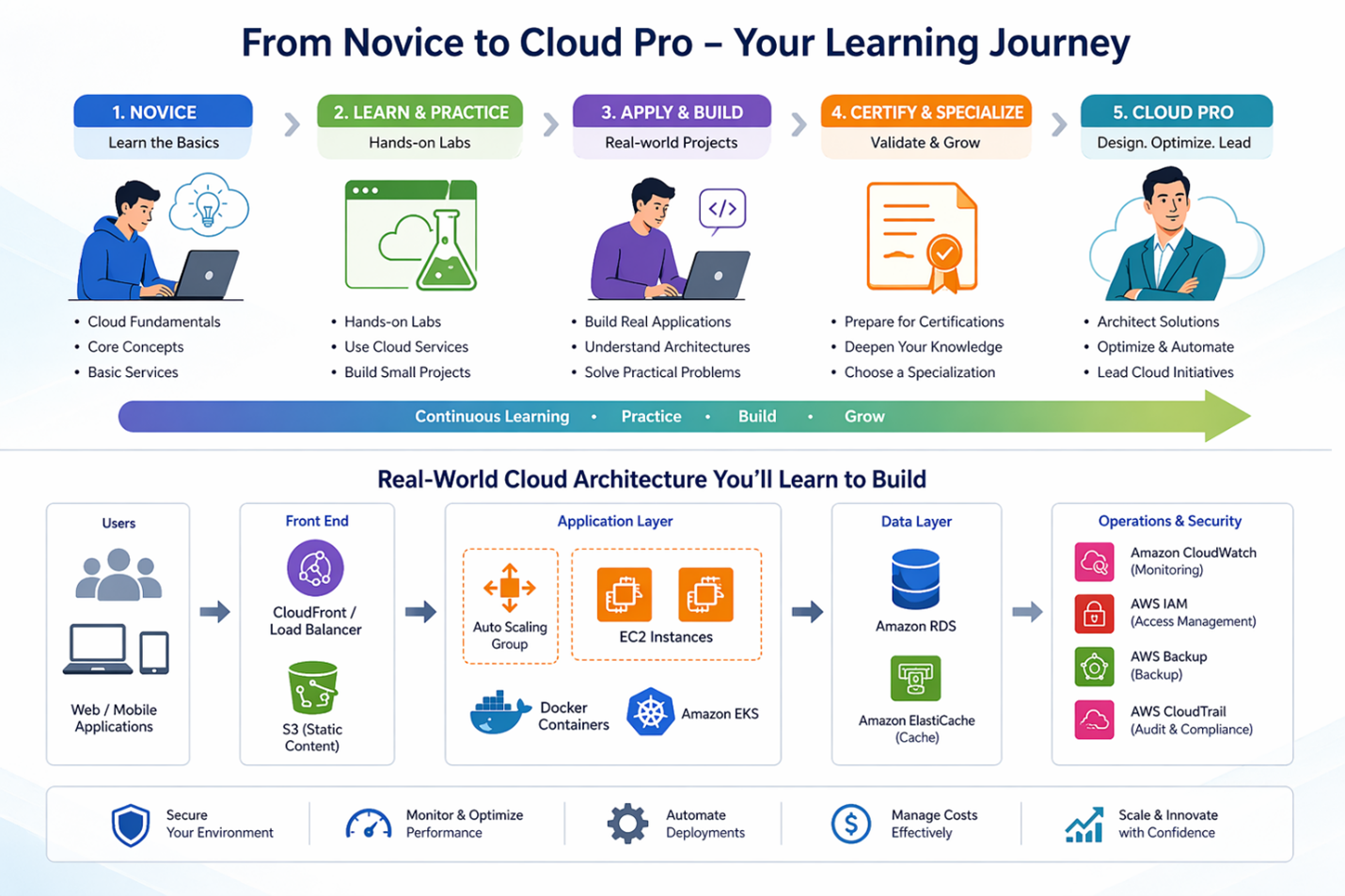
Fig 1: Learning path progression- the connection between services and learning stages.
Common Challenges Learners Face
Even with access to resources, learners often encounter challenges such as limited practical exposure or a lack of structured guidance.
They may struggle to connect individual concepts or feel overwhelmed by the number of services available.
Training providers help address these issues by offering guided learning paths, mentorship, and structured labs that simplify the learning process.
Choosing the Right Learning Approach
Selecting the right learning method is important for effective skill development.
A good program should include hands-on labs, real-world scenarios, and guidance from experienced trainers. It should also align with industry certifications and current job requirements.
A balanced approach that combines theory, practice, and mentorship typically delivers better outcomes than self-study alone.
Building Real Cloud Expertise
Becoming proficient in cloud computing is not about memorizing services; it’s about understanding how to apply them in real situations.
Cloud computing service providers play a key role in this journey by offering structured learning and practical exposure. Through hands-on cloud training, learners gain confidence, while focused programs help develop real-world cloud skills that go beyond theory.
When combined with well-designed cloud certification training, this approach helps bridge the gap between beginner knowledge and professional expertise, preparing learners for real industry challenges.
Upskill Your Teams with Enterprise-Ready Tech Training Programs
- Team-wide Customizable Programs
- Measurable Business Outcomes
About CloudThat
FAQs
1. What role do cloud computing service providers play in learning?
ANS: – They provide structured training, real-world scenarios, and guided labs that help learners gain practical experience beyond theoretical knowledge.
2. Why is hands-on cloud training important?
ANS: – It allows learners to apply concepts in real environments, improving understanding, confidence, and problem-solving skills.
3. Are certifications enough to get a cloud job?
ANS: – Certifications help validate knowledge, but employers also look for practical experience and real-world cloud skills.
4. How long does it take to build real-world cloud skills?
ANS: – It depends on consistency and practice. With structured learning and hands-on exposure, learners can start building strong skills within a few months.
5. Which is better: self-learning or structured cloud certification training?
ANS: – Both have value, but structured training provides guidance, real-world exposure, and a clear learning path, making it more effective for most learners.


WRITTEN BY Madhuri Abhijeet Joshi
Dr. Madhuri Joshi is a Microsoft Certified Trainer (MCT) and a renowned Subject Matter Expert with a Doctorate in Computer Science and Engineering. With over 23 years of experience in training and consulting, she has established herself as a trusted expert in DevOps and Cloud Computing technologies. She has worked extensively on a wide range of industry projects and has played a key role in designing custom training programs and project-based course outlines for enterprise technologies such as SAP and Red Hat OpenShift. As a technical coach for the Government of Maharashtra's Women Empowerment Program, Dr. Joshi has contributed significantly to upskilling and mentoring women in technology. Having trained over 7,000 professionals across the globe, she is highly respected for her clear, simple, and example-driven teaching style, especially when explaining complex technical concepts.


 PREV
PREV











Comments