

 Login
Login

 October 13, 2026
|
Voiced by Amazon Polly |
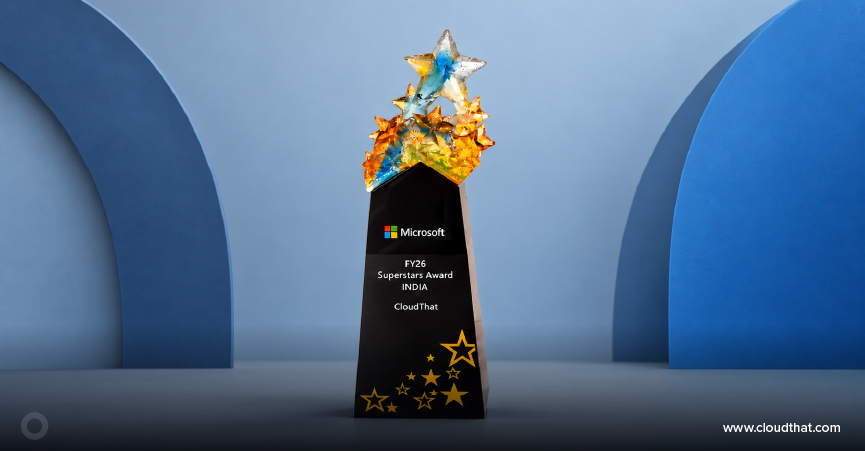
CloudThat has been named the India Winner of the Microsoft Superstars Award Campaign for FY26. It is the company’s fourth Superstars title and its eighth Microsoft recognition since 2017. This post explains what produced that result: three delivery pillars, a curriculum pipeline that turns around new product launches in days, and outcomes measured in certifications rather than attendance.
One award reflects a strong year. Four of the same award across nine years, spanning the shift from on-premises infrastructure to cloud to Copilot, reflects something built to repeat.
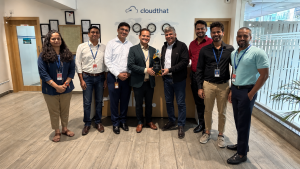
Fig 1: CloudThat won the India title in the Microsoft Superstars Award Campaign for FY26, its fourth Superstars win since 2017.
Start Learning In-Demand Tech Skills with Expert-Led Training
- Industry-Authorized Curriculum
- Expert-led Training
What is the Microsoft Superstars Award?
The Microsoft Superstars Award Campaign recognizes Microsoft partners for sustained performance in learner acquisition, skilling outcomes, and Microsoft Certified Professional growth across a fiscal year. It is awarded by country. CloudThat won the India title for FY26.
The FY26 delivery is behind it:
- 380,000+ learners trained
- 3,350 instructor-led sessions
- 200,000 learners through Microsoft 365 Copilot skilling
- 85,000 learners across Azure Data and AI
That distribution tracks where enterprise demand moved this year, which is why Microsoft weighted the FY26 campaign heavily toward Copilot skilling.
Why is AI skilling the bottleneck for enterprises?
Because the constraint on AI adoption is no longer access to tools. It is the capability to use them. Organizations are buying licenses faster than their people can absorb what those licenses entail, delaying the return on training.
The numbers behind that:
- Gartner projects that around 80% of the engineering workforce will need to upskill through 2027 to keep pace with generative AI.
- Deloitte’s State of AI in the Enterprise 2026 report, based on a survey of 3,235 leaders in late 2025, found that the AI skills gap is now the biggest barrier to integrating AI into workflows. Education was the leading response: 53% of organizations are working to raise AI fluency across the wider workforce, and 48% are building upskilling and reskilling strategies.
- Deloitte’s 2025 Global Human Capital Trends report, covering nearly 13,000 leaders across 93 countries, found 66% of managers and executives say the most recent hires are not fully prepared, with a lack of experience the most common failing. Deloitte’s conclusion is that the harder gap to close is experience rather than skills, which is a training design problem more than a training volume issue.
- The India Skills Report 2026 from Wheebox puts graduate employability at 56.35%.
Two problems sit inside those figures. Existing employees need reskilling now, and the graduate pipeline is not producing replacements fast enough. A skilling partner that solves only one of them solves half the problem.
How does CloudThat structure its Microsoft skilling programs?
CloudThat organizes Microsoft skilling across three pillars: government and policy, enterprise enablement, and academia. Each has a different buying cycle and a different measure of success, so a weak quarter in one does not become a weak year overall.
- Government and policy
Public-sector work is slow to start and durable once running.
- Maldives: 1,000 government officials trained across ministries and the Judicial Academy of the Supreme Court, through 13 instructor-led sessions, five delivered in Dhivehi. Monthly active usage of Microsoft tools rose 20% after training began in February 2026.
- Uttar Pradesh: Under AI Pragya, launched by the Center for e-Governance in collaboration with Microsoft, 1,560+ officials trained across Copilot, Azure fundamentals, Responsible AI, cybersecurity, and governance scenarios, spanning secretaries through review officers.
- Enterprise enablement
The fastest-moving pillar, driven by Copilot and Azure rollouts. Covered in detail in the two sections below.
- Academia
The slowest pillar and the only one that changes the supply of talent rather than the skill of people already employed.
How fast can a skilling partner absorb a new product?
The speed of curriculum turnaround is the clearest test of whether a skilling operation is a system or a set of relationships. CloudThat’s FY26 answer was days, not quarters.
Microsoft Copilot Cowork reached general availability worldwide on 16 June 2026. CloudThat built custom curriculum, instructor guides, and hands-on labs, and began delivery within days. One of the earliest large-scale engagements was for Persistent Systems, where 620 professionals were trained in prompt engineering, AI-assisted collaboration, automation, and Copilot workflows.
That turnaround is not a function of effort. No team builds a curriculum from nothing in a week through long hours alone. It requires:
- An instructional design pipeline that already exists and can be pointed at new material
- Lab environments that can be reconfigured rather than rebuilt
- A trainer bench deep enough to learn new content and deliver it at the same time
How do you measure training outcomes beyond attendance?
By what happens after the session ends. Attendance is easy to produce and tells you almost nothing. The measures that matter are whether trained people go on to use the technology, and whether their organization commits further as a result.
Copilot engagements in FY26 and what followed them:
- HDFC Bank: 10,000 employees trained on Copilot Chat and Microsoft 365 Copilot, contributing to increased utilization and procurement of 7,000+ Microsoft 365 Copilot licenses.
- Cognizant: 15,000 professionals trained, followed by the purchase of 100,000 Copilot licenses in FY26.
- Cipla: 18,000 employees trained, supporting a planned rollout of 1,000 licenses.
- Aditya Birla Capital: 5,000 employees trained, including 300 advanced users, after which the organization procured licenses for every advanced participant.
- Axis Bank: three Copilot Champion train-the-trainer programs (where a small group is trained to teach colleagues) produced 100+ internal champions, who then enabled 50,000+ employees.
The Axis Bank model is worth separating out. It is a designed multiplier rather than a delivery headcount, and it is the only structure in the list that continues to produce after the engagement closes.
The same outcome-first counting applies to infrastructure skilling:
- Azure: 36,581 professionals across 125 enterprises through 722 sessions, producing 8,663 Azure Administrators, 2,716 DevOps Engineers, and 1,080 Azure Solutions Architects, with organizations including TCS, NTT DATA, Tech Mahindra, and LTIMindtree.
- Security: 21,813 professionals across 71 organizations, producing 4,076 Security Operations Analysts, 8,449 Microsoft Sentinel specialists, and 2,159 Identity Administrators, working with Wipro, TCS, and Kyndryl.
Together, that is 58,394 Azure and security professionals. Note the unit being counted. Not sessions delivered. Roles created.
Who delivers the training?
Trainer depth is what converts a fast curriculum build into a certification outcome. CloudThat’s Microsoft Certified Trainers, the instructors Microsoft accredits to teach its official curriculum, are recognized globally.
A curriculum can be written quickly. A trainer bench takes years to build, which is the part that competitors cannot compress.
What makes a Microsoft Superstars Award repeatable?
The academic pillar, because it compounds while the others reset each year. Enterprise engagements end. A syllabus produces a cohort annually without being resold.
CloudThat runs curriculum partnerships with five universities: IIT (BHU) Varanasi, Shree Vaishnav Vidyapeeth University, Acharya, SKITM Indore, and GD Goenka University. Roughly 7,500 students progress through seven Microsoft certification pathways covering Azure, AI, Data Science, Cloud Computing, and Business Applications, supported by an official curriculum, guided projects, labs, and assessments. The plan is to expand from five institutions to 50 within twelve months.
Set against the national graduate employability of 56.35%, that pillar addresses the supply side directly.
Why does AI skilling matter beyond one award?
Because capability is a part of AI adoption that cannot be bought. Software arrives the moment it is licensed, but the ability to use it well has to be built within an organization, one person at a time, and rebuilt each time the underlying technology changes.
That is an uncomfortable thing for enterprises to plan around. Most technology investments behave predictably. You buy a platform, you deploy it, and you depreciate it over a known period. Skilling refuses to work that way. The curriculum that was current in January is partially obsolete by June, and the workforce that was trained last year has moved roles, changed teams, and forgotten half of what it learned. Capability is not a purchase. It is closer to maintenance, and organizations that treat it as a one-time project keep rediscovering the same gap under a new name.
This is why the shape of a skilling partnership matters more than the size of any single engagement. What an enterprise actually needs is not a large training program. It is the assurance that when the next product ships, when the next role becomes necessary, when the next cohort of graduates arrives underprepared, there is a structure ready to respond. That structure is unglamorous. It is instructional designers, lab environments, trainer accreditation, assessment design, and the institutional memory of having done it before. None of it photographs well, and none of it fits on a slide.
The Future of AI Skilling
For India, the stakes attached are unusually high. The country has the largest concentration of technology talent outside the United States and one of the widest gaps between what its graduates know and what its employers need. Whether that gap narrows is not a question of enthusiasm, because the appetite for learning is already visible in every figure on the subject. It is a question of whether enough institutions exist to translate that appetite into verified capability at a national scale, and whether they can continue to do so as the technology evolves.
An award recognizes a year of that work. The work itself does not have a finish line, which is the more useful thing to understand about it. Recognition is a scoreboard, and scoreboards only mean something while the game is still being played.
Upskill Your Teams with Enterprise-Ready Tech Training Programs
- Team-wide Customizable Programs
- Measurable Business Outcomes
About CloudThat
FAQs
1. What is the Microsoft Superstars Award?
ANS: – The Microsoft Superstars Award Campaign recognizes Microsoft partners for sustained learner acquisition, skilling outcomes, and growth in Microsoft Certified Professional certifications over a fiscal year. It is awarded on a country basis, and CloudThat won the India title for FY26.
2. How many times has CloudThat won a Microsoft award?
ANS: – CloudThat has received eight Microsoft recognitions since 2017, including four Superstars titles. The FY26 India win is the most recent.
3. How many people did CloudThat train for Microsoft in FY26?
ANS: – CloudThat trained more than 380,000 learners across 3,350 instructor-led sessions in FY26. Around 200,000 of those came through Microsoft 365 Copilot skilling and 85,000 through Azure Data and AI.
4. What is a Microsoft Certified Trainer?
ANS: – A Microsoft Certified Trainer, or MCT, is an instructor accredited by Microsoft to deliver its official curriculum. Twenty CloudThat trainers appeared in Microsoft’s Top 100 Global MCT list for 2025.
5. How long does it take to train an enterprise team on a new Microsoft product?
ANS: – It depends on whether the training partner has an existing curriculum pipeline. When Microsoft Copilot Cowork reached general availability on 16 June 2026, CloudThat built curriculum, instructor guides, and labs, and began delivering them within days.

WRITTEN BY Priyasha
Priyasha is a Content Writer at CloudThat with a talent for turning briefs into content that lands. She handles blogs, paid ads, social media, and LinkedIn and Meta marketing, while staying deeply involved in ideation, strategy, and brand storytelling across B2B and B2C spaces. Her love for storytelling doesn't stop at work; she's equally at home dissecting a film, binge-watching anime, or getting lost in a video game.


 PREV
PREV




Comments