

 Login
Login

 September 25, 2026
|
Voiced by Amazon Polly |
Introduction
Artificial Intelligence (AI) is transforming the way organizations operate, innovate, and engage with customers. As enterprises seek scalable, secure, and intelligent AI solutions, Microsoft Foundry has emerged as a powerful platform for building, deploying, and governing AI applications and AI agents at scale. Microsoft Foundry provides a unified environment that combines advanced AI models, enterprise-grade security, governance capabilities, and development tools to accelerate AI adoption across industries.
Start Learning In-Demand Tech Skills with Expert-Led Training
- Industry-Authorized Curriculum
- Expert-led Training
What is Microsoft Foundry?
Microsoft Foundry is Microsoft’s enterprise AI platform designed to help organizations build, ground, deploy, and manage AI applications and autonomous agents using a unified ecosystem of models, tools, and governance frameworks. It brings together the complete AI lifecycle, from model selection and development to deployment, monitoring, and compliance management.
The platform enables developers to access a vast catalog of AI foundry models, create intelligent agents, integrate enterprise data, automate workflows, and maintain security and compliance standards within a single environment.
Microsoft Foundry is more than just an AI development platform. It is a unified enterprise AI ecosystem that enables organizations to design, build, deploy, and manage intelligent applications and autonomous AI agents across the entire AI lifecycle. By combining access to leading foundation models, agent orchestration capabilities, enterprise integrations, and governance frameworks, Foundry helps businesses accelerate AI adoption while maintaining security, compliance, and operational control.
The main capabilities of Microsoft Foundry include:
- Access to foundation and specialized AI models
- Development and orchestration of intelligent AI agents
- Integration with enterprise data and business applications
- Security, governance, monitoring, and compliance support
- Lifecycle management from development through production
What are the key features of Microsoft Foundry?
Microsoft Foundry is Microsoft’s unified Azure platform for building, deploying, evaluating, and governing generative-AI applications and AI agents. It brings models, agents, tools, evaluation, observability, and enterprise controls into one platform.
Some of the key features of Microsoft Foundry are as follows:
- Extensive AI Model Catalog
Microsoft Foundry offers a comprehensive catalog of foundation and specialized AI models from industry-leading providers, including OpenAI, Anthropic, Meta, and Microsoft. This extensive model marketplace allows organizations to evaluate, compare, and select the most suitable models based on performance, cost, latency, and business requirements. Businesses can also fine-tune models using proprietary data to create domain-specific solutions that deliver more accurate and meaningful outcomes.
Microsoft Foundry provides access to thousands of foundations and specialized AI models, including offerings from:
- OpenAI
- Anthropic Claude
- Meta Llama
- Microsoft MAI family models
This flexibility allows organizations to select the most suitable model for their business use case.
- AI Agent Development
A key strength of Microsoft Foundry is its ability to support the creation of intelligent AI agents capable of performing complex tasks beyond simple conversational interactions. These agents can reason, make decisions, access enterprise knowledge sources, execute workflows, and collaborate with other AI agents to accomplish business objectives.
Organizations can build intelligent AI agents capable of:
- Automating workflows
- Performing complex reasoning
- Accessing enterprise knowledge
- Executing business actions
- Collaborating with multiple agents
These agents can operate autonomously while keeping human oversight in critical decision-making processes.
- Enterprise Security and Governance
As AI becomes increasingly embedded in business operations, security and governance become essential. Microsoft Foundry incorporates enterprise-grade security controls, including Microsoft Entra ID integration, role-based access control (RBAC), compliance monitoring, auditing, and responsible AI safeguards. These capabilities help organizations protect sensitive data, enforce corporate policies, meet regulatory requirements, and ensure that AI systems operate responsibly and transparently across the enterprise.
Microsoft Foundry includes:
- Microsoft Entra ID integration
- Role-Based Access Control (RBAC)
- Compliance controls
- Monitoring and tracing
- Responsible AI guardrails
These capabilities help enterprises maintain governance while scaling AI initiatives.
- Built-in Observability
Observability provides organizations with deep visibility into how AI systems perform in production environments. Microsoft Foundry enables teams to monitor model accuracy, response quality, user engagement, operational costs, system reliability, and safety metrics. Through comprehensive monitoring and tracing capabilities, businesses can detect issues early, optimize performance, improve resource utilization, and maintain trust in AI-powered applications.
Businesses can continuously monitor:
- AI performance
- Accuracy
- Cost optimization
- User interactions
- Safety compliance
This improves the transparency and reliability of AI systems in production environments.
What are the key tools included in Microsoft Foundry?
Microsoft Foundry includes a set of tools aimed at the full AI application lifecycle from model selection and agent building through evaluation, security, and production monitoring.
The key tools included in Microsoft Foundry are as follows:
- Foundry Models
A centralized model catalog allowing teams to access, compare, deploy, and fine-tune AI models.
- Foundry Agent Service
Supports the creation and orchestration of intelligent AI agents that can automate business processes and interact with enterprise applications.
- Microsoft Agent Framework
An open-source framework that helps developers build and extend AI agents using modern agentic AI patterns.
- Azure Logic Apps Integration
Provides connectivity to over 1,400 business applications, such as:
- SAP
- Salesforce
- Dynamics 365
- ServiceNow
This allows AI agents to interact with enterprise systems seamlessly.
- Model Context Protocol (MCP)
Enables secure integration of custom tools, APIs, and external systems with AI agents.
- Built-in Memory and Knowledge Integration
Allows AI agents to remember context, access organizational knowledge, and deliver more personalized and accurate responses.
How Can Microsoft Foundry Be Used Across Different Business Use Cases?
Microsoft Foundry can be applied across business functions because it combines models, AI agents, enterprise data, tools, evaluation, security, and observability into a single development platform. Current Microsoft customer examples show applications ranging from marketing and retail to logistics, professional services, and telecommunications.
Some use cases include:
- Customer Service Automation
AI-powered virtual assistants and chatbots can support customer service by resolving common queries, providing instant assistance, reducing support costs, and improving customer satisfaction.
AI-powered virtual assistants and chatbots can:
- Resolve customer queries
- Provide instant support
- Reduce support costs
- Improve customer satisfaction
Example:
A telecom company uses Foundry-based AI agents to handle billing inquiries and automatically troubleshoot common issues.
- Intelligent Document Processing
Organizations can automate the processing of documents that traditionally require significant manual effort. Foundry-based solutions can extract, classify, and analyze information from structured and unstructured documents
Organizations can automate the processing of:
- Invoices
- Contracts
- Insurance claims
- Legal documents
Example:
Banks use Foundry agents to extract, classify, and analyze information from loan applications, reducing manual effort significantly.
- Healthcare Assistance
Healthcare providers can use AI solutions to support documentation, information access, and administrative workflows. These applications can improve operational efficiency while requiring appropriate safeguards for sensitive information.
Healthcare providers can use AI solutions for:
- Medical record summarization
- Patient support
- Clinical documentation
- Research assistance
This helps improve operational efficiency and patient care.
- Software Development Productivity
Developers can use advanced AI models to assist with common software engineering activities. Such support can reduce repetitive work and help teams focus on design, testing, and problem-solving.
Developers can leverage advanced AI models for:
- Code generation
- Debugging
- Refactoring
- Documentation creation
- Test case generation
Recent model integrations, such as Claude and the GPT series, enhance coding productivity and software quality.
- Supply Chain Optimization
AI agents can support supply chain planning by analyzing demand, monitoring inventory, identifying potential disruptions, and assisting procurement activities.
AI agents can:
- Forecast demand
- Monitor inventory
- Predict disruptions
- Automate procurement decisions
This improves operational resilience and cost efficiency.
- Financial Analysis and Reporting
Organizations can use AI to support financial reviews and planning activities. Advanced reasoning models can help teams organize information and generate business insights more quickly, subject to human validation and governance.
Organizations can automate:
- Financial reviews
- Risk assessment
- Budget forecasting
Advanced reasoning models enable faster and more accurate business insights.
Importance of Microsoft Foundry in AI
Microsoft Foundry is important because it provides an end-to-end platform for developing, deploying, and managing AI applications and agents. Instead of organizations having to assemble separate services for models, data, agents, evaluation, security, and monitoring, Foundry brings these capabilities together within Azure.
- Accelerates AI Innovation
Microsoft Foundry shortens the time required to move from AI experimentation to production deployment by providing integrated tools and workflows.
- Supports Multi-Model Strategy
Organizations are no longer limited to a single AI provider. Foundry supports multiple leading AI models, enabling flexibility and reducing vendor dependency.
- Enterprise Readiness
Built-in security, compliance, identity management, and governance make the platform suitable for large-scale enterprise deployments.
- Enhances Productivity
AI agents and automation capabilities reduce manual work, improve efficiency, and allow employees to focus on higher-value tasks.
- Future-Proof AI Development
With support for emerging AI models, agentic workflows, and advanced orchestration capabilities, Microsoft Foundry helps organizations stay competitive in the evolving AI landscape.
Architecture
Microsoft Foundry architecture is a layered architecture that connects AI models and agents with enterprise data, tools, applications, and governance.
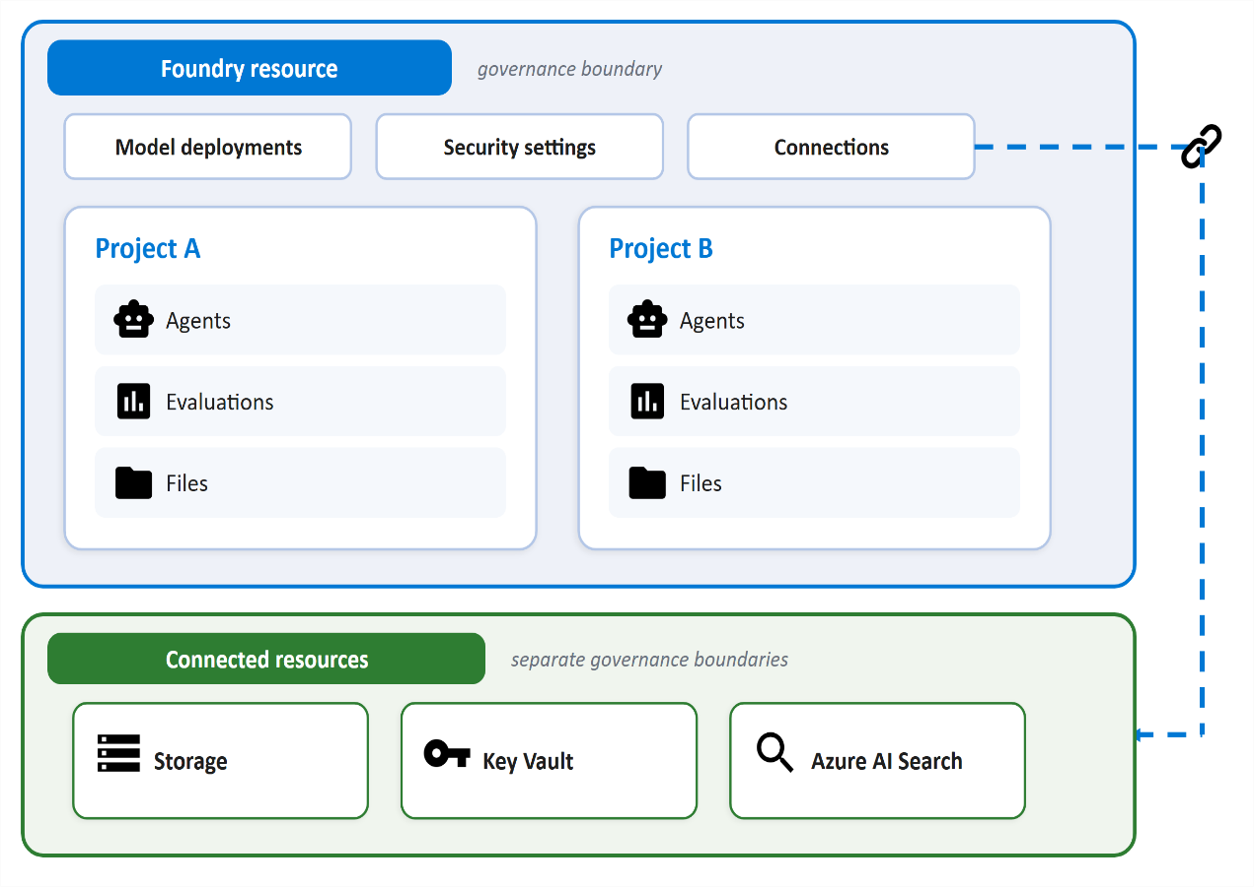
Figure 1: Microsoft Foundry Architecture
If you want to learn more about Microsoft Foundry, then you can refer to Microsoft Certified: Azure AI Fundamentals-AI-901 and Microsoft Certified: Develop AI Apps and Agent on Azure -AI-103, so you will get more information for this
Powering Enterprise AI Innovation
Microsoft Foundry represents a significant step forward in enterprise AI by providing a comprehensive platform for building, deploying, and governing intelligent applications and AI agents. With access to leading AI models, robust security controls, integrated development tools, and enterprise-grade governance, organizations can accelerate digital transformation while maintaining trust and compliance. Whether the goal is customer service automation, intelligent document processing, software development assistance, or advanced business analytics, Microsoft Foundry offers the foundation needed to unlock AI-driven innovation and create sustainable competitive advantage in the modern digital economy
Upskill Your Teams with Enterprise-Ready Tech Training Programs
- Team-wide Customizable Programs
- Measurable Business Outcomes
About CloudThat
FAQs
1. What AI models are available in Microsoft Foundry?
ANS: – Microsoft Foundry offers access to a broad catalog of AI models from leading providers, including OpenAI, Anthropic Claude, Meta Llama, and Microsoft MAI models. Organizations can compare, select, deploy, and fine-tune these models based on their business requirements.
2. How does Microsoft Foundry support AI agent development?
ANS: – Microsoft Foundry enables organizations to create intelligent AI agents that can automate workflows, perform complex reasoning, access enterprise knowledge, execute business actions, and collaborate with other agents. These agents can operate autonomously while maintaining human oversight for critical decisions.
3. What security and governance features are included in Microsoft Foundry?
ANS: – Microsoft Foundry includes enterprise-grade security and governance capabilities, including Microsoft Entra ID integration, Role-Based Access Control (RBAC), compliance monitoring, auditing, observability tools, and responsible AI guardrails. These features help organizations maintain security, compliance, and transparency while scaling AI initiatives.


WRITTEN BY Mahendra Patel
Mahendra Patel is Subject Matter Expert in Azure Infra/Arch at CloudThat, with a passion for empowering professionals through top-tier Microsoft training. As an MCT he brings over 13 years of rich experience in training, academics and research. He holds 18+ professional certifications across Microsoft ecosystem and has successfully trained over 2200+ professionals in Azure Solution Architect, Azure Administrator, Azure Network, PowerBI, Azure Security and AI Data Engineering. His hands-on, tool-driven approach to training is known for translating complex concepts into practical, real-world solutions.


 PREV
PREV










Comments