

 Login
Login


 September 25, 2026
|
Voiced by Amazon Polly |
Artificial intelligence is moving from experimentation to an essential business capability. Organizations are using AI for automation, customer service, analytics, software development, fraud detection, personalization, and decision support. But becoming AI-ready is not simply a matter of purchasing an AI tool or deploying a large language model.
So, how long does it take to become AI-ready? For many organizations, an initial AI-readiness assessment can take a few weeks, while building the data, cloud infrastructure, governance, skills, and operating processes needed for production AI can take several months. The exact timeline depends on the organization’s current technology environment, data maturity, workforce skills, regulatory requirements, and the complexity of its AI use cases.
Start Learning In-Demand Tech Skills with Expert-Led Training
- Industry-Authorized Curriculum
- Expert-led Training
What Does It Mean to Be AI-Ready?
AI-ready means having the people, data, technology, processes, and governance required to develop, deploy, monitor, and improve AI solutions responsibly.
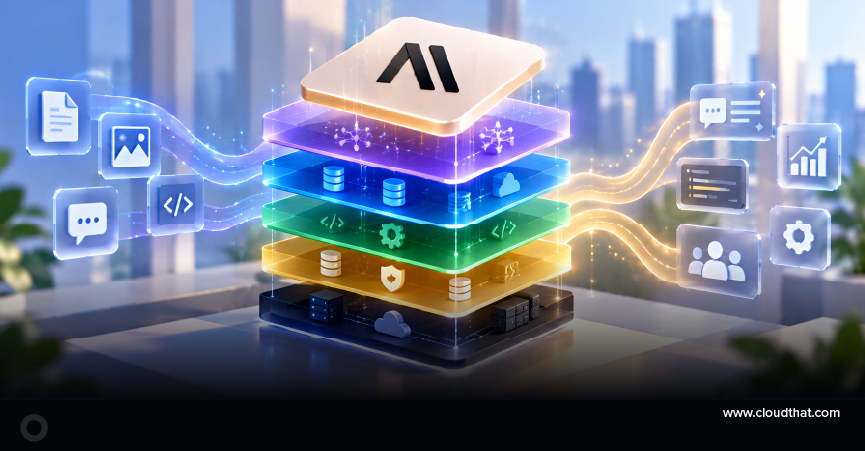
An AI-ready organization typically has five foundations:
- Business strategy: Clear objectives and measurable outcomes for AI initiatives.
- Data readiness: Accessible, reliable, secure, and appropriately governed data.
- Technology readiness: Cloud infrastructure, computing resources, APIs, data platforms, and deployment capabilities.
- People and skills: Employees who understand AI capabilities, limitations, security, and responsible use.
- Governance: Policies for privacy, security, risk management, monitoring, accountability, and compliance.
How Long Does It Take to Become AI-Ready?
A realistic timeframe is several weeks for an initial readiness assessment and roughly three to six months for broader organizational readiness, depending on the starting point and scope.
A small organization with modern cloud infrastructure, accessible data, and a focused AI use case may move from assessment to a production pilot relatively quickly. A large enterprise with legacy systems, fragmented data, strict compliance requirements, and multiple business units may require significantly more time.
What are the factors in the AI Readiness Timeline?
The biggest factors are data quality, existing infrastructure, workforce capability, governance requirements, and the complexity of the intended AI applications.
- Data maturity
AI systems depend heavily on data. Organizations need to understand where their data is stored, who can access it, whether it is accurate, and whether it can be used legally and securely for its intended purpose.
If data is scattered across disconnected systems or requires extensive cleaning, the AI-readiness journey can take considerably longer.
- Cloud and technology infrastructure
AI workloads can require scalable compute, storage, networking, data pipelines, model-serving infrastructure, and monitoring.
Cloud platforms can help organizations provision and scale these capabilities more efficiently. A mature cloud environment can therefore shorten the infrastructure-preparation stage.
- Skills and workforce readiness
AI adoption requires more than data scientists. Organizations may need cloud engineers, software developers, data engineers, security professionals, AI specialists, product managers, and business teams who understand how AI fits into their workflows.
- Governance and security
Organizations must consider privacy, security, reliability, transparency, bias, accountability, and other AI risks.
NIST recommends incorporating trustworthiness considerations throughout the design, development, deployment, and use of AI systems. Its Generative AI Profile provides additional guidance for risks associated with generative AI.
- Complexity of the use case
A customer support assistant using an existing knowledge base can have a very different implementation timeline than an AI system that requires custom model training, real-time data processing, complex integrations, or highly regulated information.
Start with a use case that is valuable but manageable.
The first 90 days should focus on establishing the foundation and proving value rather than attempting an organization-wide AI transformation.
Days 1–30: Assess and prioritize
Document existing data sources, cloud infrastructure, applications, security controls, skills, and business objectives.
Create an AI use-case backlog and score potential projects according to business value, technical feasibility, data availability, risk, and expected time to value.
Days 31–60: Prepare
Select one high-priority use case. Prepare the required data and infrastructure, define security requirements, identify responsible stakeholders, and establish success metrics.
For generative AI projects, also consider prompt security, data privacy, model evaluation, output quality, and human oversight.
Days 61–90: Pilot and measure
Build a controlled pilot and measure it against predefined KPIs.
Possible measurements include accuracy, response quality, processing time, operational cost, employee productivity, customer satisfaction, or revenue impact. If the pilot produces measurable value and meets security and governance requirements, create a plan for production deployment and scaling.
Build AI Readiness Stepwise
Becoming AI-ready is not a one-time project but an organizational capability that develops over time. While an initial readiness assessment can often be completed within a few weeks, achieving production-level AI readiness typically takes several months, depending on data maturity, infrastructure, governance requirements, workforce skills, and business objectives.
Upskill Your Teams with Enterprise-Ready Tech Training Programs
- Team-wide Customizable Programs
- Measurable Business Outcomes
About CloudThat
FAQs
1. What is the biggest obstacle to AI readiness?
ANS: – Data quality and accessibility are often major challenges. However, organizational skills, infrastructure, security, governance, and unclear business objectives can also slow adoption.
2. Does AI readiness require a large AI team?
ANS: – No. Organizations can begin with a cross-functional team combining business, data, technology, security, and AI expertise. Team size should grow according to the number and complexity of AI initiatives.
3. Can small businesses become AI-ready?
ANS: – Yes. Small businesses can start with managed AI services and targeted use cases rather than building complex AI infrastructure. A focused approach can reduce initial cost and implementation complexity.


WRITTEN BY Martuj Nadaf
Martuj Nadaf is a Subject Matter Expert at CloudThat, specializing in DevOps Tools and multi-cloud. With 14 years of experience in training and industry, he has trained over 2000+ professionals/students to upskill in Hardware, Networking, Windows, Linux, DevOps, Docker, Kubernetes, Monitoring tools, Multi-cloud globally. Known for explaining complex technical concepts in a simple and understandable manner, hands-on teaching and industry insights, he brings deep technical knowledge and practical application into every learning experience. Martuj's passion for exploring new technologies reflects in his unique approach to learning and development.


 PREV
PREV










Comments