

 Login
Login

 March 5, 2026
|
Voiced by Amazon Polly |
Serverless computing has fundamentally changed how teams build and operate applications in the cloud. With AWS Lambda, developers no longer need to worry about provisioning servers, managing operating systems, or scaling infrastructure. You simply write code, upload it, and AWS takes care of the rest.
At the same time, many real-world workloads still require the flexibility and control of EC2 instances, such as custom runtimes, large binaries, specialized networking, or long-running processes. This creates a familiar tension: serverless simplicity vs infrastructure control.
Imagine a model where these two worlds converge. This is where the idea of AWS Lambda Managed Instances comes in – combining the event-driven, auto-scaling nature of Lambda with the power and configurability of EC2.
Start Learning In-Demand Tech Skills with Expert-Led Training
- Industry-Authorized Curriculum
- Expert-led Training
The Evolution of Serverless on AWS
AWS Lambda was designed for short-lived, stateless workloads that respond instantly to events. Over time, AWS has steadily expanded Lambda’s capabilities:
- Increased memory and CPU limits
- Support for container images
- Provisioned Concurrency for predictable latency
- SnapStart to reduce cold starts
- Deeper integration with services like EventBridge, SQS, and Step Functions
Despite these enhancements, some workloads still fall into a grey area:
- Processing large payloads
- Using heavy dependencies or custom system libraries
- Running ML inference or complex image processing
- Needing more control over networking or storage
These workloads are often pushed back to EC2 or ECS, increasing operational complexity.
What are Lambda Managed Instances?
Lambda Managed Instances can be thought of as a hybrid execution model: AWS manages EC2 instances on your behalf, while you interact with them through a Lambda-like experience.
From a developer’s perspective:
- You still deploy code as functions
- You still trigger execution using events
- You still benefit from automatic scaling and managed availability
Behind the scenes:
- AWS provisions and manages EC2 instances
- Instances persist longer than traditional Lambda execution environments
- You get access to instance-level capabilities without managing the instance lifecycle
In essence, you get EC2 flexibility without EC2 operational burden.
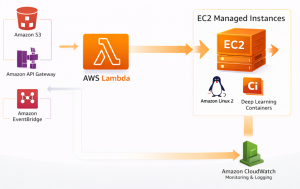
Fig 1: How Lambda Managed Instances combine Lambda simplicity with EC2 instance-level capabilities.
How It Differs from Traditional Lambda
Traditional Lambda functions are optimized for:
- Short execution durations
- Lightweight dependencies
- Fully ephemeral compute environments
Lambda Managed Instances, on the other hand, would be optimized for:
- Heavier workloads
- Larger binaries and system dependencies
- Warm, reusable execution environments
- More predictable performance
Think of it as state-aware serverless compute, where AWS still controls scaling, health checks, and replacement, but gives you a richer execution context.
How It Differs from EC2 and ECS
With EC2:
- You choose instance types
- You manage scaling policies
- You patch, monitor, and replace instances
- You design for high availability
With ECS or EKS:
- You manage clusters
- You think in terms of tasks, pods, and capacity
- You operate the control plane and worker nodes
With Lambda Managed Instances:
- No cluster management
- No instance patching
- No capacity planning
- No manual scaling rules
You focus on code and events, not infrastructure.
Ideal Use Cases
AWS Lambda Managed Instances bridge the gap between traditional serverless functions and long-running, resource-intensive workloads. Below are some ideal scenarios where this model truly shines.
- Machine Learning Inference
Machine learning inference workloads often push the boundaries of what standard Lambda functions can handle. Large model sizes, cold-start latency, and compute-intensive inference make it challenging to run ML models efficiently in a purely ephemeral environment.
- Warm model loading keeps models in memory across invocations, drastically reducing latency from repeated model initialization.
- GPU-backed instances (conceptually) accelerate inference for deep learning, computer vision, and NLP workloads that benefit from parallel computation.
- Media Processing
Media workloads such as video transcoding, image rendering, and document processing are notoriously demanding on compute, memory, and execution time.
- Long execution times allow tasks like video encoding or batch image processing to complete without artificial time constraints.
- High CPU or memory usage is essential for high-resolution video processing, OCR pipelines, or large-scale image transformations.
- Data Processing Pipelines
Event-driven data processing is a cornerstone of modern data architectures. ETL and stream-processing workloads often require fast startup times and consistent compute availability to keep up with data volume.
- Persistent compute, which avoids repeated environment setup and improves processing efficiency.
- Faster warm starts, enabling near real-time processing when triggered by S3 uploads, Kinesis streams, or Kafka events.
- Enterprise Integrations
Many enterprises struggle to adopt pure serverless models due to constraints imposed by legacy systems and proprietary software.
- Legacy libraries and system-level dependencies that require custom OS configurations or native binaries.
- Proprietary SDKs and licensed software that cannot be easily packaged into standard Lambda runtimes.
Cost and Performance Considerations
One of the most compelling aspects of this model is cost alignment.
- You pay for compute capacity that runs your workloads
- No idle instance costs like traditional EC2
- No over-provisioning for peak traffic
- Automatic scaling based on demand
This makes it especially attractive for latency-sensitive workloads that struggle with cold starts.
Security and Operations
From a security perspective, Lambda Managed Instances would inherit the best of both worlds:
- IAM-based execution roles
- VPC integration
- Automatic patching and instance replacement
- Isolation managed by AWS
Operationally, teams benefit from:
- Built-in monitoring via CloudWatch
- Native logging and tracing
- Event-driven observability
- Reduced operational overhead
Next-Gen Serverless Compute
AWS Lambda Managed Instances represent the best of both worlds: the simplicity and scalability of serverless computing combined with the flexibility and power of EC2.
While traditional Lambda remains ideal for lightweight, stateless functions, this hybrid model opens the door for a new class of workloads – complex, resource-intensive, and performance-sensitive applications that still want a serverless experience.
As cloud architectures continue to evolve, concepts like Lambda Managed Instances point to a future where developers focus only on code and outcomes, while the cloud handles everything else.
Serverless is no longer just about small functions. It’s about running anything without managing servers.
Upskill Your Teams with Enterprise-Ready Tech Training Programs
- Team-wide Customizable Programs
- Measurable Business Outcomes
About CloudThat


WRITTEN BY Nitin Kamble
Nitin Kamble is a Subject Matter Expert and Champion AAI at CloudThat, specializing in Cloud Computing, AI/ML, and Data Engineering. With over 21 years of experience in the Tech Industry, he has trained more than 10,000 professionals and students to upskill in cutting-edge technologies like AWS, Azure and Databricks. Known for simplifying complex concepts, delivering hands-on labs, and sharing real-world industry use cases, Nitin brings deep technical expertise and practical insight to every learning experience. His passion for bike riding and road trips fuels his dynamic and adventurous approach to learning and development, making every session both engaging and impactful.


 PREV
PREV











Comments