

 Login
Login

 September 2, 2026
|
Voiced by Amazon Polly |
Introduction
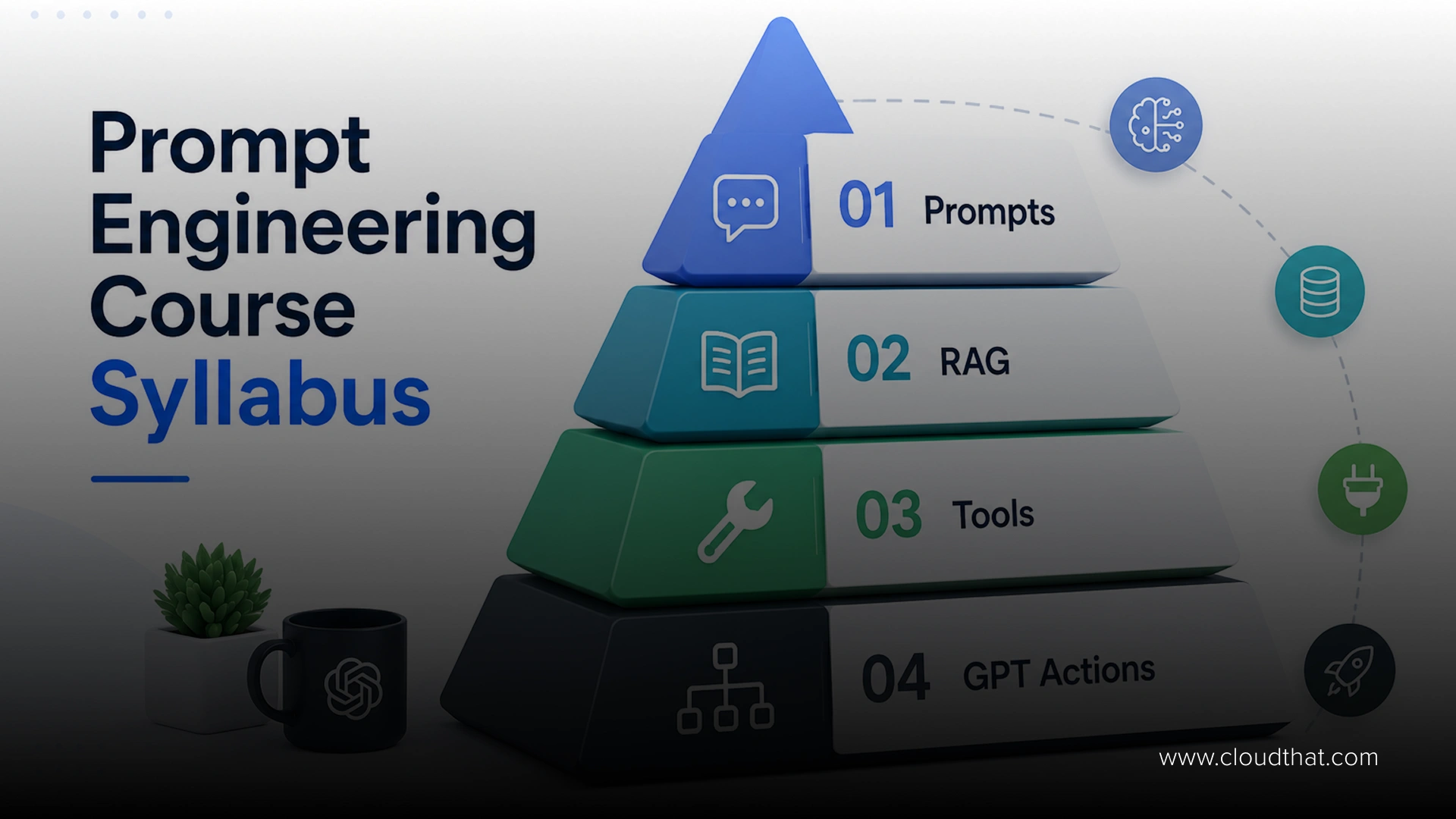
Quick Answer: A complete prompt engineering course syllabus should cover four layers: writing better prompts with structure and consistency; RAG to ground answers in real data; tools and function calling so the model can trigger real actions; and GPT Actions to connect AI to external systems and workflows. If a prompt engineering course syllabus stops at “write clearer prompts,” you are only getting the first quarter of the skill. This guide walks through what an AI prompt engineering course should actually include, in the order it should be taught.
Okay, quick confession. The first time someone showed me a real prompt engineering course syllabus, I expected slides on “how to talk nicely to ChatGPT.” I got RAG pipelines, tool calls, and something called GPT Actions on slide two. I closed the laptop for a second, genuinely.
That reaction is normal. Most people searching for a prompt engineering course syllabus expect a glorified prompt cheat sheet. What they actually need is a build path, one that goes from writing a decent prompt to something that works inside a real product. So let’s walk through what a proper syllabus looks like, layer by layer.
Advance Your Career with OpenAI Training
- Build AI Applications
- GPT-5 & OpenAI APIs
- Hands-on Projects
What a Real Prompt Engineering Course Syllabus Should Cover
A strong prompt engineering course syllabus is built in layers, not a random list of topics. Layer one is prompting itself; layer two is RAG; layer three is tools and function calling; and layer four is GPT Actions.
Most short workshops only cover layer one. That is why so many people finish a course, feel confident, then freeze the moment a manager asks them to connect AI to an actual company system. A genuine AI prompt engineering course does not stop at confidence; it builds capability.
McKinsey’s latest research on generative AI adoption found most organizations are still using AI in a fairly basic way, while a smaller group has actually rewired real workflows around it. The depth of your prompt engineering course syllabus decides which group you end up in.
Layer 1: Writing Better Prompts (The Part Everyone Expects)
Every prompt engineering course syllabus starts here, and it should. This layer covers role-based prompting, few-shot examples, chain-of-thought reasoning, system prompts, and formatting output into something usable, like JSON, instead of a wall of text.
The mistake most learners make is treating this as the whole course. It is the entry point of an ai prompt engineering course, not the destination. Getting good here means your prompts stop being one-time lucky guesses and start being repeatable, testable instructions.
CloudThat’s AI and ML training tracks treat this layer as week one of a longer program, not the entire syllabus, because employers stopped being impressed by “I can write a good prompt” a while back. Learners who need the applied AI and ML groundwork behind prompting often start with the Master Data Science with Azure program.
Layer 2: RAG, or Teaching the Model to Stop Guessing
RAG, short for Retrieval Augmented Generation, is where a prompt engineering course syllabus should start getting genuinely useful. It solves the biggest complaint about AI tools: they confidently make things up when they do not actually know the answer.
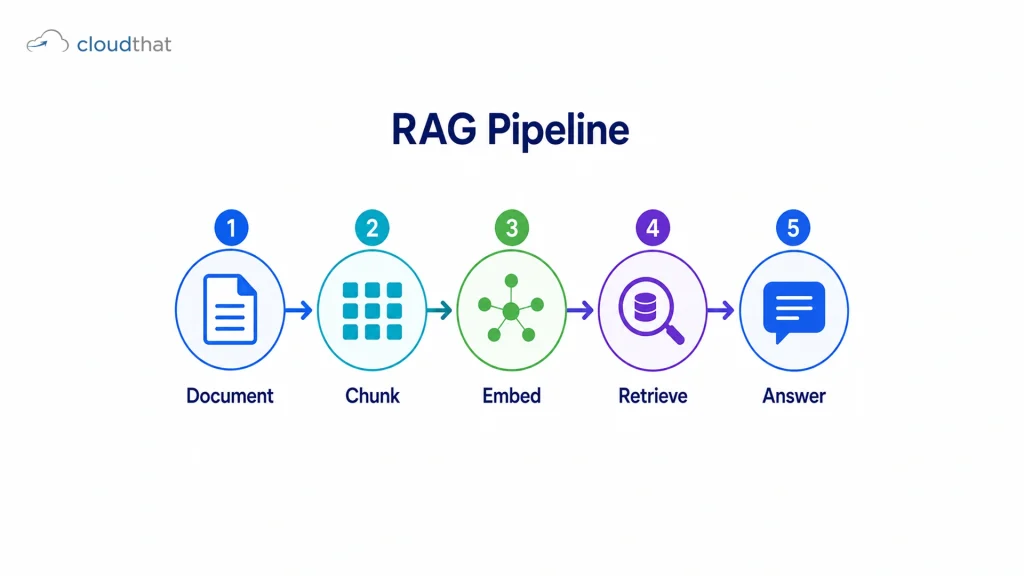
This layer covers embedding documents, chunking them properly, storing them in a vector database, and retrieving the relevant pieces before the model generates a response. Done right, the model stops guessing and starts citing your actual company documents, policy pages, or support history.
This is exactly the kind of build that CloudThat’s GenAI Innovation Center runs with enterprise teams, turning a messy document library into something the model can search accurately rather than confidently hallucinate.
Layer 3: Tools and Function Calling
Once RAG grounds the model in real data, the next stop on any serious prompt engineering course syllabus is tools and function calling. This is where a model stops just answering questions and starts triggering real actions.
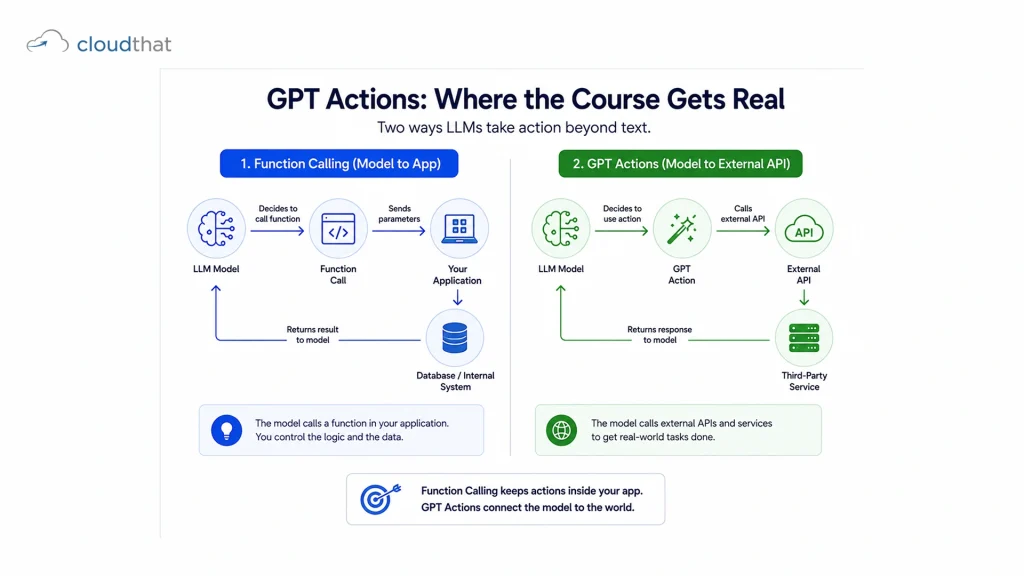
Function calling lets the model request data or execute a step in your application, checking inventory, pulling a customer record, sending a notification, based on the conversation happening. OpenAI’s own function calling guide breaks down exactly how models decide when to call a tool and how your application should respond.
This layer is where an AI prompt-engineering course starts to feel like actual software work rather than clever writing. You are no longer just prompting; you are designing a system, the same kind of CloudThat’s consulting practice builds for enterprise clients that need AI wired into real workflows.
Layer 4: GPT Actions, Where the Course Gets Real
GPT Actions take function calling one step further, letting a custom GPT connect to external APIs and systems directly within a conversation, without a developer having to wire every request by hand each time.
A prompt engineering course syllabus that includes GPT Actions teaches you to build assistants that can check a CRM, trigger a workflow, or pull live data from a company system, all inside a single chat interface. This is the layer that turns a course project into something a business could actually deploy.
Few programs get this far. Most stop at layer one or two because layer four needs trainers who have actually shipped this kind of integration, not just read about it.
Why the Order of the Syllabus Actually Matters
Skipping ahead sounds efficient. It is not. Jumping straight to GPT Actions without solid prompting and RAG underneath means your assistant sounds confident while being wrong, and now it is wrong while taking real actions in a real system.
A well-sequenced prompt engineering course syllabus builds each layer on the one before it. Prompting gives you control. RAG gives you accuracy. Tools give you capability. GPT Actions give you reach. Skip a step and the whole thing gets shaky right when it matters most.
Why CloudThat Teaches This Syllabus Differently
CloudThat runs this full syllabus as a live, instructor-led program, not a weekend workshop that stops after layer one. Trainers teaching prompting, RAG, tools, and GPT Actions are the same people building these systems for enterprise clients between sessions, not freelancers reading from a slide deck.
The AI/ML and GenAI training tracks run with 50 to 60 percent hands-on lab time, so you are building RAG pipelines and testing tool calls in the lab, not watching a demo. For companies that want their whole team through this syllabus at once, the Capability Development Framework runs a scoped, assessed rollout across a cohort, and Experiential Learning tests whether each person can apply every layer in a real scenario, not just describe it in an interview.
CloudThat is an AWS Premier Tier Training Partner and an NVIDIA Training Partner with a dedicated focus on GenAI, backed by 14+ years of training experience. Check the training calendar for upcoming batches covering this full syllabus.
Conclusion
A real prompt engineering course syllabus is not a cheat sheet, it is a build path. Better prompts get you started, RAG keeps answers honest, tools give the model real capability, and GPT Actions connect all of it to systems a business actually runs. Learn the layers in order and you come out able to build things that work, not just write prompts that sound good.
Key Takeaways
- A real prompt engineering course syllabus covers four layers, prompting, RAG, tools, and GPT Actions, not just one.
- Layer one prompting skills are the entry point of an ai prompt engineering course, not the finish line.
- RAG stops the model from guessing by grounding answers in real company data.
- Function calling lets a model trigger real actions instead of just generating text.
- GPT Actions connect an assistant to external systems directly inside a conversation.
- Skipping layers in the syllabus creates a model that sounds confident while being wrong.
- The order of the syllabus matters more than the speed at which you move through it.
- Hands on lab time matters more than watched hours when judging any prompt engineering course syllabus.
- Most complete programs run six to ten weeks with live, instructor led sessions.
- Enterprise teams can move through the full syllabus together using a structured, assessed framework.
Ready to actually build with all four layers instead of stopping at layer one? Check CloudThat’s live training calendar and pick your batch.
About CloudThat
FAQs
1. Is a prompt engineering course syllabus useful if I only want to write better prompts?
ANS: – Yes, layer one alone still helps. But most underestimate how much further a full ai prompt engineering course goes once RAG and tools enter the picture.
2. Do I need to know RAG before learning function calling?
ANS: – It helps a lot. A solid prompt engineering course syllabus usually teaches RAG before tools, since grounding the model in real data first makes tool use more reliable.
3. What is the difference between function calling and GPT Actions?
ANS: – Function calling lets a model trigger a specific action inside your own application. GPT Actions extend that to external APIs directly inside a custom GPT conversation.
4. Can beginners follow a full four layer prompt engineering course syllabus?
ANS: – Yes, as long as the program builds each layer with hands on practice. Jumping straight to GPT Actions without the basics usually backfires.
5. How long does a complete ai prompt engineering course covering all four layers take?
ANS: – Most structured programs run six to ten weeks with live instructor led sessions, longer for self paced learning without guided feedback.
6. Can a company train its whole engineering team on this syllabus together?
ANS: – Yes. CloudThat’s Capability Development Framework walks a full cohort through prompting, RAG, tools, and GPT Actions within a single scoped timeline.

WRITTEN BY Himisha Raval
Himisha Raval is a Digital Marketing Manager at CloudThat with a strong command of search engine optimization, web analytics, link building, and content strategy. She brings a data-driven approach to digital marketing, helping IT companies strengthen their online presence, improve search rankings, and generate consistent leads across channels. Beyond execution, she plays an active role in ideation, campaign strategy, and website performance optimization. Outside of work, she balances her analytical side with a love for travel, nature painting, and dancing.


 PREV
PREV






Comments