

 Login
Login

 March 18, 2026
|
Voiced by Amazon Polly |
Mixed Reality is no longer a futuristic concept discussed only in research labs. It is actively reshaping how organizations design, collaborate, train, and solve real-world problems. At the center of this evolution is Microsoft HoloLens, a device that blends digital content with the physical environment in a way traditional screens never could.
Unlike virtual reality headsets that isolate users, HoloLens allows people to remain present in the real world while interacting with holograms anchored to physical spaces. This unique approach makes it especially valuable for enterprise, industrial, and educational use cases where context and precision matter.
Start Learning In-Demand Tech Skills with Expert-Led Training
- Industry-Authorized Curriculum
- Expert-led Training
Understanding Microsoft HoloLens
Microsoft HoloLens is a self-contained Mixed Reality headset that overlays holographic images onto the user’s surroundings. It does not require external sensors, cameras, or a tethered computer. Everything, from spatial mapping to gesture recognition, runs directly on the device.
What truly differentiates HoloLens is its awareness of the physical environment. Walls, machines, tools, and workspaces become reference points for digital content. As a result, holograms remain fixed in place, enabling realistic and shared experiences for individuals and teams working together.
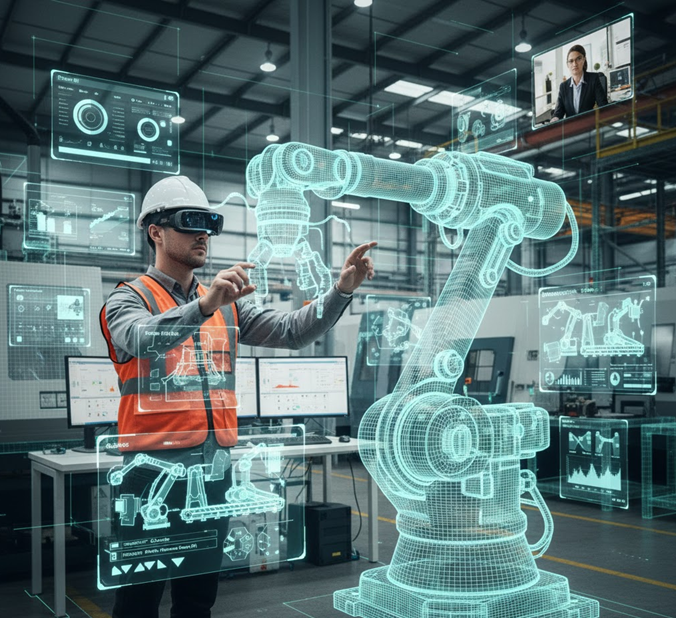
Fig 1: HoloLens enabling spatially anchored holograms for industrial mixed reality use cases.
How Mixed Reality Changes Enterprise Workflows
In many enterprises, critical information is confined to dashboards, manuals, or remote systems. HoloLens brings that information directly into the workspace, exactly where it is needed.
Engineers can visualize 3D models of machinery on the factory floor, aligned with the physical asset. Architects can walk through life-sized holographic building designs before construction begins. Field technicians can follow step-by-step guidance overlaid on real components, significantly reducing errors and downtime.
This shift from screen-based interaction to spatial interaction improves clarity, collaboration, and decision-making across teams.
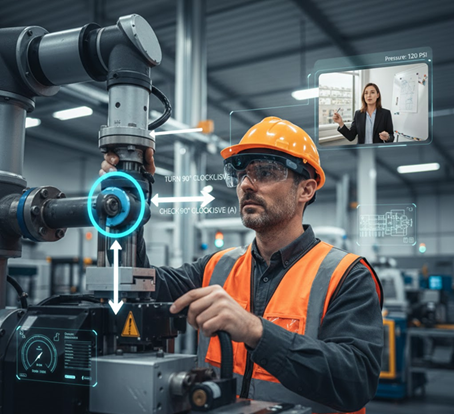
Fig 2: Spatially guided workflows using HoloLens in industrial environments.
Key Capabilities That Power HoloLens
Microsoft HoloLens combines multiple advanced technologies into a single wearable device. Spatial mapping allows it to scan and understand the environment in real time. Hand tracking enables intuitive interaction without physical controllers, while eye tracking helps the system respond intelligently to user intent.
Voice commands further simplify interaction, allowing users to work hands-free in complex or safety-critical environments. Built-in cameras and sensors also support remote collaboration, enabling experts to see exactly what on-site workers see and provide guidance in real time.
These capabilities make HoloLens especially effective in environments where accuracy, safety, and speed are essential.
Industry Use Cases That Show Real Impact
HoloLens has already demonstrated measurable value across multiple industries.
In healthcare, surgeons use holographic visualizations of patient anatomy to improve preoperative planning. Medical students gain a deeper understanding by interacting with 3D organs rather than static diagrams.
In manufacturing and energy sectors, remote assistance has emerged as one of the most practical applications. Experts located anywhere in the world can guide on-site staff by placing annotations and instructions directly into their field of view.
Education and workforce training also benefit significantly. Learners can practice complex procedures in immersive yet safe environments, improving retention and confidence before working on real systems.
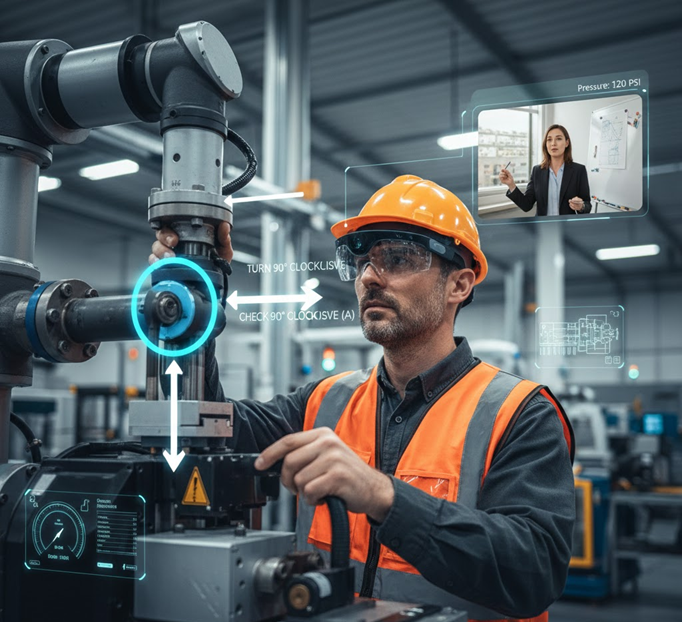
Fig 3: Using Microsoft HoloLens for remote assistance and real-time guidance in industrial environments.
Building Solutions on the Microsoft Ecosystem
One of the strongest advantages of Microsoft HoloLens is its seamless integration with the broader Microsoft ecosystem. Developers can create Mixed Reality applications using familiar tools such as Unity and connect them with Azure services for data processing, analytics, and AI-driven insights.
This integration enables organizations to connect Mixed Reality solutions with existing enterprise systems, including digital twins, asset management platforms, and collaboration tools.
Professionals aiming to work with such Mixed Reality solutions often begin by strengthening their AI/ML fundamentals. Learning paths such as Microsoft Azure AI Solutions help build the foundational knowledge required to design and support Mixed Reality workloads effectively.
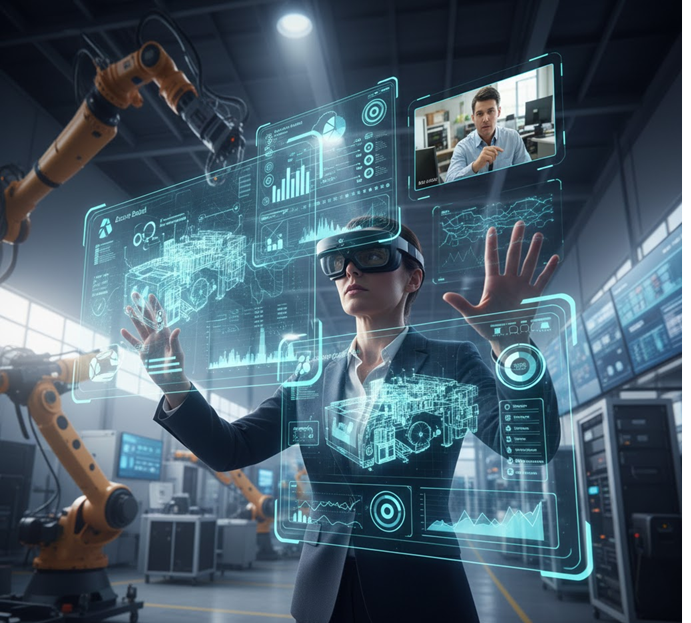
Fig 4: Microsoft HoloLens integrated with cloud-powered analytics and enterprise systems.
Challenges to Consider Before Adoption
While Microsoft HoloLens offers powerful capabilities, successful adoption requires thoughtful planning. Organizations must consider factors such as device cost, application development effort, and user onboarding.
Comfort for extended usage, battery life, and change management within teams are equally important. Most successful implementations begin with focused pilot projects that address specific operational challenges before scaling across the organization.
Preparing Teams for Mixed Reality Technologies
As Mixed Reality becomes more common, skills related to cloud integration, spatial computing, and secure deployment will grow in importance. Understanding how devices like HoloLens interact with cloud platforms is essential for architects, developers, and IT professionals.
Certifications such as Microsoft Certified: Azure Solutions Architect Expert help professionals validate their ability to design enterprise-grade solutions that combine cloud and immersive technologies.
Mixed Reality Innovation
Microsoft HoloLens represents a major step forward in how humans interact with digital information. Blending holographic content seamlessly into the physical world enables new ways of working that go far beyond traditional screens.
As industries continue to adopt immersive technologies, HoloLens stands out as a practical, enterprise-ready platform that enhances real-world tasks. Organizations that explore Mixed Reality today will be better positioned to innovate, collaborate, and operate more effectively in the years ahead.
Upskill Your Teams with Enterprise-Ready Tech Training Programs
- Team-wide Customizable Programs
- Measurable Business Outcomes
About CloudThat


WRITTEN BY Rajesh KVN
Dr. K. V. N. Rajesh is a Microsoft Certified Trainer & Senior Subject Matter Expert at CloudThat (Microsoft Gold Partner), specializing in Azure cloud security and AI. With over 20 years of experience in training, research, and development, he has trained thousands globally on Microsoft certifications and best practices. Known for simplifying complex security concepts and practical, hands‑on guidance, Dr. Rajesh brings deep technical insight. His passion for mentoring and writing fuels every learning journey. He is a Microsoft global award winner.


 PREV
PREV











Comments