

 Login
Login


 August 24, 2026
|
Voiced by Amazon Polly |
Overview
Artificial Intelligence is evolving far beyond simple chatbots and automated workflows. Today’s AI systems are becoming capable of reasoning, decision-making, and autonomous execution. At the center of this transformation lies a new generation of intelligent systems known as AI agents.
Unlike traditional AI models that respond to prompts, AI agents can remember information, plan tasks, and use external tools to accomplish complex objectives. These capabilities are making AI agents more human-like in the way they think and operate.
Three core components are driving this evolution:
- Memory
- Planning
- Tool Calling
Together, these capabilities allow AI agents to move from passive assistants to active problem-solvers.
Pioneers in Cloud Consulting & Migration Services
- Reduced infrastructural costs
- Accelerated application deployment
The Role of Memory in AI Agents
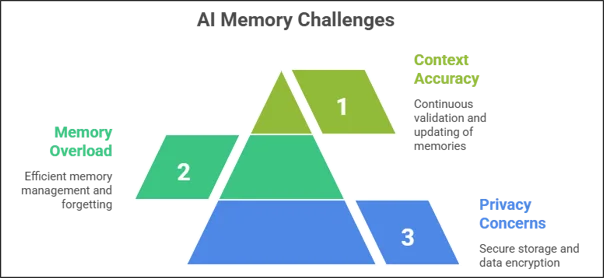
Memory is one of the most important capabilities that separates advanced AI agents from ordinary language models.
Without memory, an AI system behaves like someone with short-term amnesia. Every interaction becomes isolated.
Memory enables AI agents to retain information and draw on past experiences to make better decisions.
Why Memory Matters?
Imagine speaking with a customer support assistant who forgets your issue every few minutes.
That would be frustrating.
Similarly, an AI agent without memory cannot:
- Track previous conversations
- Maintain long-term context
- Understand user preferences
- Learn from past actions
- Build continuity across tasks
Memory enables agents to behave more intelligently and naturally.
Types of Memory in AI Agents
AI agents typically use multiple forms of memory.
- Short-Term Memory
Short-term memory stores information related to the current interaction or task.
For example:
- Current conversation history
- Temporary instructions
- Ongoing workflow context
This helps the agent maintain continuity during a session.
Example:
If you ask:
“Summarize this document and email it to my manager.”
The AI agent remembers:
- Which document you upload
- Who the manager is
- The summary generated earlier
Without short-term memory, the task flow would break.
- Long-Term Memory
Long-term memory stores information across sessions and interactions.
This may include:
- User preferences
- Historical conversations
- Previous decisions
- Business workflows
- Behavioral patterns
For example:
A personal AI assistant may remember:
- Your preferred meeting timings
- Frequently contacted clients
- Writing style preferences
- Favorite travel routes
This creates highly personalized experiences.
- Episodic Memory
Episodic memory refers to the ability to remember past events and experiences.
Humans use episodic memory constantly.
AI agents can use it too.
For example:
A project management AI agent may remember:
- Why a previous project failed
- Which strategy worked better
- Which tasks caused delays
This helps improve future planning and decision-making.
- Semantic Memory
Semantic memory stores general knowledge and facts.
Examples include:
- Company policies
- Product documentation
- Technical knowledge
- Industry regulations
This allows agents to answer questions and make informed decisions.
Planning in AI Agents
Planning is another core capability that enables AI agents to be intelligent.
Traditional automation systems follow predefined workflows.
AI agents can dynamically create workflows on their own.
Planning allows agents to:
- Break large goals into smaller tasks
- Prioritize actions
- Evaluate options
- Adjust strategies
- Handle unexpected situations
This makes AI agents significantly more flexible.
How Planning Works?
When given a goal, an AI agent first analyzes the objective.
Then it creates a step-by-step execution strategy.
For example:
Goal:
“Prepare a monthly sales performance presentation.”
The AI agent may:
- Retrieve sales data
- Analyze monthly trends
- Generate visual charts
- Summarize insights
- Create presentation slides
- Email the report to stakeholders
This is not hardcoded automation.
The agent plans the process dynamically.
Types of Planning in AI Agents
- Task Planning
Breaking a large task into smaller subtasks.
Example:
“Launch a marketing campaign.”
Subtasks may include:
- Audience research
- Content creation
- Budget allocation
- Ad scheduling
- Performance monitoring
- Sequential Planning
Executing tasks in a specific order.
For example:
A software deployment agent must:
- Run tests
- Validate security
- Build containers
- Deploy applications
- Monitor logs
Each step depends on the previous one.
- Adaptive Planning
AI agents can modify plans based on real-time changes made.
Example:
If a flight becomes unavailable, a travel AI agent may automatically search for alternatives without user intervention.
This adaptability is one of the biggest advantages of AI agents.
- Multi-Agent Planning
In advanced systems, multiple AI agents collaborate together.
For example:
- One agent handles research
- Another generates reports
- Another performs analysis
Together, they complete complex workflows more efficiently.
Tool Calling in AI Agents
Memory and planning alone are not enough.
AI agents also need the ability to interact with the external world.
This is where tool calling becomes critical.
Tool calling allows AI agents to use external systems, APIs, databases, applications, and software tools to perform tasks.
It is one of the most powerful features of modern Agentic AI.
What Is Tool Calling?
Tool calling refers to an AI agent’s ability to invoke external functions or systems whenever needed.
Instead of relying only on internal knowledge, the agent can:
- Search the web
- Access databases
- Send emails
- Execute code
- Query APIs
- Generate reports
- Use calculators
- Control applications
This dramatically expands the capabilities of AI systems.
How Tool Calling Works
The process usually involves:
- Understanding the task
- Selecting the appropriate tool
- Passing parameters
- Executing the action
- Returning results
- Continuing the workflow
For example:
If a user asks:
“What is the weather in Mumbai today?”
The AI agent may:
- Call a weather API
- Retrieve live data
- Summarize the forecast
- Provide recommendations
Without tool calling, the AI would rely only on outdated training data.
The Connection Between Memory, Planning, and Tool Calling
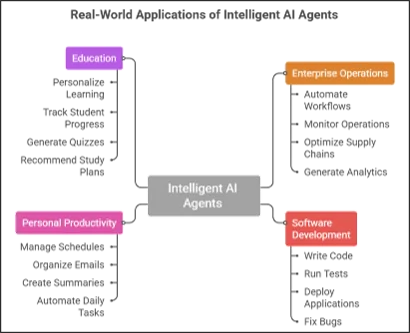
These three capabilities work together.
- Memory provides context.
- Planning creates execution strategies.
- Tool calling enables action.
Together, they create intelligent autonomous systems.
For example:
A project management AI agent may:
- Remember project deadlines
- Plan weekly priorities
- Use tools like Jira, Slack, and Google Calendar
- Send reminders
- Track progress
- Generate reports
This creates a fully operational AI workflow assistant.
Challenges in Building AI Agents
Despite their capabilities, AI agents still face limitations.
Hallucinations
AI agents may generate incorrect outputs or poor plans.
Tool Misuse
Improper tool usage can lead to operational risks.
Strong validation is necessary.
Scalability
Managing memory, planning, and tool orchestration at scale requires significant infrastructure.
Security and Compliance
AI agents interacting with sensitive systems require strict governance.
Conclusion
Memory, planning, and tool calling are the three foundational pillars of modern AI agents.
Without memory, agents cannot maintain context.
Without planning, they cannot solve complex tasks.
Without tool calling, they cannot interact with the real world.
Together, these capabilities are transforming AI systems from simple conversational models into intelligent autonomous agents capable of reasoning, learning, and executing tasks independently.
Drop a query if you have any questions regarding the AI Agent, and we will get back to you quickly.
Empowering organizations to become ‘data driven’ enterprises with our Cloud experts.
- Reduced infrastructure costs
- Timely data-driven decisions
About CloudThat
FAQs
1. Why is memory important in AI agents?
ANS: – Memory helps AI agents maintain context, remember past interactions, and provide personalized responses. Without memory, every interaction would feel disconnected and repetitive.
2. What is the difference between short-term and long-term memory in AI agents?
ANS: – Short-term memory stores temporary context during a session, while long-term memory retains information across multiple interactions, such as user preferences, historical tasks, or behavioral patterns.
3. Can AI agents decide their own workflow?
ANS: – Yes. Advanced AI agents use planning capabilities to break goals into smaller tasks, prioritize actions, and dynamically create workflows based on the situation instead of following fixed rules.


WRITTEN BY Modi Shubham Rajeshbhai
Shubham Modi is working as a Research Associate - Data and AI/ML in CloudThat. He is a focused and very enthusiastic person, keen to learn new things in Data Science on the Cloud. He has worked on AWS, Azure, Machine Learning, and many more technologies.


 PREV
PREV






Comments