

 Login
Login

 September 25, 2026
|
Voiced by Amazon Polly |
How can procurement teams prepare better for supplier negotiations? Dynamics 365 Supply Chain Management can provide procurement data such as vendor, purchase order, purchasing agreement, and transaction information, while Generative AI can help turn that information into a concise negotiation brief. The proposed approach combines operational data with AI-generated analysis while retaining the procurement professional’s responsibility for validating the final insights.
Supplier negotiations often require procurement managers to understand more than the latest quoted price. They may need to review historical purchases, delivery performance, contractual commitments, and pricing patterns before deciding what to discuss with a supplier.
The challenge is not necessarily a lack of data. It is the time required to bring relevant information together and interpret it before a negotiation.
This is where Generative AI in Supply Chain Management can become useful.
Start Learning In-Demand Tech Skills with Expert-Led Training
- Industry-Authorized Curriculum
- Expert-led Training
What makes supplier negotiation preparation difficult?
Supplier negotiation preparation becomes difficult when relevant information is spread across different procurement records, reports, contracts, and communications. Procurement managers need to connect these pieces of information before they can identify useful negotiation points.
For example, a supplier’s current price may only tell part of the story. A procurement manager may also want to know whether the organization has increased its purchase volume, whether delivery performance has changed, or whether the current purchasing agreement provides a basis for negotiating different terms.
Microsoft’s source-to-pay guidance describes supplier relationship management, sourcing and contracting, procurement, vendor performance, and contract negotiation as connected procurement activities within the broader process.
This makes procurement data a useful foundation for an AI-assisted negotiation preparation process.
How can Dynamics 365 Supply Chain Management provide the data?
Dynamics 365 Supply Chain Management can provide the operational procurement information needed to understand a supplier relationship, including vendor information, purchase orders, purchasing agreements, receipts, and related procurement records. This information can form the foundation for an AI-generated negotiation brief.
A procurement manager may want to examine four main areas:
- Purchase history
Historical purchase records can help establish how much the organization has purchased from a supplier, what products were purchased, and how prices have changed over time.
- Delivery performance
Purchase order and receipt information can help procurement teams assess whether deliveries were received as expected and identify orders that require further investigation. Microsoft documents Copilot purchase-order summaries that can surface overdue or nearly overdue lines.
- Contract performance
Purchase agreements can contain commitments around quantities, prices, discounts, and validity periods. Microsoft documentation notes that purchase agreements can commit an organization to buy a specified quantity or amount over time in exchange for special prices or discounts.
- Price trends
Historical purchase prices can help procurement managers understand whether a supplier’s pricing has changed over successive purchasing cycles. Where an organization has approved market or benchmark data, that information can provide additional context for the discussion.
Together, these four areas provide the context required to prepare for a supplier negotiation.
How can Generative AI turn procurement data into a negotiation brief?
Generative AI can summarize relevant procurement information, identify patterns, and organize those findings into a business-oriented negotiation brief. The important distinction is that this article describes a proposed AI-assisted workflow rather than a claim that Dynamics 365 Supply Chain Management provides a native feature called an “AI-generated supplier negotiation brief.”
The workflow could combine:
- Purchase history
Historical quantities, unit prices, purchasing frequency, and supplier spend.
- Delivery performance
Delivery dates, overdue purchase-order lines, and recurring delivery issues.
- Contract information
Purchase-agreement commitments, pricing terms, validity periods, and applicable discounts.
- Price trends
Historical price movements and, where available, approved external or internal benchmarks.
Generative AI can then organize these inputs into sections such as:
- Supplier performance
- Pricing trends
- Contract status
- Potential risks
- Negotiation opportunities
- Suggested discussion points
The purpose is not to generate a decision automatically. The purpose is to reduce the amount of manual information gathering required before the procurement manager begins the negotiation.
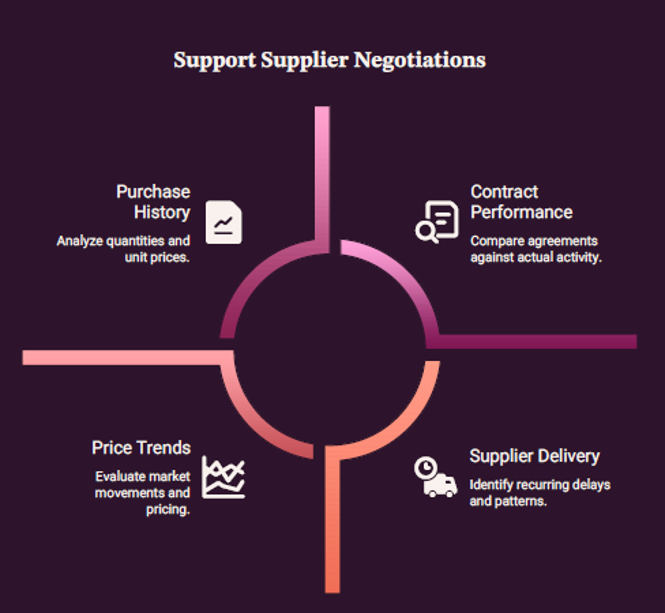
Fig. 1: Generative AI transforms procurement data into actionable insights for supplier negotiations.
What could an AI-generated supplier negotiation brief contain?
A useful negotiation brief should summarize the supplier relationship, highlight key changes, identify potential negotiation points, and provide the procurement manager with sufficient context to validate the findings. The output should be concise enough to review before a supplier meeting but detailed enough to show where each insight came from.
A possible brief could look like this:
- Supplier performance
Summarize purchasing volume, delivery performance, open purchase orders, and other relevant supplier indicators.
- Pricing analysis
Show significant changes in historical purchasing prices and identify periods where pricing changed materially.
- Contract position
Summarize the relevant purchasing agreement, including commitments, pricing terms, and validity period.
- Risks
Highlight recurring delivery delays, unusual price changes, or other issues that may affect the negotiation.
- Negotiation opportunities
Identify potential discussion areas such as volume-based pricing, delivery commitments, payment terms, or longer-term pricing arrangements.
- Suggested discussion points
Convert the identified patterns into natural-language questions or discussion points that the procurement manager can review before the meeting.
Can Copilot already perform these procurement tasks?
Yes. Dynamics 365 Supply Chain Management already includes AI-assisted Copilot capabilities, so Generative AI should not be presented as a replacement for Copilot. Microsoft’s current documentation describes Copilot-generated vendor and purchase-order summaries, while newer Procurement Agent capabilities address supplier communications and purchase-order follow-up.
For example, Microsoft’s vendor summary can surface information including active contracts, rebates, open purchase orders, vendor invoices, payment status, delivery trends, and risks. Purchase-order summaries can provide status information and highlight overdue or nearly overdue lines.
Microsoft’s Procurement Agent also supports supplier communication scenarios, including following up on purchase orders and handling vendor change requests.
Therefore, the value of a custom AI-powered procurement workflow is not simply “using Generative AI because Copilot cannot do it.”
Instead, organizations may use a custom Generative AI layer when they want to combine multiple enterprise sources and apply a negotiation-specific format, business rules, or workflow.
When can custom Generative AI complement Copilot?
Custom Generative AI can complement Copilot when an organization needs a specialized workflow that combines Dynamics 365 data with other approved enterprise sources to produce business-specific output. This could include contract repositories, enterprise data platforms, approved market information, or organization-specific procurement rules.
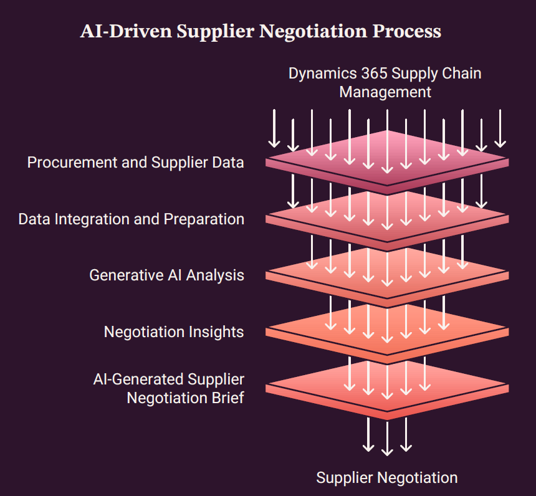
Fig 2: Custom Generative AI enhances Copilot with enterprise-specific procurement insights and negotiation support.
This approach extends the procurement process rather than replacing existing Dynamics 365 capabilities.
How does human review fit into an AI-generated negotiation brief?
Human review should remain a mandatory step before an AI-generated negotiation brief is used for a commercial decision. Generative AI can identify patterns and summarize information, but it may not understand the business rationale behind a price change or a supplier performance issue.
For example, an increase in price could result from changes in material specifications, transportation costs, product quality, or market conditions. The AI may identify the change correctly, but still lack the business context required to interpret it.
Microsoft’s Responsible AI guidance for Copilot summaries explicitly states that generated content should not be used without manual review or supervision and recommends reviewing generated summaries before making decisions.
What benefits can AI-assisted negotiation preparation provide?
AI-assisted negotiation preparation can reduce manual information gathering and give procurement managers a more consistent view of supplier performance, pricing, and contractual context. The value comes from organizing existing information into a format that supports a specific business decision.
Potential benefits include:
- Faster preparation
Instead of manually gathering information from multiple procurement reports, the manager can begin with a consolidated summary.
- Better supplier visibility
Purchase history, delivery information, pricing, and contract information can be reviewed together.
- Evidence-based discussions
Negotiation points can be connected to actual procurement records rather than assumptions.
- Consistent preparation
Organizations can establish a repeatable format for preparing supplier meetings.
- Earlier risk identification
Recurring supplier issues can be highlighted before the negotiation takes place.
These benefits depend on the quality, accessibility, and governance of the underlying data. Generative AI does not compensate for incomplete or inaccurate source information.
What should organizations consider before implementing this approach?
Organizations should first define the negotiation use case, identify trusted data sources, establish access controls, and decide how AI-generated recommendations will be reviewed. A successful workflow depends as much on data quality and governance as it does on the language model.
Four areas deserve particular attention:
- Data quality: The AI should work with current and reliable procurement records.
- Data access: Users should only receive information they are authorized to access.
- Source traceability: Important insights should be traceable to the underlying procurement records.
- Human validation: Procurement professionals should approve important commercial decisions.
Microsoft’s Copilot documentation similarly emphasizes the importance of data permissions and manual review when using AI-generated summaries.
For professionals looking to strengthen their knowledge of the underlying platform, Microsoft Dynamics 365 Supply Chain Management training can provide structured learning across Dynamics 365 capabilities and supply chain processes.
Smarter Supplier Negotiations
Generative AI can help procurement teams turn Dynamics 365 Supply Chain Management data into concise supplier negotiation insights. By combining procurement data, AI capabilities, and human review, organizations can prepare for supplier discussions more effectively without replacing procurement expertise.
Upskill Your Teams with Enterprise-Ready Tech Training Programs
- Team-wide Customizable Programs
- Measurable Business Outcomes
About CloudThat
FAQs
1. What is an AI-generated supplier negotiation brief?
ANS: – It is a concise summary of supplier data, such as purchasing history, delivery performance, contracts, and pricing trends, that helps procurement teams prepare for negotiations.
2. Can Dynamics 365 Supply Chain Management provide supplier insights?
ANS: – Yes. Copilot provides vendor and purchase order summaries that include contracts, purchase orders, invoices, delivery trends, and risks.
3. Does Generative AI replace Microsoft Copilot?
ANS: – No. A custom Generative AI workflow can complement Copilot by combining approved enterprise data and generating organization-specific negotiation insights.
4. What data can be used for a supplier negotiation brief?
ANS: – Approved data, such as purchase history, delivery performance, purchase agreements, pricing history, and supplier information, can be used.
5. Should AI-generated negotiation recommendations be reviewed?
ANS: – Yes. Procurement professionals should review AI-generated information before using it for commercial decisions. Microsoft recommends manual review of AI-generated summaries.


WRITTEN BY Charanya B
Charanya is a Microsoft Certified Trainer specializing in Microsoft Dynamics 365, Power Platform, CRM, and ERP solutions. With experience in delivering technical training to professionals across leading organizations, including MNCs such as Cognizant and Infosys, she brings a strong blend of technical expertise and practical industry experience to her sessions. She holds multiple Microsoft certifications, including PL-200, MB-230, MB-280, AB-900, MB-330, and MB-310. Known for simplifying complex concepts, using practical business scenarios, and encouraging hands-on learning, Charanya focuses on making every learning experience engaging, relevant, and easy to apply in real-world environments.


 PREV
PREV



Comments