

 Login
Login


 August 21, 2026
|
Voiced by Amazon Polly |
Introduction
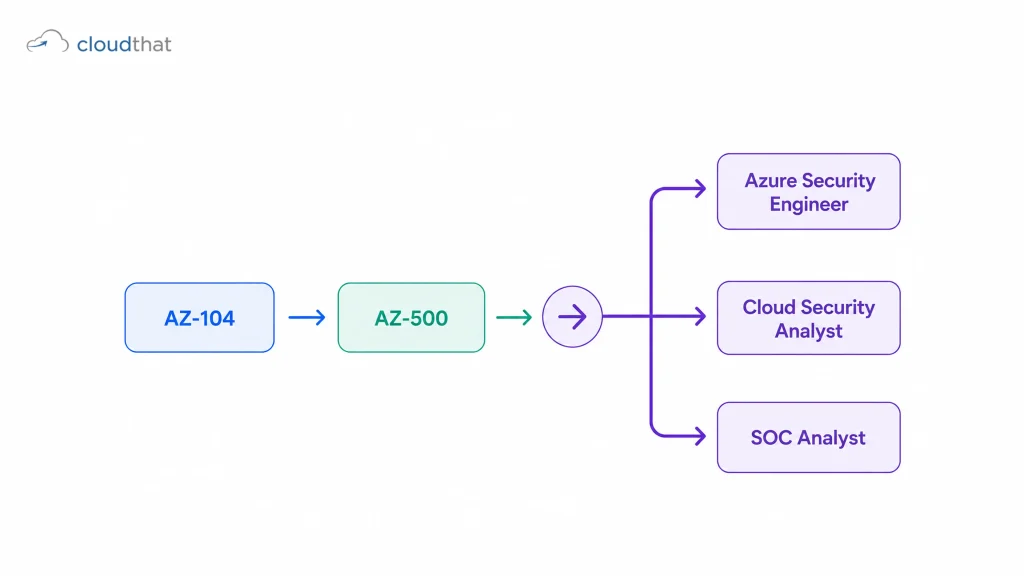
The AZ-500 certification, officially Microsoft Azure Security Technologies, validates your ability to secure identities, network access, platform protection, and data on Azure. It is Microsoft’s core azure security certification for engineers who already work with Azure and want to move into a dedicated security role. The exam covers four domains: identity and access, platform protection, security operations, and data and application security. Most candidates come in with AZ-104 Microsoft Azure Administrator Associate level knowledge and use the AZ-500 certification to pivot into roles like Azure Security Engineer, Cloud Security Analyst, or SOC Analyst. Hands-on labs matter more than theory here. If you can configure a conditional access policy under exam pressure but freeze in a real tenant, the AZ-500 certification will expose that gap fast, which is exactly why serious Microsoft Security training leans on live tenants instead of slides.
Access to Unlimited* Azure Trainings at the cost of 2 with Azure Mastery Pass
- Microsoft Certified Instructor
- Hands-on Labs
- EMI starting @ INR 4999*
Someone Is Going to Get Paged at 2 AM
A misconfigured storage account. A role assignment nobody remembers making. A conditional access policy that got “temporarily” disabled for testing and was never turned back on.
That is the world the AZ-500 certification actually prepares you for.
Not slides. Not a glossary of Azure security terms. A tenant that behaves exactly like the one your company runs, where one wrong permission can expose customer data and one right policy can quietly stop an attacker before anyone notices. Pair this exam with a broader Azure training path, and that tenant stops feeling unfamiliar altogether.
This blog breaks down what the AZ-500 certification really tests, what the labs look like once you are inside them, and which job roles actually open up once the badge lands on your profile.
Table of Contents
- Who Should Go For the AZ-500 Certification
- What the Exam Actually Tests
- Inside the Lab: What You Build During Training
- Job Roles You Can Target After Certification
- AZ-500 vs Other Azure Certification Paths
- Why Train for AZ-500 With CloudThat
- FAQs
- Key Takeaways
Who Should Go For the AZ-500 Certification
You should go for the AZ-500 certification if you already work inside Azure and security has quietly become your problem too.
Most candidates are not starting from zero. They are Azure administrators who got pulled into an access review. Network engineers who now own the firewall rules nobody wants to touch. Developers who keep getting Slack pings about “can you check if this API is exposed.”
If that sounds familiar, this is not a stretch. It is the natural next step. Microsoft expects candidates to already hold associate-level Azure knowledge, similar to what the AZ-104 Microsoft Azure Administrator Associate covers, before attempting this exam.
Career switchers with zero Azure background usually struggle here. Not because the concepts are impossible, but because the AZ-500 certification assumes you already know how a subscription, a resource group, and a virtual network fit together. Get that foundation first, then come back for it.
What the Exam Actually Tests
Short answer: four domains, and none of them are theoretical.
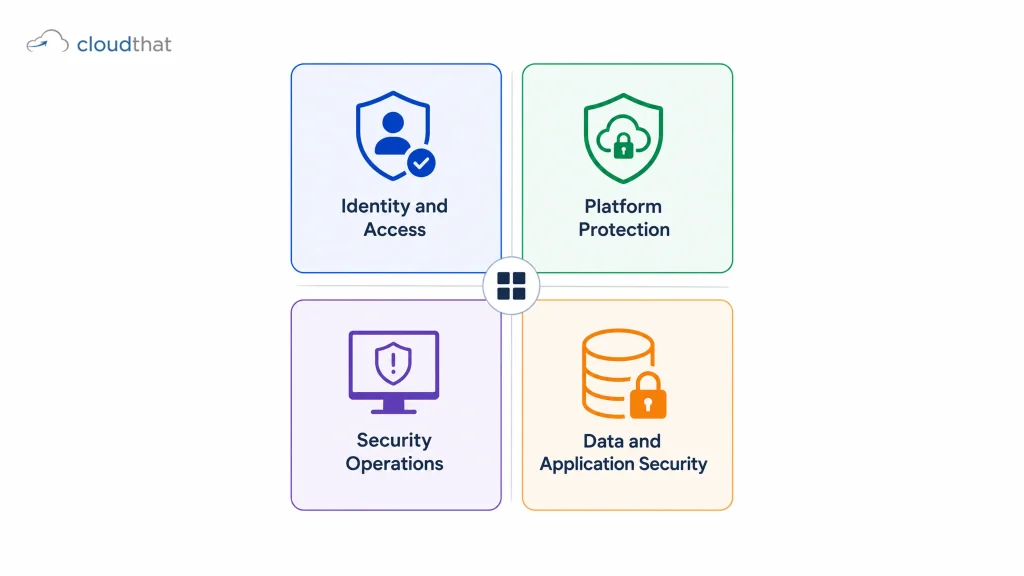
Microsoft groups the AZ-500 exam into identity and access management, platform protection, security operations, and data and application security. Each domain maps to something you would actually be asked to fix in a real tenant, not a definition you memorise once and forget.
Identity and access covers Azure AD (now Microsoft Entra ID), conditional access, privileged identity management, and role-based access control. This is where most breaches start, so Microsoft weights it heavily.
Platform protection is about securing the infrastructure itself. Network security groups, Azure Firewall, DDoS protection, and Azure Bastion all live here.
Security operations tests whether you can actually run Microsoft Defender for Cloud and Microsoft Sentinel, not just recognise their names on a slide.
Data and application security closes the loop with key vaults, storage encryption, and securing app services against common attack paths.
The exam blueprint changes periodically, so always cross-check the current domain weighting on the official Microsoft Learn AZ-500 exam page before you lock your study plan.
Inside the Lab: What You Build During Training
This is the part most people underestimate.
Reading about conditional access is one thing. Building a policy that blocks a risky sign-in from an unfamiliar country, without locking out your own admin account by mistake, is a completely different skill. That mistake alone has taken down real production environments.
A serious AZ-500 certification training program puts you inside a live Azure tenant, not a screenshot walkthrough. Expect labs where you configure Microsoft Entra ID conditional access policies, set up Privileged Identity Management for just-in-time admin access, and lock down a virtual network with NSGs and Azure Firewall rules.
You will also spend real time inside Microsoft Defender for Cloud, triaging alerts the way a security analyst actually would, and building detection rules in Microsoft Sentinel. Key Vault access policies, storage account encryption, and securing an App Service from common exposure points round out the practical side.
This hands-on depth is exactly why CloudThat structures its training around 50 to 60 percent lab time. Theory gets you through multiple-choice questions. Labs get you through your first month on the job.
Job Roles You Can Target After Certification
Here is where the AZ-500 certification actually pays off.
| Job Role | What You Would Own | Typical Background |
| Azure Security Engineer | Identity, network, and data protection across a tenant | AZ-104 plus AZ-500 certification |
| Cloud Security Analyst | Monitoring alerts, triaging incidents in Defender and Sentinel | SOC or infrastructure background |
| Security Operations (SOC) Analyst | Detection, response, and Sentinel rule tuning | Security fundamentals plus this exam |
| Identity and Access Management Specialist | Conditional access, PIM, RBAC governance | Azure AD or Entra ID experience |
| Cloud Security Consultant | Client-facing security assessments and remediation plans | AZ-500 certification plus consulting exposure |
Recruiters treat the AZ-500 certification as proof you can be trusted with production access from day one, not proof you passed a test. That distinction is exactly why L&D teams push cohorts through this azure security certification path before deploying them on client environments, a pattern documented in Gartner’s cloud security research.
AZ-500 vs Other Azure Certification Paths
People often ask whether they need AZ-104 or AZ-305 before the AZ-500 certification, or whether this azure security certification stands alone.
| Certification | Focus | Best For |
| AZ-104 | General Azure administration | Foundation before specialising |
| AZ-305 | Solutions architecture across compute, network, storage | Architects designing full environments |
| AZ-500 | Deep security across identity, network, data, operations | Anyone owning security specifically |
AZ-500 is not a replacement for AZ-104 or AZ-305. It sits on top of that foundation. If your role is purely security, the AZ-500 certification is the one credential Microsoft built specifically for you.
Why Train for AZ-500 With CloudThat
CloudThat’s AZ-500 Microsoft Azure Security Technologies program runs inside live Azure tenants, not recorded screen-shares. As an AWS Premier Tier Training Partner and Microsoft Partner for Azure Security, CloudThat’s trainers are practising cloud security engineers, not narrators reading exam objectives off a deck.
The program covers Microsoft Entra ID conditional access, Microsoft Defender for Cloud, Microsoft Sentinel, and Key Vault configuration through guided labs, with 50 to 60 percent of class time spent hands-on inside a real tenant. If you are coming from administration, the AZ-104 Microsoft Azure Administrator Associate course builds the exact foundation this azure security certification assumes you already have. Architects evaluating a broader path can look at AZ-305 Designing Microsoft Azure Infrastructure Solutions alongside it.
For teams instead of individuals, CloudThat’s corporate training arm runs AZ-500 certification cohorts through its Capability Development Framework, taking security hires from onboarding to billable inside a defined timeline instead of leaving them to figure production access out on the job. Anyone whose security needs go beyond training, like an actual Azure environment audit, can loop in CloudThat’s cloud consulting team directly. Confirm a batch on the training calendar before your next review cycle.
Conclusion
The AZ-500 certification is not a badge you collect and forget. It is proof that you can be handed the keys to a production Azure tenant and not break anything on your first Monday. Get the identity fundamentals right, spend real hours inside Defender and Sentinel, and the job roles will follow.
Key Takeaways
- The AZ-500 certification tests identity, platform, operations, and data security as one connected skill set, not four separate topics.
- Most successful candidates already hold AZ-104-level Azure administration knowledge before attempting this exam.
- Conditional access and Privileged Identity Management labs form the core of any serious azure security certification prep.
- Microsoft Defender for Cloud and Microsoft Sentinel are tested as working tools, not vocabulary.
- Hands-on lab time matters more than memorising exam objectives for AZ-500.
- Azure Security Engineer and Cloud Security Analyst are the most common roles hiring for this credential.
- AZ-500 sits on top of AZ-104 and complements AZ-305, it does not replace either.
- Recruiters treat this certification as proof of production readiness, not just exam knowledge.
- Corporate cohorts benefit from structured frameworks that convert training into billable skill, not just certificates.
Accelerate Your Azure Career Without Quitting Your Job
- Authorized Training
- Live Hands-on Labs
- Flexible Batches
About CloudThat
FAQs
1. Is this exam hard to clear?
ANS: – It is harder than most associate-level Azure exams because it assumes working knowledge across identity, networking, and data security together. Candidates without hands-on lab practice tend to struggle with scenario-based questions.
2. Do I need AZ-104 before attempting the AZ-500 exam?
ANS: – Microsoft does not enforce it as a prerequisite, but most candidates who pass comfortably already hold AZ-104-level Azure administration knowledge.
3. How long does the training usually take?
ANS: – Most structured programs run four to six weeks with live sessions plus lab time, though self-paced learners often take longer without guided practice.
4. What is the difference between AZ-500 and a general azure security certification path?
ANS: – AZ-500 is Microsoft’s specific, official azure security certification. Broader “security certification paths” often bundle AZ-500 with SC-series exams, but AZ-500 alone is the core technical credential employers look for.
5. Which job roles hire specifically for AZ-500 holders?
ANS: – Azure Security Engineer, Cloud Security Analyst, SOC Analyst, and Identity and Access Management Specialist roles most commonly list this credential as preferred or required.
6. Is this exam worth it if I already have AWS security experience?
ANS: – Yes, if your organisation runs on Azure or is migrating to it. AWS security concepts transfer conceptually, but Entra ID, NSGs, and Sentinel are Azure-specific tools this exam tests directly.

WRITTEN BY Himisha Raval
Himisha Raval is a Digital Marketing Manager at CloudThat with a strong command of search engine optimization, web analytics, link building, and content strategy. She brings a data-driven approach to digital marketing, helping IT companies strengthen their online presence, improve search rankings, and generate consistent leads across channels. Beyond execution, she plays an active role in ideation, campaign strategy, and website performance optimization. Outside of work, she balances her analytical side with a love for travel, nature painting, and dancing.


 PREV
PREV











Comments