

 Login
Login


 September 25, 2026
|
Voiced by Amazon Polly |
If you’re a DevOps engineer weighing an AI certification, skip the generic AI-literacy badge and go straight to the operations-focused exam on the cloud you already run: AWS Certified Machine Learning Engineer – Associate, Microsoft’s Machine Learning Operations Engineer Associate (AI-300), or Google Cloud’s Professional Machine Learning Engineer. This guide compares all three against the CI/CD, infrastructure-as-code, and monitoring skills you already have, so you know which one to book first and what gap you’ll need to close before exam day.
Start Learning In-Demand Tech Skills with Expert-Led Training
- Industry-Authorized Curriculum
- Expert-led Training
Why Should a DevOps Engineer Add an AI Certification?
An AI certification proves to employers that you can operationalize ML models with the pipeline, monitoring, and infrastructure-as-code skills you already use, and operations-tier AI roles pay noticeably more. MLOps and GenAIOps depend on those same skills, so the certification formalizes an overlap that already exists. Demand supports this: the World Economic Forum’s Future of Jobs Report 2023, cited on AWS’s own certification page, projects 40% growth in demand for AI and machine learning specialists. The goal isn’t to turn you into a data scientist. It’s to show you can run models the same way you already run applications.
The pay data reflects that operations angle. According to 2026 market figures published by FlashGenius, AWS Certified AI Practitioner holders in entry-level AI roles average $88,000–$117,000, while certified AWS Machine Learning Engineers average $120,000–$160,000, with senior roles going past $200,000. That gap separates a foundational, business-facing badge from an operations-tier credential, and the operations tier is where a DevOps background gives you a head start.
Takeaway: If you already write pipelines and manage infrastructure, don’t start with a generic AI literacy exam. Go straight to the operations-tier certification on your primary cloud.
Which AWS Certification Fits a DevOps Background?
The AWS Certified Machine Learning Engineer – Associate (MLA-C01) is the AWS certification that best fits a DevOps background. It’s a $150 exam covering the parts of the ML lifecycle a DevOps engineer already knows: data preparation, model deployment, monitoring, and CI/CD for ML workloads. Skip the AWS Certified AI Practitioner (AIF-C01) unless you need it for a non-technical, stakeholder-facing role. That exam is $100, lasts 90 minutes, has 65 questions, has no prerequisites, and is built for people who work alongside AI systems rather than build and run them.
Two timing details matter right now. AWS retired the older AWS Certified Machine Learning – Specialty exam on March 31, 2026, so it can no longer be earned. AWS opened beta registration for an updated MLA-C02 version of the Associate exam on September 1, 2026. MLA-C02 extends the MLA-C01 scope to cover generative AI implementation using Amazon Bedrock, agentic AI workflows, and the operationalization of foundation models. The English-language MLA-C01 will no longer be offered after September 28, 2026.
Picture a DevOps engineer who already manages CodePipeline deployments and a fleet of SageMaker endpoints. MLA-C01 maps almost directly onto that job: it validates that you can build the deployment and monitoring pipeline around a model, not that you can design the model itself.
Takeaway: If your team runs workloads on SageMaker or Bedrock today, sit MLA-C01 before the cutoff, or plan for the broader MLA-C02 once it leaves beta.
Which Azure Certification Fits a DevOps Background?
AI-300, the Machine Learning Operations Engineer Associate, is the Azure certification that fits a DevOps background, but only once you’ve added Python and core ML fundamentals. Read the fine print before you register. Microsoft’s certification page lists candidate expectations as a data science background with Python experience, plus an entry-level understanding of DevOps practices such as GitHub Actions and command-line tools. In other words, AI-300 assumes you’re coming from the data-science side and picking up ops skills. A pure infrastructure-focused DevOps engineer needs more than CI/CD experience to be ready.
Compare that with AZ-400, the Azure DevOps Engineer Expert exam. It remains general-purpose (source control, CI/CD pipelines, infrastructure as code, release management, and monitoring) and requires passing the AZ-104 (Azure Administrator Associate) or AZ-204 (Azure Developer Associate) exam first. AZ-400 won’t teach you AI operations, but it covers the DevOps half of the AI-300 candidate profile, making it a sensible earlier step if you haven’t taken it yet.
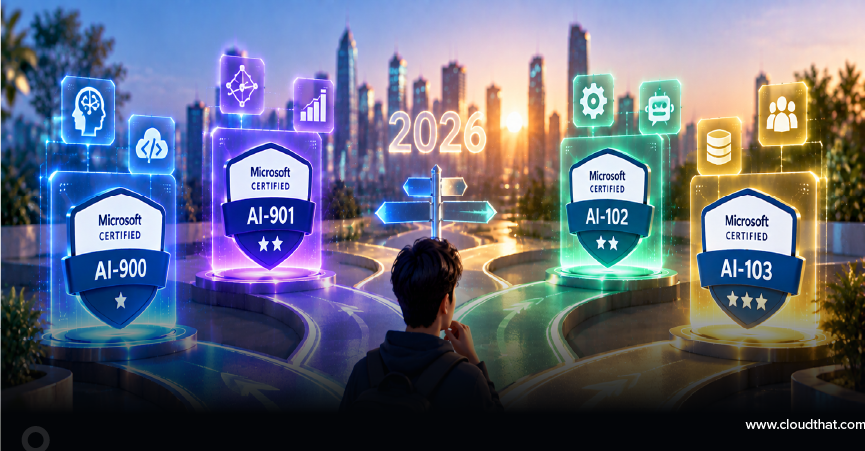
One more change to plan around: Microsoft retired the older AI-102 Azure AI Engineer Associate exam on June 30, 2026. Its replacement, AI-103 (Azure AI Apps and Agents Developer Associate), is designed for developers who build and deploy AI agents using Microsoft Foundry. That’s a builder role, not an operations role, so it’s a weaker fit for a DevOps engineer than AI-300.
Takeaway: Hold off on AZ-400 or plan for it first if you’re purely infrastructure; then add Python and ML fundamentals before attempting AI-300. Don’t assume DevOps experience alone clears the bar.
Is Google Cloud’s ML Engineer Certification Worth It for DevOps Engineers?
Yes, but only if you already have about a year of hands-on experience with Google Cloud ML in production. The Professional Machine Learning Engineer (PMLE) exam is the most demanding of the three: $200, two hours, and 50–60 multiple-choice and multiple-select questions. Google recommends roughly a year of hands-on experience with Google Cloud before attempting it. It suits a DevOps engineer already running Vertex AI pipelines, GKE workloads, or BigQuery ML in production, not someone new to the platform.
The 2026 exam blueprint has expanded to include Vertex AI Agent Builder, Model Garden, and generative AI evaluation alongside the existing MLOps and pipeline-orchestration domains. One useful detail for engineers without a heavy coding background: per Google’s exam guide, PMLE does not directly assess coding skills, even though production-level proficiency is assumed for the job afterward.
Takeaway: Treat PMLE as a second-year goal on Google Cloud, not a first certification. Build a year of production experience with Vertex AI or BigQuery ML first.
How Do You Choose Between AWS, Azure, and Google Cloud?
Choose the cloud certification your team already runs in production. Depth on your primary platform matters more to hiring managers than a second, shallower badge or whichever platform has the loudest salary headlines. If your organization is genuinely multi-cloud, earn the operations-tier certification for the platform carrying the most ML workloads today, then add a foundational badge on a second cloud later for breadth.
- AWS: MLA-C01 (~$150). Best fit if SageMaker or Bedrock is already in your deployment pipeline.
- Azure: AI-300, Machine Learning Operations Engineer Associate. Best fit if you already run Azure Machine Learning or Microsoft Foundry pipelines and can add Python and ML fundamentals. Hold AZ-400 first if you need the DevOps half validated.
- Google Cloud: Professional Machine Learning Engineer (~$200). Best fit with a year or more of hands-on Vertex AI or BigQuery ML production experience.
Takeaway: Pick one exam tied to your primary production cloud and commit. A sequential study on a single path beats splitting attention across three certifications at once.
What Should You Do Next?
Book the operations-tier exam for your primary production cloud, and start with a prep course that maps to your existing CI/CD workflows rather than a generic ML fundamentals course. If SageMaker or Bedrock is already part of your deployment pipeline, that means registering for MLA-C01 before the September 28, 2026, English-language cutoff, or planning for MLA-C02 once it leaves beta.
Upskill Your Teams with Enterprise-Ready Tech Training Programs
- Team-wide Customizable Programs
- Measurable Business Outcomes
About CloudThat
FAQs
1. Can a DevOps engineer become an AI engineer without a data science background?
ANS: – Partially, and it depends on the cloud. AWS’s Machine Learning Engineer – Associate exam leans on pipeline and deployment skills that a DevOps engineer already has. Microsoft’s AI-300 explicitly lists a data science background and Python experience as expected knowledge, so a pure infrastructure-focused DevOps engineer will need to add those first.
2. Which AI certification doesn't require coding skills?
ANS: – The AWS Certified AI Practitioner (AIF-C01) requires no coding skills, has no prerequisites, and is designed for a non-technical audience. Google Cloud’s Professional Machine Learning Engineer exam also doesn’t directly assess coding, according to Google’s exam guide, though production-level programming experience is assumed for the job that follows.
3. How much do AWS AI certifications cost?
ANS: – The AWS Certified AI Practitioner exam costs $100, and the AWS Certified Machine Learning Engineer – Associate exam costs $150, as of 2026 pricing.
4. Is the AWS Machine Learning Specialty certification still available?
ANS: – No. AWS retired it on March 31, 2026. It has been replaced by the Machine Learning Engineer – Associate certification for MLOps-focused work and the Generative AI Developer – Professional certification for Bedrock and generative AI application development.
5. What replaced Azure's AI-102 exam?
ANS: – AI-103 (Azure AI Apps and Agents Developer Associate) replaced AI-102, which Microsoft retired on June 30, 2026. AI-103 targets developers building AI agents with Microsoft Foundry rather than engineers focused on AI operations, so DevOps-minded candidates should look at AI-300 instead.


WRITTEN BY Madhuri Abhijeet Joshi
Dr. Madhuri Joshi is a Microsoft Certified Trainer (MCT) and a renowned Subject Matter Expert with a Doctorate in Computer Science and Engineering. With over 23 years of experience in training and consulting, she has established herself as a trusted expert in DevOps and Cloud Computing technologies. She has worked extensively on a wide range of industry projects and has played a key role in designing custom training programs and project-based course outlines for enterprise technologies such as SAP and Red Hat OpenShift. As a technical coach for the Government of Maharashtra's Women Empowerment Program, Dr. Joshi has contributed significantly to upskilling and mentoring women in technology. Having trained over 7,000 professionals across the globe, she is highly respected for her clear, simple, and example-driven teaching style, especially when explaining complex technical concepts.


 PREV
PREV









Comments