

 Login
Login


 June 19, 2026
|
Voiced by Amazon Polly |
The AB-6004-A: Introduction to Service in Dynamics 365 course is a beginner-friendly Microsoft training designed to help professionals understand how modern customer service operations can be transformed using intelligent, connected business applications. This course focuses on how organizations can enhance customer experiences, streamline service operations, and improve efficiency by leveraging Dynamics 365 Customer Engagement apps and their seamless integration with Microsoft 365. It is especially valuable for business users, consultants, and leaders who want to adopt digital service solutions without needing deep technical expertise.
At its core, the course introduces service management in Dynamics 365, covering key applications such as Customer Service, Field Service, and Contact Center. These tools enable organizations to handle customer interactions across multiple channels, including chat, email, and phone, while maintaining a unified view of customer data.
One of the biggest advantages highlighted in this course is the ability to improve and automate business processes using AI-driven capabilities. This includes intelligent case management, automated workflows, and predictive insights that help teams respond to customer needs more effectively.
Start Learning In-Demand Tech Skills with Expert-Led Training
- Industry-Authorized Curriculum
- Expert-led Training
Customer Service in D365
A major focus area is customer service automation and case management. Dynamics 365 allows businesses to track, prioritize, and resolve customer issues through structured case workflows. With AI-powered assistance, support teams can quickly analyze incoming requests, categorize them, and suggest solutions. This not only reduces response time but also ensures consistency in service delivery. Additionally, the platform supports self-service capabilities, such as knowledge bases and chatbots, enabling customers to find answers independently, further reducing the workload on support teams.
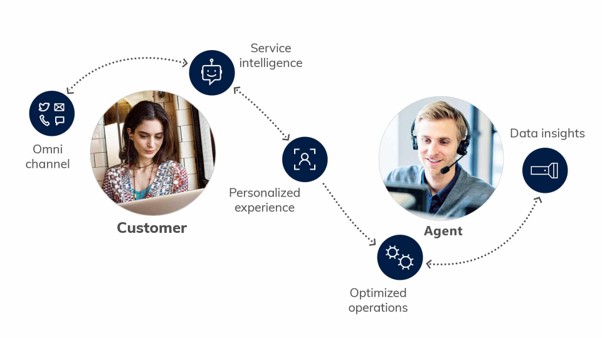
Fig 1: Customer and Agent Workflow in Dynamics 365 Contact Center
Another important component of the course is omnichannel communication through the Dynamics 365 Contact Center. Modern customers expect seamless interactions across multiple platforms, and Dynamics 365 addresses this by integrating all communication channels into a single interface. This allows service agents to switch between conversations without losing context, improving both efficiency and customer satisfaction. AI-first features also enhance these interactions by providing real-time suggestions, sentiment analysis, and automated responses, ensuring that every customer interaction is handled professionally and effectively.
Field Service in D365
The course Dynamics 365 Field Service also explores Field Service capabilities essential for organizations that provide on-site support or maintenance services. Unfortunately, the exam for the Field Service in D365 course will retire on June 30, 2026, so candidates must complete it before that date to earn the certification.
The Dynamics 365 Field Service helps businesses manage work orders, schedule technicians, and optimize routes to deliver service faster. With AI-driven insights, organizations can improve first-time fix rates by ensuring that technicians have the right tools, information, and parts before arriving on-site. This not only enhances operational efficiency but also improves customer experience by reducing delays and repeat visits.
Integration with Microsoft 365 is another key highlight. By connecting service applications with tools like Outlook, Teams, and Excel, organizations can create a more collaborative and productive work environment.
For example, service agents can access customer data directly within their communication tools, collaborate with team members in real time, and generate reports without switching between multiple systems. This interconnected ecosystem ensures that service operations are not isolated but are part of a broader business workflow, enabling better decision-making and coordination.
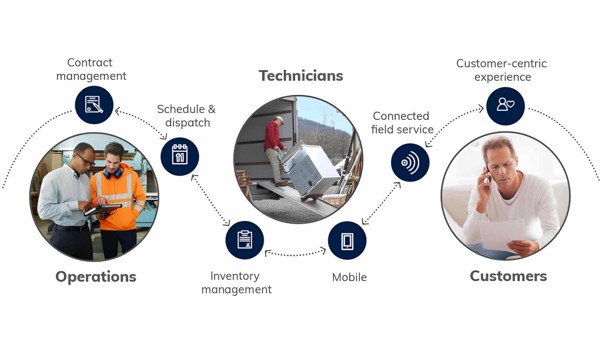
Fig 2: Interaction between Operations and Customers
The course is structured to provide a comprehensive overview of service capabilities in Dynamics 365, including foundational concepts, self-service options, case management, workforce management, and shared features across applications. It typically takes 1 day to complete and requires no prerequisites, making it accessible to beginners.
By the end of the course, learners gain a clear understanding of how to use Dynamics 365 tools to improve service delivery, automate processes, and enhance customer engagement.
Modern Service Transformation
In conclusion, the Introduction to Service in Dynamics 365 course is an excellent starting point for anyone looking to modernize service operations with Dynamics 365. It demonstrates how businesses can leverage AI-driven tools, automation, and integrated platforms to deliver faster, smarter, and more personalized customer experiences. As organizations continue to prioritize customer satisfaction and operational efficiency, the knowledge gained from this course becomes increasingly valuable in today’s digital business landscape.
Upskill Your Teams with Enterprise-Ready Tech Training Programs
- Team-wide Customizable Programs
- Measurable Business Outcomes
About CloudThat


WRITTEN BY Anoop H A
Anoop H A is a Microsoft Certified Trainer (MCT) at CloudThat with over 9+ years of experience in the training industry. He has delivered 600+ sessions and trained more than 4,000 professionals across various domains. Anoop specializes in Microsoft Fabric, Power BI, Azure AI, Dynamics 365, Tableau, and Advanced Excel with Copilot, offering impactful training to clients including Microsoft and other leading corporates. Known for his passionate and learner-centric approach, he stays aligned with the latest tech trends and has conducted numerous seminars and webinars, both online and offline. In recognition of his excellence, he has received the prestigious MCT Quality Award and was named among the Top 100 MCTs globally for 2024–2025.


 PREV
PREV











Comments