

 Login
Login


 June 19, 2026
|
Voiced by Amazon Polly |
Artificial Intelligence is transforming modern enterprises by enabling intelligent automation, predictive analytics, and data-driven decision-making. Organizations across industries are adopting AI-powered solutions to improve operational efficiency, customer experience, and innovation.
However, deploying AI solutions successfully requires more than intelligent applications. Enterprises need secure, scalable, and high-performance cloud environments that support demanding AI workloads.
Traditional infrastructure models are often unable to meet the performance, scalability, and security requirements of modern AI platforms. Microsoft Azure provides a comprehensive cloud ecosystem that helps organizations design resilient and intelligent environments optimized for enterprise AI operations.
This blog explores how organizations can design AI-Ready Infrastructure in Azure by focusing on scalability, compute optimization, networking, storage, and security.
Start Learning In-Demand Tech Skills with Expert-Led Training
- Industry-Authorized Curriculum
- Expert-led Training
Enabling Cloud Scalability for AI Workloads
AI workloads are resource-intensive and highly dynamic. During model training and large-scale analytics operations, infrastructure demand can increase significantly.
Azure enables organizations to build scalable AI platforms using:
- Azure Kubernetes Service (AKS)
- Virtual Machine Scale Sets (VMSS)
- Azure Container Apps
- Azure Load Balancer
These services allow enterprises to scale resources automatically based on workload requirements.
For example, GPU-enabled virtual machines can scale dynamically during AI model training and scale down once workloads are completed, helping optimize both performance and cost.
Organizations designing AI environments should prioritize:
- High availability
- Elastic compute environments
- Multi-region deployment
- Fault tolerance
- Automated scaling strategies
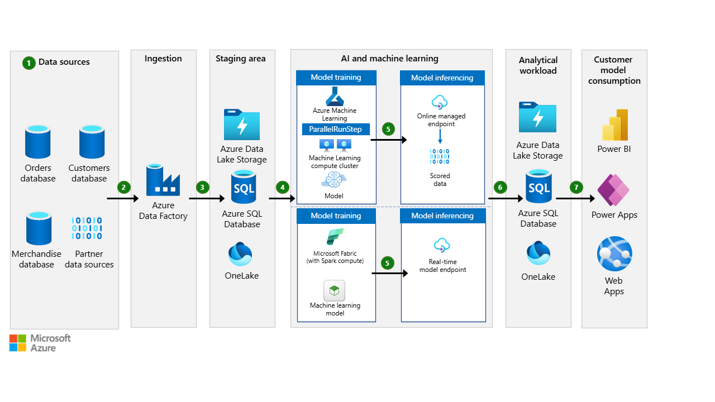
Fig 1: Modern Azure AI architecture diagram
Importance of GPU Computing in AI Platforms
Modern AI and machine learning workloads require massive parallel processing capabilities that traditional CPUs cannot efficiently provide.
This is where GPU Computing becomes essential.
Azure provides GPU-enabled virtual machines optimized for:
- Deep learning
- Natural language processing
- Computer vision
- Generative AI
- Advanced analytics
Azure VM series such as NC-series, ND-series, and NV-series support AI frameworks including TensorFlow, PyTorch, and CUDA.
These GPU-powered environments significantly improve AI model training speed and analytical performance.
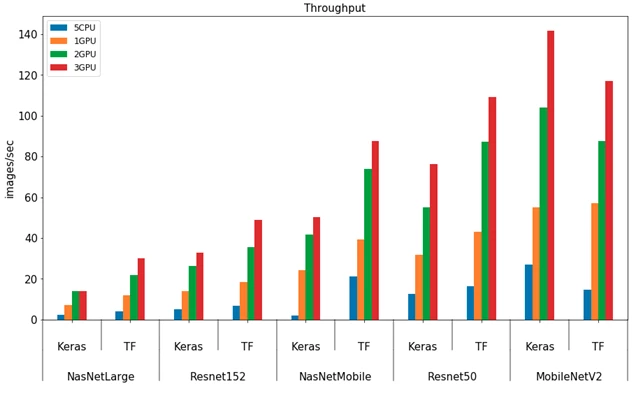
Fig 2: A visual comparison of CPU versus GPU processing for AI model training.
Designing High-Performance Storage Architecture
AI systems rely heavily on large-scale data processing. Storage performance directly impacts training efficiency and application responsiveness.
Azure provides multiple storage solutions optimized for AI workloads.
Azure Blob Storage
Ideal for:
- Large datasets
- AI training files
- Media and analytics data
Azure Data Lake Storage
Supports:
- Big data analytics
- Machine learning pipelines
- Structured and unstructured data
Azure NetApp Files
Provides:
- High throughput
- Low latency
- Enterprise-grade storage performance
Organizations should design storage architectures that support:
- Fast data access
- Geo-redundancy
- Backup and recovery
- Secure data retention
Efficient storage architecture is critical for maintaining AI performance at enterprise scale.
Strengthening Cybersecurity for AI Infrastructure
As AI adoption increases, cyber threats targeting cloud environments are also growing rapidly.
AI environments often contain:
- Sensitive business data
- Proprietary AI models
- Customer information
- Intellectual property
Strong cybersecurity architecture is therefore essential.
Azure provides several security services to protect AI infrastructure.
Microsoft Defender for Cloud
Provides:
- Threat detection
- Security posture management
- Vulnerability assessment
Microsoft Sentinel
Supports:
- SIEM capabilities
- Threat analytics
- Incident response
Azure Key Vault
Secures:
- Secrets
- Certificates
- Encryption keys
Organizations should also implement:
- Role-based access control (RBAC)
- Multi-factor authentication
- Network segmentation
- End-to-end encryption
Security should be integrated into every layer of AI infrastructure rather than added later.
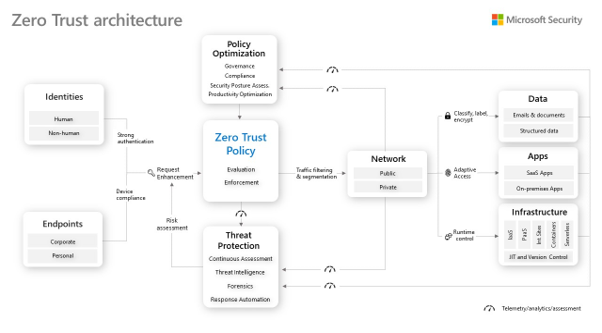
Fig 3: A Zero Trust security architecture diagram.
Governance and Operational Management
Enterprise AI platforms require strong governance to maintain compliance, operational consistency, and cost optimization.
Azure governance capabilities include:
- Azure Policy
- Management Groups
- Microsoft Purview
- Azure Cost Management
Operational monitoring also plays a critical role in AI infrastructure management.
Azure Monitor and Log Analytics help organizations track:
- Resource utilization
- GPU performance
- Network traffic
- Security alerts
- Application health
Building Intelligent Cloud Foundations
Artificial Intelligence is redefining how organizations process data, build applications, and deliver innovation. As enterprises continue investing in AI-powered solutions, infrastructure architecture becomes a critical success factor.
By focusing on:
- AI-Ready Infrastructure
- Cloud Scalability
- GPU Computing
- Cybersecurity
Organizations can build secure, scalable, and resilient Azure environments optimized for modern AI workloads.
Azure provides the architectural flexibility, intelligent services, and enterprise-grade capabilities required to support next-generation AI transformation initiatives while maintaining operational efficiency and security.
Upskill Your Teams with Enterprise-Ready Tech Training Programs
- Team-wide Customizable Programs
- Measurable Business Outcomes
About CloudThat


WRITTEN BY Navitha Wilson
Navitha Wilson is a Microsoft Certified Trainer and Subject Matter Expert in Azure Infrastructure and Architecture at CloudThat, with a strong focus on Microsoft Azure and Hybrid Infrastructure. With over 13 years of experience in training and academics, she has empowered 5,000+ professionals and learners through her expertise in Azure Administration, Networking and Security. She is also a Cisco Certified Network Professional (CCNP) in Routing and Switching, with robust hands-on experience across cloud and on-premises environments. Renowned for her ability to simplify complex technical concepts and deliver engaging hands-on sessions, Navitha consistently receives outstanding feedback from learners and is widely recognized as an exceptional trainer. Her training style blends deep technical knowledge with practical application, ensuring impactful and results-driven learning experiences. Navitha’s passion for technology and reading fuels her unique and inspiring approach to learning and development.


 PREV
PREV







Comments