

 Login
Login

 June 19, 2026
|
Voiced by Amazon Polly |
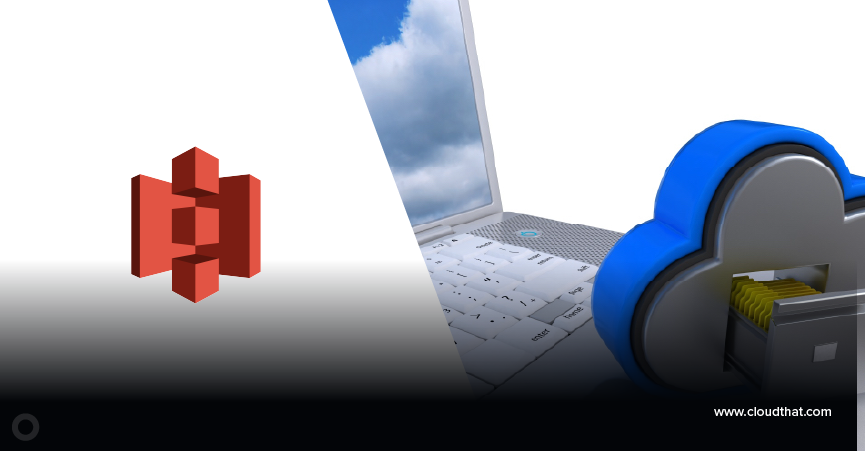
Cloud storage has evolved significantly over the years, but one fundamental challenge has always remained: the gap between object storage and file systems. With the launch of Amazon S3 Files, AWS has taken a major step in bridging this divide. This innovation allows developers and organizations to access their S3 buckets just like a traditional file system, simplifying workflows and reducing architectural complexity.
In this blog, we will explore how S3 Files works, why it matters, and how it can transform the way you interact with cloud storage.
Start Learning In-Demand Tech Skills with Expert-Led Training
- Industry-Authorized Curriculum
- Expert-led Training
Understanding the Storage Gap
Traditionally, Amazon S3 has been an object storage service, meaning data is stored as objects rather than files. This model is highly scalable, durable, and cost-effective, making it ideal for data lakes, backups, and analytics workloads.
However, many applications, especially legacy systems, machine learning pipelines, and developer tools, are designed to work with file systems. These applications require features such as hierarchical directories, file editing, and standard file operations.
This mismatch often forced organizations to:
- Duplicate data between S3 and file systems
- Build complex synchronization pipelines
- Use additional storage services like file systems
S3 Files eliminates this gap by allowing S3 buckets to behave like a file system without moving data.
What are S3 Files?
S3 Files is a new capability that enables you to mount an S3 bucket as a fully functional file system. Once mounted, your applications can interact with S3 data using standard file operations such as read, write, update, and delete.
In simple terms, it allows you to treat your S3 bucket like a local folder on your system, no extra code or complex integrations required.
Key Features and Capabilities
- File System Semantics
S3 Files supports common file system operations, including:
- Creating and deleting files
- Updating file content
- Navigating directories
This brings familiar file-based interactions to object storage.
- High Performance
The service provides low-latency access (around milliseconds for active data) and high throughput, ensuring that performance is not compromised.
- No Data Duplication
You no longer need to copy data between storage systems. S3 remains the single source of truth.
- Seamless Integration
S3 Files works with:
- Compute instances
- Containers
- Serverless functions
This means your existing applications can access S3 data without modification.
- Automatic Synchronization
Changes made in the file system are reflected in S3 and vice versa, ensuring consistency across both views.
How S3 Files Work
Under the hood, S3 Files uses a file system layer that translates file operations into S3 API requests.
Here’s a simplified flow:
- You mount an S3 bucket as a file system.
- Your application performs file operations (e.g., open, edit, save).
- S3 Files converts these operations into S3 object requests.
- Changes are stored in S3 and reflected back in the file system.
Additionally, frequently accessed data is cached for faster performance, while less frequently accessed data is served directly from S3.
Benefits for Modern Workloads
Simplified Architecture
By eliminating the need for separate storage systems and synchronization pipelines, S3 Files reduces complexity.
Improved Developer Experience
Developers can use familiar file operations instead of learning S3 APIs.
Cost Efficiency
Since data remains in S3, organizations benefit from its cost-effective storage model.
Scalability
Thousands of compute resources can access the same data simultaneously without duplication.
Real-World Use Cases
- Machine Learning Pipelines
Data scientists can directly access training datasets stored in S3 without copying them to a file system.
- AI and Agent-Based Systems
AI agents that rely on file-based operations can now interact with S3 seamlessly.
- Data Analytics
Analytics tools that expect file system access can work directly with S3 data lakes.
- Legacy Applications
Older applications that require file systems can now run on modern cloud storage without modification.
Getting Started with S3 Files
Getting started with S3 Files is straightforward:
- Create or select an S3 bucket
- Configure it as a file system
- Mount it on your compute resource
- Start accessing it like a regular directory
Once mounted, you can use standard commands like creating files, listing directories, or editing content, just as you would on a local system.
If you are Interested in diving deeper into the world of AWS, check out AWS Certified Solutions Architect training to explore advanced concepts and use cases.
Transforming Cloud Storage
The launch of S3 Files represents a significant shift in how we think about cloud storage. By merging the benefits of object storage with the usability of file systems, AWS has removed a long-standing barrier in cloud architecture.
With this innovation, organizations can simplify their workflows, reduce costs, and unlock new possibilities for applications that rely on file-based interactions.
As cloud-native and AI-driven applications continue to grow, S3 Files is poised to become a foundational tool for modern data architectures.
Upskill Your Teams with Enterprise-Ready Tech Training Programs
- Team-wide Customizable Programs
- Measurable Business Outcomes
About CloudThat


WRITTEN BY Nehal Verma
Nehal is a seasoned Cloud Technology Expert and Subject Matter Expert at CloudThat, specializing in AWS with a proven track record across Generative AI, Machine Learning, Data Analytics, DevOps, Developer Tools, Databases and Solutions Architecture. With over 12 years of industry experience, she has established herself as a trusted advisor and trainer in the cloud ecosystem. As a Champion AWS Authorized Instructor (AAI) and Microsoft Certified Trainer (MCT), Nehal has empowered more than 15,000 professionals worldwide to adopt and excel in cloud technologies. She holds premium certifications across AWS, Azure, and Databricks, showcasing her breadth and depth of technical expertise. Her ability to simplify complex cloud concepts into practical, hands-on learning experiences has consistently earned her praise from learners and organizations alike. Nehal’s engaging training style bridges the gap between theory and real-world application, enabling professionals to gain skills they can immediately apply. Beyond training, Nehal actively contributes to CloudThat’s consulting practice, designing, implementing and optimizing cutting-edge cloud solutions for enterprise clients. She also leads experiential learning initiatives and capstone programs, ensuring clients achieve measurable business outcomes through project-based, real-world engagements. Driven by her passion for cloud education and innovation, Nehal continues to champion technical excellence and empower the next generation of cloud professionals across the globe.


 PREV
PREV










Comments