

 Login
Login


 May 25, 2026
|
Voiced by Amazon Polly |
Introduction
The landscape of cloud-native infrastructure is undergoing an unprecedented shift. In 2026, the conversation has officially moved from simply hosting generative AI models to orchestrating fully autonomous, agentic workflows that drive tangible business value. For cloud professionals and platform architects, this rapid evolution brings a completely new set of operational challenges: how do we provision, secure, and dynamically scale autonomous AI agents without compromising system integrity?
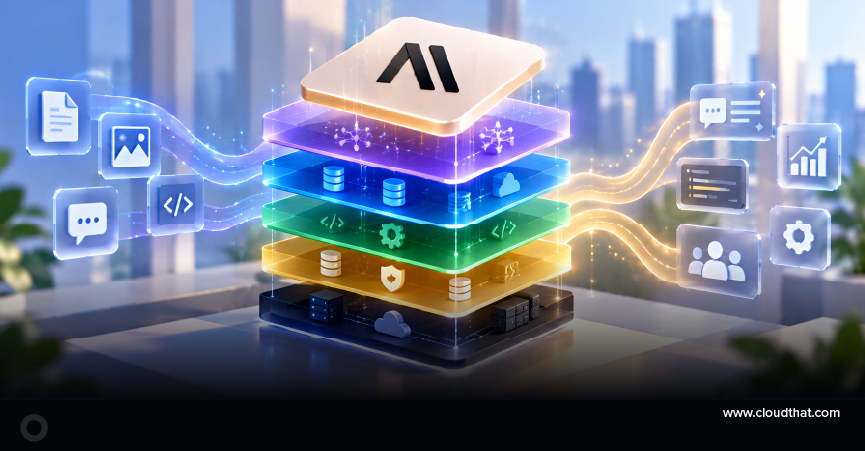
The recent release of Amazon Bedrock AgentCore has provided the definitive answer, fundamentally changing how enterprises integrate large language models with their internal APIs, proprietary data sources, and core compute infrastructure. This deep dive explores the technical nuances of architecting advanced Amazon Bedrock AgentCore environments. By focusing on declarative provisioning, robust identity governance, and containerized execution layers, engineering teams can build reliable, production-ready AI ecosystems.
Pioneers in Cloud Consulting & Migration Services
- Reduced infrastructural costs
- Accelerated application deployment
The Evolution of AI on AWS
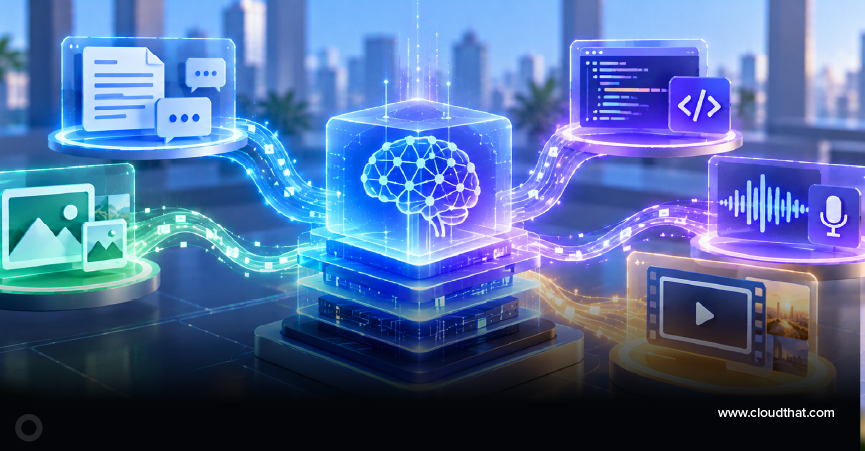
Amazon Bedrock has evolved dramatically from a simple foundational model API layer into a comprehensive multimodal and agentic platform. The introduction of Amazon Bedrock AgentCore represents a critical milestone in cloud engineering. Unlike traditional single-turn inference calls, Amazon Bedrock AgentCore natively enables stateful reasoning, allowing the AI to autonomously break down highly complex user requests, formulate multi-step execution plans, and securely invoke external systems to complete the required tasks. Supported by a newly introduced, highly efficient distributed inference engine for large-scale model serving, Amazon Bedrock AgentCore effortlessly handles the heavy lifting of context window management and advanced memory streaming across prolonged user sessions. For platform engineering teams, the real power of Amazon Bedrock AgentCore lies in its robust, enterprise-grade policy controls. Agents deployed via this service are no longer unpredictable components; their actions are strictly governed by rigorous verification loops that intercept and evaluate API calls before they ever reach external systems or internal data lakes. Running these agents in production requires rigorous DevOps practices. Transitioning from manual console setups to highly automated infrastructure is where modern cloud engineering delivers sustained value.
Infrastructure as Code for Agentic Workloads
Building resilient, highly available cloud-native infrastructure dictates that all resources must be programmatically defined and managed. Managing complex AI agents is certainly no exception to this rule. As teams move generative AI workloads from the sandbox to production environments, defining Amazon Bedrock components via Infrastructure-as-Code tools such as Terraform and AWS CloudFormation becomes indispensable. Using Terraform, platform engineers can accurately codify the entire AWS Bedrock environment. This technical implementation includes creating the dedicated agent resources, specifying the precise model ID, and defining the prompt templates that strictly govern the operational persona. Action groups, which specify the exact API endpoints the agent is permitted to call, must be explicitly defined in the codebase. By managing these intricate configurations entirely as code, infrastructure teams enforce strict version control over deployments. This allows for seamless rollbacks to previous states if an update inadvertently degrades performance. Automating these deployments through rigorous CI/CD pipelines ensures that any changes to the internal logic are tested, effectively eliminating dangerous configuration drift across environments.
Securing Agents with Centralized Identity Governance
Security, strict compliance, and granular access control are paramount when granting autonomous AI agents the programmatic ability to interact with sensitive enterprise systems. Implementing a comprehensive, centralized identity governance framework is the foundational layer for securing advanced Amazon Bedrock AgentCore workflows. By effectively leveraging AWS Organizations and AWS IAM Identity Center, platform security teams can establish strict, cross-account access controls that definitively dictate exactly what internal APIs an autonomous agent is allowed to access. When an AI agent executes a designated task, it assumes a specific AWS IAM service role. Integrating this architecture with SAML-based federation and AWS IAM Identity Center ensures that backend compute systems invoked by the agent consistently operate under the strict principle of least privilege. By centralizing these permission boundaries through a unified identity portal, large organizations maintain a fully transparent audit trail, drastically simplifying regulatory compliance and proactive threat detection.
Executing Agent Actions on Amazon EKS
An AI agent is ultimately only as powerful as the operational tools it can successfully access. While Amazon Bedrock AgentCore handles workflow orchestration, the actual physical execution of tasks often requires dedicated compute resources. For large-scale enterprise environments, deploying these critical backend tools within Kubernetes clusters provides the necessary scalability, performance, and infrastructure resilience. By designing and automating cloud-native infrastructure using Amazon EKS, engineering teams can reliably host the scalable microservices that serve as the agent’s primary action groups. When Amazon Bedrock AgentCore invokes a tool, it makes an authenticated call to an API endpoint exposed by the Amazon EKS cluster. Kubernetes automation ensures that as the AI dynamically scales, backend compute capacity expands. This powerful combination creates a decoupled, highly scalable modern architecture.
Conclusion
By rigorously managing deployments through Infrastructure as Code, securing them with centralized identity governance, and offloading execution to Kubernetes environments, organizations can confidently transition operations from AI experimentation to full-scale, production-grade automation.
Drop a query if you have any questions regarding Amazon Bedrock AgentCore and we will get back to you quickly.
Making IT Networks Enterprise-ready – Cloud Management Services
- Accelerated cloud migration
- End-to-end view of the cloud environment
About CloudThat
FAQs
1. What is the powerful Amazon Bedrock AgentCore platform?
ANS: – It is an advanced enterprise-grade AI platform feature. It natively enables globally stateful, fully autonomous agents.
2. How do you manage Amazon Bedrock configurations safely?
ANS: – Enterprise deployments should always be fully automated and seamless. Provision them using standard Infrastructure-as-Code tools.
3. How do you restrict what an AI agent does?
ANS: – Security teams must enforce strict boundaries via custom policies. Attach least-privilege IAM execution roles to all deployed agents.


WRITTEN BY Swapnil Kumbar
Swapnil Kumbar is a Senior Research Associate at CloudThat with over 2.5 years of experience in DevOps. He specializes in AWS, Kubernetes, automation, and cloud-native technologies. Passionate about innovation and research, Swapnil focuses on building scalable infrastructure, optimizing deployments, and exploring emerging tools. In his free time, he actively contributes to knowledge sharing and community learning initiatives.


 PREV
PREV









Comments