

 Login
Login


 December 1, 2025
|
Voiced by Amazon Polly |
Introduction
Enterprises today are rapidly embracing multi-cloud strategies, especially combinations like AWS + Azure, to unlock flexibility, leverage best-of-breed services, and avoid vendor lock-in. However, while multi-cloud adoption accelerates innovation, it also amplifies the complexity of costs.
Different providers offer varying pricing models, licensing rules, consumption behaviors, and billing engines. Without the right governance framework, organizations often see 20–30% unnecessary spending due to inefficient architecture and fragmented visibility.
This first part of the Multi-Cloud Cost Optimization series sets the foundation for successful hybrid cost governance. We will explore:
- The biggest cost management pain points in a multi-cloud setup
- Why traditional cost governance models fail in cloud-native ecosystems
- Strategies to establish unified cost visibility across AWS & Azure
- Standardized tagging, reporting & chargeback design
By the end of this guide, you’ll understand exactly how to gain full cost transparency and prepare your cloud environment for measurable optimization.
Pioneers in Cloud Consulting & Migration Services
- Reduced infrastructural costs
- Accelerated application deployment
Understanding the True Challenges of Multi-Cloud Cost Management
Multi-cloud promises strategic advantages, but usually at a high operational overhead if governance is lacking.
Here are the top cost management challenges enterprises face:
Billing Complexity & Lack of Standardization
AWS and Azure differ in:
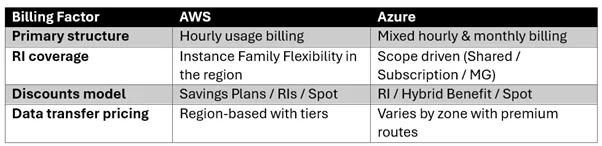
This makes direct comparisons difficult and often leads to duplicated resources and inefficient placement decisions.
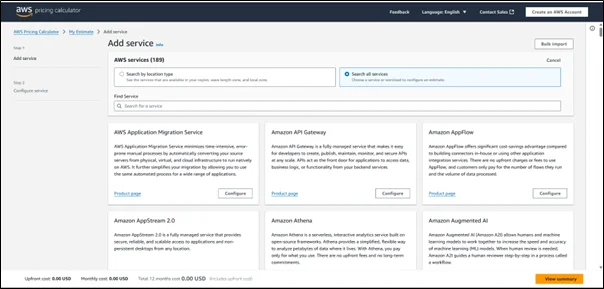
AWS Pricing Calculator
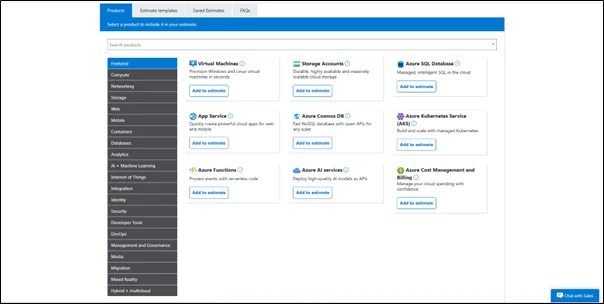
Azure Pricing Calculator
Resource Sprawl
Teams provision resources independently across clouds. Over time, this leads to:
- Orphaned disks, snapshots, snapshots
- Idle compute resources
- Forgotten development/test workloads
- Underutilized high-tier instances
Even 10% untracked sprawl in multi-cloud deployments can translate into thousands of dollars in monthly wastage.
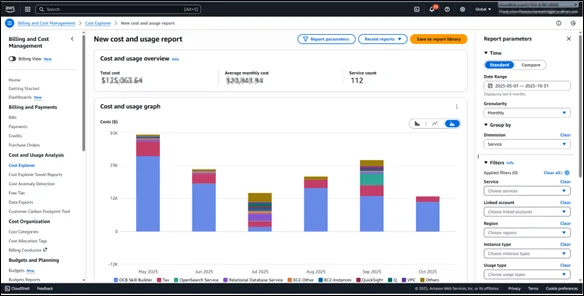
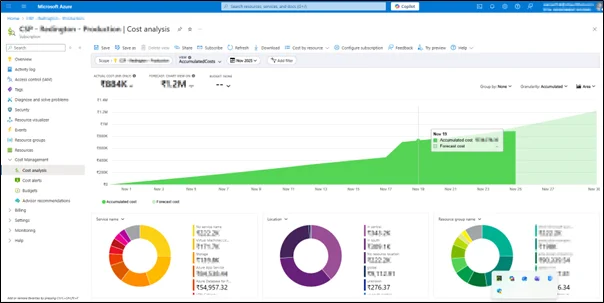
Visibility Gaps Across Clouds
Native cost monitoring tools are siloed:
- AWS Cost Explorer → View only AWS spend
- Azure Cost Management → View only Azure spend
Without aggregation:
- No unified spending insights
- No accurate forecasting
- No business-unit-based cost classification
Thus, financial accountability erodes, and budgets get exceeded without early signs.
Separate Optimization Techniques
Equivalent services use different cost optimization levers:
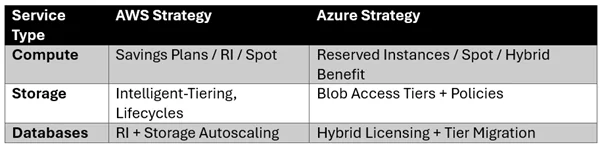
Organizations need dual expertise, which increases operational complexity.
Data Transfer Cost Surprises
Multi-cloud = more cross-platform data movement, leading to:
- Egress charges
- Inter-region network pricing penalties
- Cost unpredictability
Often, the network becomes more expensive than compute in hybrid data architectures.
Why Traditional Cost Governance Fails in Multi-Cloud
Historically, companies handled IT budgeting in static, predictable environments:
- CapEx-based procurement
- Manual approvals for any new hardware
- Fixed & forecastable monthly spend
Cloud changed everything, resources are instant, elastic, and consumed per second.
Traditional processes fail because they are:
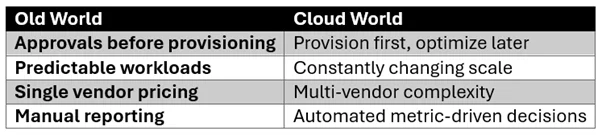
Thus, enterprises must evolve to FinOps-based operational models.
Establishing a Unified Cost Monitoring Framework
Before optimization begins, visibility must be centralized, automated, and standardized.
Here’s what a strong monitoring framework looks like:
Step 1: Configure Detailed Cost Exports
For AWS → Cost & Usage Reports (CUR)
- Deliver to Amazon S3 automatically
- Enable hourly granularity + resource IDs
- Integrate with Amazon Athena / Amazon QuickSight / Power BI / third-party tools
For Azure → Cost Management Exports
- Export to Azure Storage daily
- Enable subscription-level granularity
- Include tag data & amortized cost view
Note: Use the same cost reporting frequency across both clouds, with a minimum of daily.
Step 2: Implement Standardized Tagging Guidelines
Cost transparency relies on robust metadata practices.
Tag everything. Enforce tagging. Automate tagging.
Recommended Tag Framework
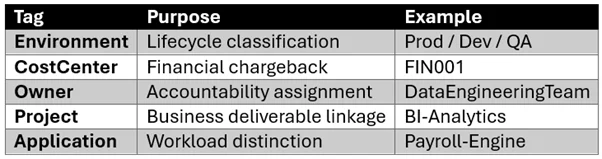
Mandatory across AWS + Azure
Required for budgeting, allocation & automation
Stored in governance documentation
Step 3: Centralize Cost Dashboards
Integrate AWS and Azure data using a unified analytics engine:
Recommended Tools:
- Power BI
- CloudHealth
- Apptio
- FinOps-based BI pipelines
- AWS CUDOS dashboard + Azure export connectors
Key KPIs to track:
- Cloud spend by environment + business unit
- Waste: idle & underutilized resources
- RI/Savings Plan utilization
- Cost per product feature (true business value cost)
Step 4: Set Budgets & Automated Alerts
Assign budget guards per:
- Subscription / Account
- Resource Group / Project
- Environment (Prod vs Dev)
- Platform owner team
Alert types:

Budget alerts provide early warnings before a bill becomes a financial risk.
The Results of Unified Visibility
Once cost integration is implemented, organizations typically achieve:
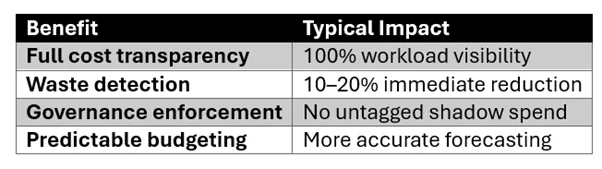
Centralized monitoring provides the foundation for intelligent optimization, which is exactly what we will tackle next.
Conclusion
Multi-cloud brings powerful flexibility but also introduces significant cost complexity. To maintain control over spending across AWS and Azure, organizations must first establish unified visibility through tagging, centralized dashboards, and automated alerts.
In the next part of this series, we will focus on practical optimization strategies for AWS and Azure to further maximize savings and operational efficiency in a hybrid cloud environment.
Drop a query if you have any questions regarding Managing Cost in Multi-Cloud and we will get back to you quickly.
Please check for Part 2 here.
Empowering organizations to become ‘data driven’ enterprises with our Cloud experts.
- Reduced infrastructure costs
- Timely data-driven decisions
About CloudThat
FAQs
1. What makes multi-cloud cost control challenging for enterprises?
ANS: – Managing costs across multiple cloud providers becomes difficult because each platform uses different pricing rules, billing formats, and discount programs. When costs are tracked separately, organizations struggle to compare usage, identify waste, and forecast spending accurately, which often leads to overspending.
2. What is the first step toward gaining unified cost visibility across AWS and Azure?
ANS: – The foundation is to centralize cost data. This includes exporting detailed billing records from both clouds, enforcing standardized tagging for every resource, and connecting cost data to a single analytics dashboard such as Power BI or CloudHealth. This enables a consolidated view of total cloud spending across environments, teams, and applications.
3. Where do unexpected expenses usually come from in a multi-cloud setup?
ANS: – Unexpected costs often arise from unused or forgotten resources, oversized compute instances, unmonitored storage elements such as old snapshots, and network data transfer charges between regions or platforms. Insufficient tagging and a lack of automated alerts also contribute to hidden spending.


WRITTEN BY Samarth Kulkarni
Samarth is a Senior Research Associate and AWS-certified professional with hands-on expertise in over 25 successful cloud migration, infrastructure optimization, and automation projects. With a strong track record in architecting secure, scalable, and cost-efficient solutions, he has delivered complex engagements across AWS, Azure, and GCP for clients in diverse industries. Recognized multiple times by clients and peers for his exceptional commitment, technical expertise, and proactive problem-solving, Samarth leverages tools such as Terraform, Ansible, and Python automation to design and implement robust cloud architectures that align with both business and technical objectives.


 PREV
PREV












Comments