

 Login
Login


 September 2, 2026
|
Voiced by Amazon Polly |
Most operations teams already understand more about infrastructure than they get credit for. They have spent years keeping servers up, chasing failed backups, and untangling network issues at odd hours. What is usually missing isn’t aptitude, it’s structured exposure to cloud-native tools, plus a plan that turns years of tribal knowledge into skills a hiring manager would recognize. 90 days is enough time to build that foundation, provided the plan is deliberate rather than a stack of online courses handed out on day one and never followed up.
Start Learning In-Demand Tech Skills with Expert-Led Training
- Industry-Authorized Curriculum
- Expert-led Training
Why 90 Days Is the Right Window
Shorter timelines don’t leave room for enough hands-on repetition, so the concepts don’t stick. Longer timelines lose urgency, and cloud training gets deprioritized behind the ticket queue within a few weeks. Three months maps cleanly onto three phases: learn the platform, apply it to real work, then own a piece of it under pressure. Each phase should end with something the team can point to, not just a completion certificate.
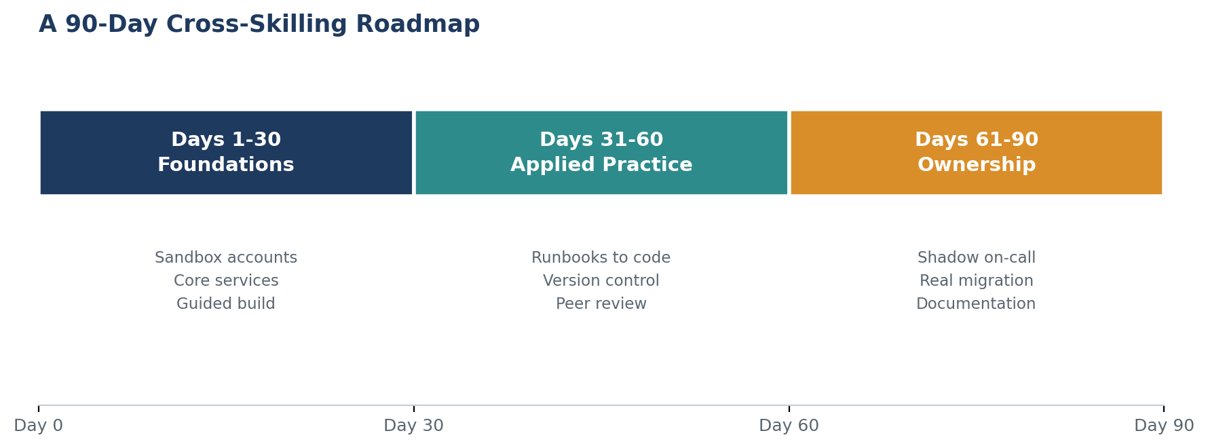
Fig 1. The three phases build on each other rather than running in parallel.
Days 1-30: Building the Vocabulary
The first month is about getting comfortable with cloud primitives before worrying about automation or cost optimization. Skip the sprawling service catalog and stick to what ops engineers will actually touch first.
- Give each engineer an individual sandbox account with a hard spending cap, not a shared demo environment where mistakes go unnoticed, and nobody owns the cleanup.
- Anchor learning around four service categories: compute, storage, identity, and networking. Everything else can wait until month two.
- Close the month with a small, graded project: standing up a basic three-tier application by hand, without automation, so the concepts are tied to something built, not just watched in a video.
AWS, Microsoft, and Google all publish structured learning paths that serve well as a syllabus for this phase, even if no one has taken a certification exam yet. AWS’s certification overview is a reasonable starting reference for mapping out what to cover first.
Days 31-60: Turning Runbooks into Code
This is where most cross-skilling programs either gain momentum or stall. The insight worth acting on: an ops team’s existing runbooks are the best training material available, because they already describe exactly how the infrastructure is supposed to behave.
- Assign each engineer one existing runbook and have them rebuild the process it describes as a Terraform or Bicep module, instead of starting from a generic tutorial project.
- Introduce version control discipline for infrastructure changes, the same way it already exists for application code, pull requests, review, and a rollback plan for every change.
- Rotate a “cloud buddy” from another pod into code review so knowledge doesn’t stay locked inside the pair that wrote it.
The Cloud Native Computing Foundation’s project landscape is a reasonable reference point once engineers start asking what tool fits a given job, rather than reaching for whatever was mentioned in a course.
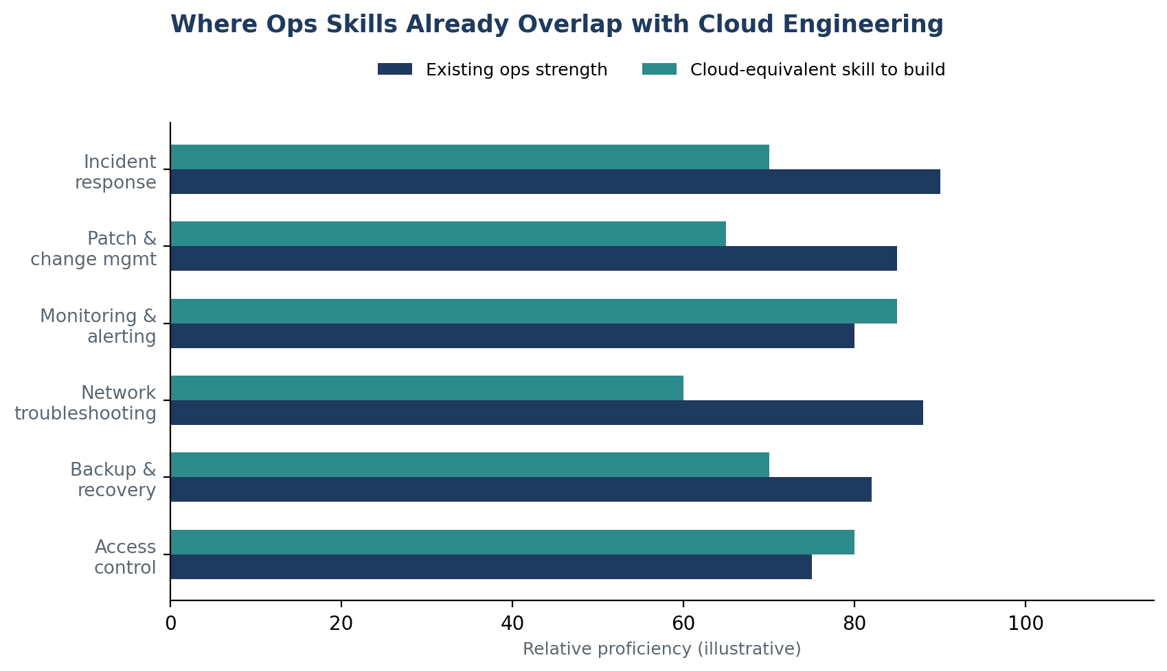
Fig 2: Illustrative mapping of where existing ops strengths carry over directly and where a new skill needs deliberate practice.
Days 61-90: Owning Something Real
The gap between knowing cloud concepts and being a cloud engineer shows up under pressure, not in a lab. The last month should have placed trained engineers in environments where pressure exists.
- Put each engineer on a shadow on-call rotation for a cloud-hosted service, paired with an experienced colleague, before they carry a pager alone.
- Assign one real, low-risk migration or cost-optimization task with an actual deadline and a stakeholder who will ask about it.
- Have them write the documentation or postmortem for what they built. Writing it down is what turns the experience into something the rest of the team can reuse.
By day 90, certification becomes optional rather than the goal. Microsoft’s certification tracks are worth pointing motivated engineers toward, but the exam should follow the work, not replace it.
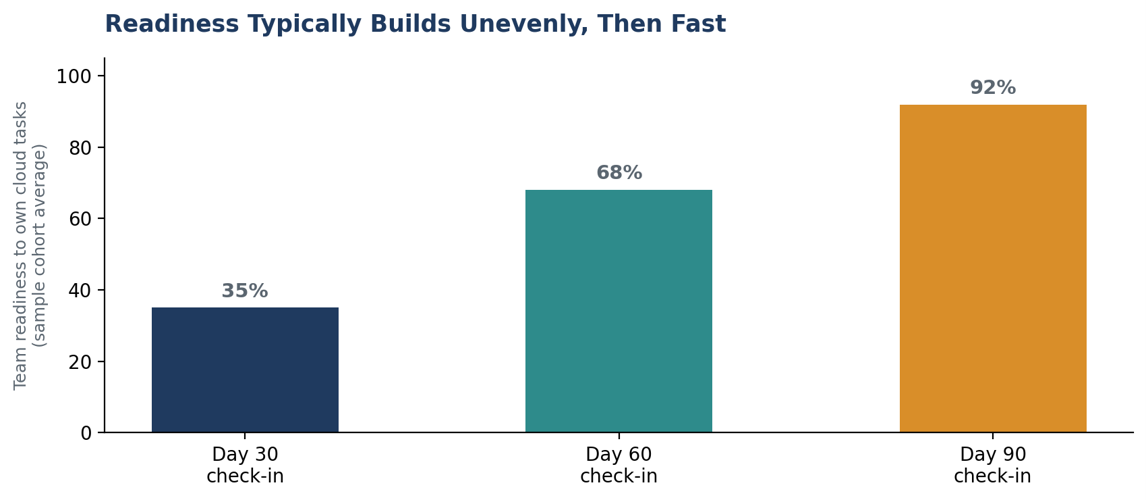
Fig 3: A sample cohort’s self-reported readiness to take on cloud tasks unsupervised, checked at each 30-day mark.
Where Programs Go Wrong
A few patterns show up often enough to call out directly.
- Certification-first thinking. Passing an exam doesn’t mean someone can debug a broken VPC peering connection at three in the morning. Certifications are a useful checkpoint, not a substitute for hands-on incidents.
- Treating this as an individual project. If only one or two people cross-skill, the team ends up with a new single point of failure instead of a distributed one.
- Skipping cost literacy. Engineers who don’t learn to read a billing dashboard early build habits that get expensive fast, especially once auto-scaling groups and managed database tiers are involved.
What This Actually Delivers
Cross-skilling an ops team isn’t a training calendar bolted onto existing work; it’s a restructuring of how that work gets done, with cloud-native tools replacing manual ones a piece at a time. Done over 90 days, with real ownership at the end, it keeps institutional knowledge in-house, reduces the pressure to backfill roles externally, and gives ops engineers a credible path into cloud engineering without having to restart their careers. The teams that get the most out of it treat day 90 as a starting point for ongoing responsibility, not a finish line.
Upskill Your Teams with Enterprise-Ready Tech Training Programs
- Team-wide Customizable Programs
- Measurable Business Outcomes
About CloudThat


WRITTEN BY Ninad Samudre
Ninad is an experienced academician, corporate trainer working on Docker and Kubernetes technologies. He holds a passion for exploring new tools in DevOps and delivering it, hence contributing the best possible policies and industry standard implementation methods indispensable for today’s generation cloud enthusiast. Master of Engineering degree with IT experience noted for identifying opportunities & executing strategic IT initiatives and engineering products, he provides a competitive edge in the technology landscape. Besides building automated CI/CD pipelines using Docker & Kubernetes, he has transformed micro-services apps into Docker containers running on scalable Kubernetes Cluster. He has rich experience, with multiple roles as corporate trainer with various reputed organizations and training more than 1000+ passionate professional learners.


 PREV
PREV











Comments