

 Login
Login


 March 17, 2026
|
Voiced by Amazon Polly |
The way we work is changing faster than ever. Roles that existed five years ago are evolving, and entirely new job categories are emerging. According to the World Economic Forum, nearly 44% of core workforce skills are expected to change within the next few years, driven by AI, automation, and digital technologies. Microsoft’s Work Trend Index also highlights that AI adoption is reshaping how employees perform daily tasks, making digital capability a baseline expectation rather than a differentiator.
In this environment, relying only on experience is risky. What kept professionals relevant yesterday may not be enough tomorrow. This is where upskilling becomes critical, not as a choice, but as a necessity for survival and growth.
Whether you’re an individual contributor, manager, or business leader, continuous learning is now the foundation of long-term career security.
Start Learning In-Demand Tech Skills with Expert-Led Training
- Industry-Authorized Curriculum
- Expert-led Training
The Core Concept: Why Upskilling Matters More Than Ever
At its simplest, upskilling means learning new competencies that enhance your current role or prepare you for emerging responsibilities. But in today’s workplace, it goes deeper.
It is about:
- Staying aligned with evolving technologies
- Adapting to AI-driven workflows
- Improving productivity and decision-making
- Remaining employable in competitive markets
Organizations are also recognizing their value. Employees who actively learn contribute more, innovate faster, and solve problems independently. From a business standpoint, investing in corporate training often costs less than hiring new talent and helps retain institutional knowledge.
When teams consistently upgrade their skills, companies see:
- Faster project delivery
- Reduced dependency on external consultants
- Higher employee engagement
- Better adaptation of new tools like Power BI, AI Copilots, and cloud platforms
Simply put, learning is now part of the job description.
The Growing Skills Gap: A Business Reality
One of the biggest challenges organizations face today is the widening Skills Gap.
Many professionals are experts in traditional tools but struggle with:
- Data analytics
- Cloud technologies
- AI-assisted workflows
- Automation tools
For example, someone comfortable with Excel may now be expected to work with Power BI dashboards. A support engineer may need knowledge of the cloud. Managers may need data storytelling skills to present insights.
Without structured learning, this gap slows performance and limits career growth.
This is why companies worldwide are building structured learning paths and certification programs to keep their workforce relevant.
Real-World Applications: What Upskilling Looks Like in Practice
Let’s look at how upskilling creates tangible impact.
Consider a mid-sized services company that needs better reporting and decision-making. After enrolling their team in structured analytics training:
- Manual reporting time has been reduced massively
- Dashboards replaced spreadsheets
- Managers made faster decisions
- Productivity improved across departments
One team lead shared:
“Once our team learned Power BI and automation, we stopped spending hours preparing reports and started focusing on insights.”
This is the practical side of learning- it directly improves day-to-day work.
Similarly, many organizations partnering with training and consulting companies like CloudThat have seen measurable improvements after targeted training in analytics, cloud, and AI.
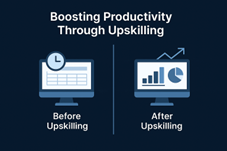
Fig 1: Boosting productivity through upskilling.
Actionable Strategies to Start Continuous Learning Today
Knowing the importance of learning is one thing. Acting on it is another. Here are practical steps professionals and organizations can follow:
Identify skill gaps
Assess what your current role demands versus future expectations. Talk to managers and review industry trends.
Focus on high-impact skills.
Prioritize skills that directly improve productivity, such as:
- Data analysis
- AI tools
- Cloud platforms
- Visualization and storytelling
Learn in small, consistent steps.
Spend 30–45 minutes daily rather than waiting for large blocks of time.
Apply immediately
Use new skills in real projects. Practical application reinforces learning faster than theory.
Why Organizations Should Care
Upskilling isn’t only an individual responsibility. Companies that invest in corporate training often experience:
- Lower attrition
- Stronger internal mobility
- Better adoption of new technologies
- Higher morale
Employees also feel valued when their growth is prioritized. This builds loyalty and long-term commitment. In contrast, organizations that ignore learning often face stagnation and higher hiring costs.
Continuous Learning Imperative
Careers today are not built on static knowledge. They are built on adaptability. The reality is simple: technology will continue to evolve, tools will change, and expectations will rise. The only way to stay relevant is through consistent upskilling and continuous learning.
Professionals who learn regularly stay confident, employable, and prepared for new opportunities. Organizations that support learning build stronger, future-ready teams.
So, the question is no longer “Should I upskill?” but instead, it’s “What should I learn next?” Start small, stay consistent, and make learning part of your routine. Your future career depends on it.
Upskill Your Teams with Enterprise-Ready Tech Training Programs
- Team-wide Customizable Programs
- Measurable Business Outcomes
About CloudThat


WRITTEN BY Reshu Goyal
Reshu Goyal is a Microsoft Certified Trainer and Subject Matter Expert at CloudThat with over 10 years of experience in data analytics and visualization. She has trained 1,000+ professionals across Power BI, Microsoft Fabric, Advanced Excel and Tableau, delivering sessions for top clients like Microsoft, Deloitte and TCS. Reshu is known for her hands-on, learner-focused approach and her ability to turn complex data into actionable insights.


 PREV
PREV








Comments