

 Login
Login


 June 19, 2026
|
Voiced by Amazon Polly |
Cloud adoption has moved beyond simple infrastructure migration. Organizations today use cloud technologies to support application modernization, data analytics, artificial intelligence, business continuity, and digital transformation initiatives. While cloud platforms offer significant flexibility, achieving consistent results requires more than selecting the right technology stack.
Many organizations begin their cloud journey with ambitious goals but struggle with implementation challenges, including inconsistent development practices, deployment delays, security concerns, and governance gaps. These challenges often arise when cloud initiatives lack a structured approach.
This is where a well-defined Development Framework and Delivery Framework become essential. Together, they provide a roadmap that guides teams from planning and design through deployment and ongoing operations. By establishing clear processes, standards, and responsibilities, organizations can improve efficiency, reduce risks, and ensure that cloud investments align with business objectives.
For professionals and enterprises investing in Cloud Computing Programs, understanding how development and delivery frameworks work together is critical for achieving long-term success.
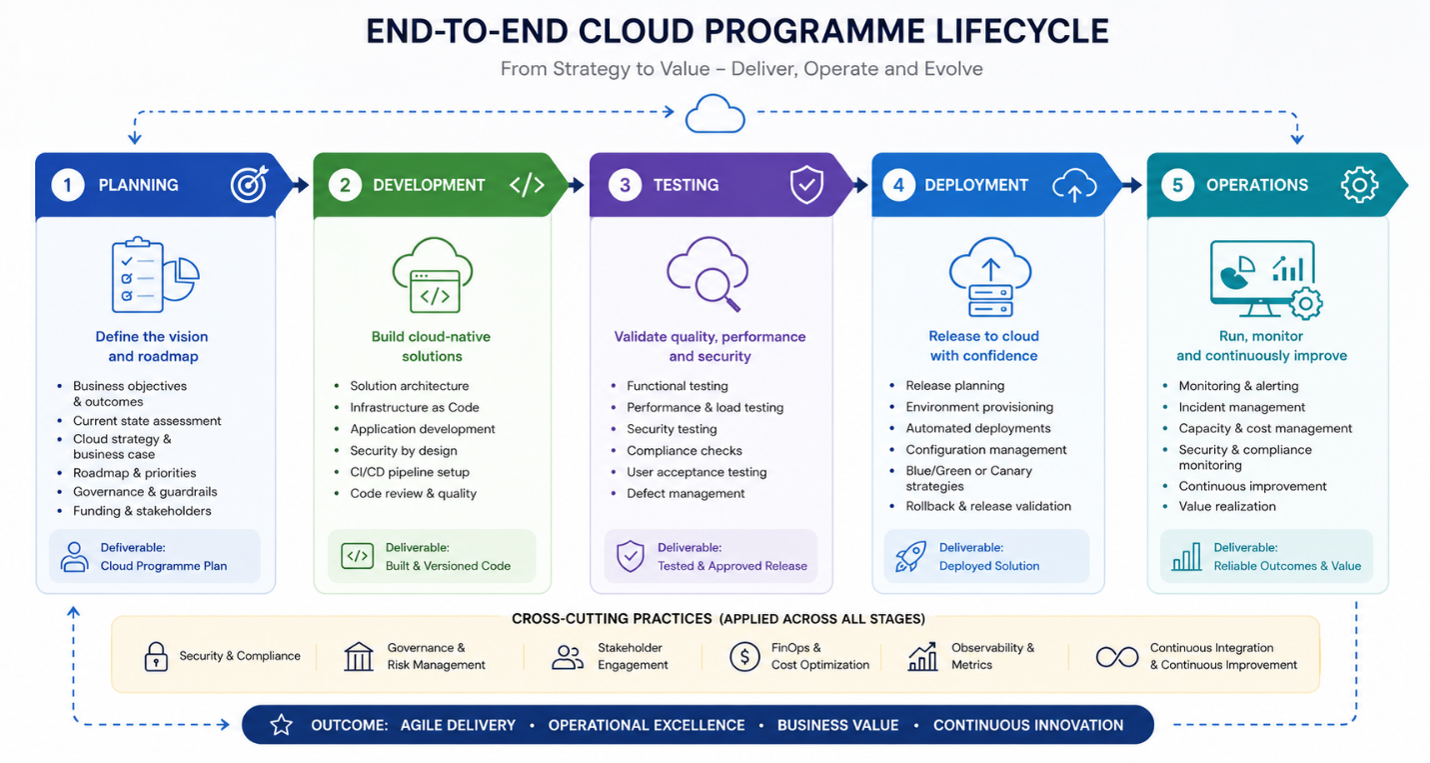
Fig 1: End-to-end cloud program lifecycle illustrating planning, development, testing, deployment, and operations.
This image highlights the key stages involved in managing cloud initiatives and demonstrates how development and delivery processes connect throughout the lifecycle.
Start Learning In-Demand Tech Skills with Expert-Led Training
- Industry-Authorized Curriculum
- Expert-led Training
Why Structured Cloud Computing Programs Matter
As organizations expand their cloud footprint, multiple teams often work across different platforms, applications, and environments. Without standardized processes, maintaining consistency becomes increasingly difficult.
Structured cloud programs establish common practices that guide development, deployment, security, and operational management. These practices help organizations reduce project delays, improve collaboration, and ensure compliance with internal and external requirements.
A well-managed program also creates visibility across teams, enabling stakeholders to track progress, identify risks, and make informed decisions. Rather than treating cloud adoption as a one-time project, organizations can build repeatable processes that support ongoing innovation and growth.
Professionals looking to strengthen their cloud expertise can explore specialized training opportunities, such as cloud computing programs.
Establishing a Strong Development Framework
The foundation of any successful cloud initiative begins with a robust Development Framework. This framework defines how solutions are designed, developed, tested, secured, and documented before reaching production environments.
A strong framework promotes consistency across teams and projects. Developers can follow standardized guidelines while architects ensure that solutions align with organizational objectives and technical requirements.
Key components typically include:
- Cloud architecture standards
- Secure coding practices
- Infrastructure as Code (IaC) implementation
- Automated testing requirements
- Security and compliance controls
- Documentation standards
While these elements may appear independent, their effectiveness comes from integration within a single development process. Teams should understand not only the requirements but also the business and technical reasons behind them.
Regular reviews and updates help ensure that development standards remain aligned with changing technologies and evolving business needs.
Designing an Effective Delivery Framework
Once development activities are complete, organizations need a reliable method for moving applications and services into production. This is the role of the Delivery Framework.
An effective delivery model balances speed, quality, and governance. Organizations increasingly rely on automation to streamline release processes while maintaining control over security and compliance requirements.
Key areas of focus include:
- Release management
- Change control procedures
- Environment consistency
- Deployment automation
- Operational readiness assessments
- Incident response planning
The goal is not simply faster releases but predictable and reliable releases. A mature delivery process enables organizations to deploy frequently while minimizing operational disruptions.
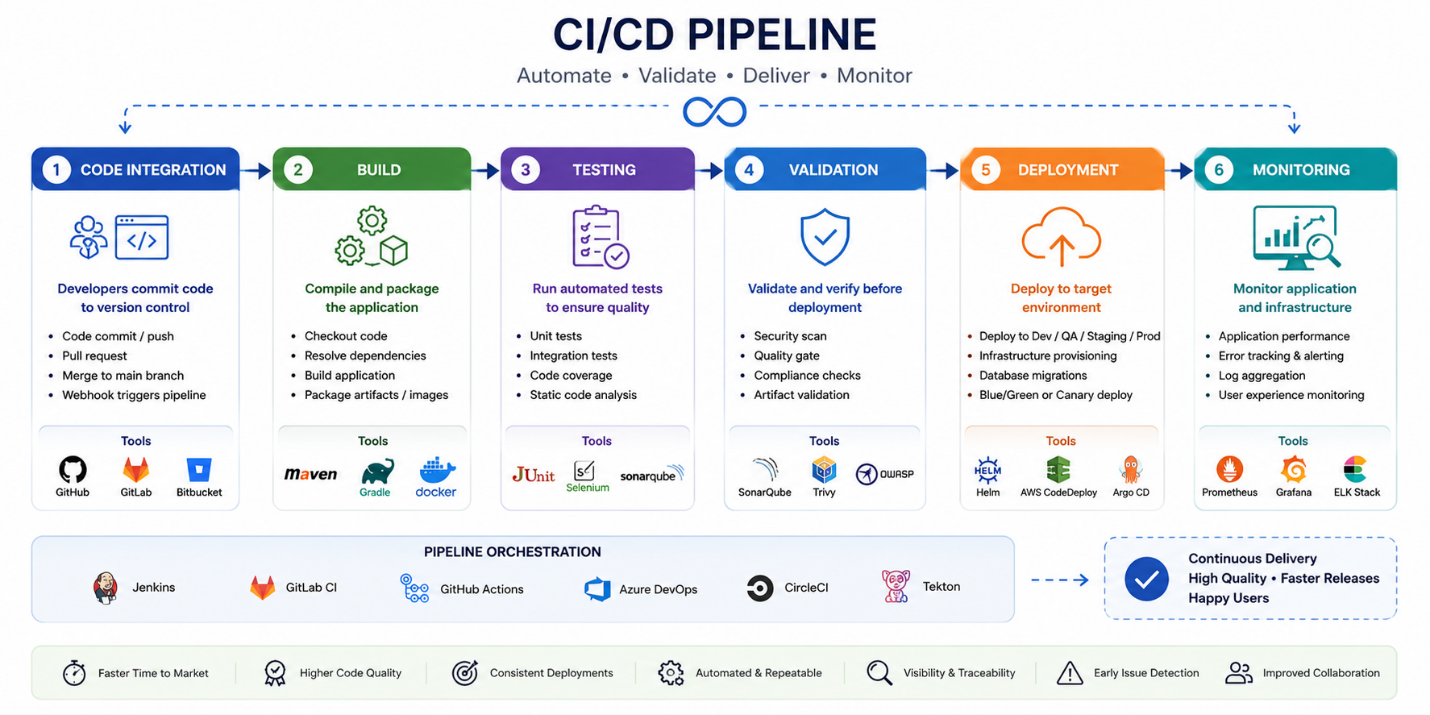
Fig 2: CI/CD pipeline enabling automated, reliable software delivery.
Organizations that invest in delivery excellence often experience reduced deployment failures, improved service availability, and faster issue resolution.
Best Practices for Reliable Cloud Deployment
The transition from development to production represents one of the most critical stages in any cloud initiative. Effective Cloud Deployment practices help ensure that applications and services perform as expected in live environments.
Automation plays a central role in reducing manual effort and minimizing configuration errors. Infrastructure provisioning, application deployment, testing, and monitoring can all benefit from automation-driven approaches.
Organizations should also integrate security throughout the deployment lifecycle. Security validation should occur continuously rather than being reserved for final-stage reviews.
Additional best practices include:
- Maintaining consistency across environments
- Using Infrastructure as Code for provisioning
- Implementing automated rollback mechanisms
- Continuously monitoring application performance
- Conducting post-deployment reviews
These practices contribute to operational stability while supporting rapid innovation and continuous delivery objectives.
Governance and Continuous Improvement
Successful cloud initiatives extend beyond deployment. Ongoing governance ensures that cloud environments remain secure, compliant, cost-effective, and aligned with business goals.
Organizations should establish governance policies covering resource management, security controls, compliance requirements, and operational responsibilities. Clearly defined ownership structures improve accountability and decision-making.
Continuous improvement is equally important. Teams should regularly review performance metrics, deployment outcomes, operational incidents, and user feedback. These insights help identify opportunities to refine processes and improve overall program effectiveness.
By treating cloud management as an ongoing discipline rather than a completed project, organizations can maximize long-term value from their cloud investments.
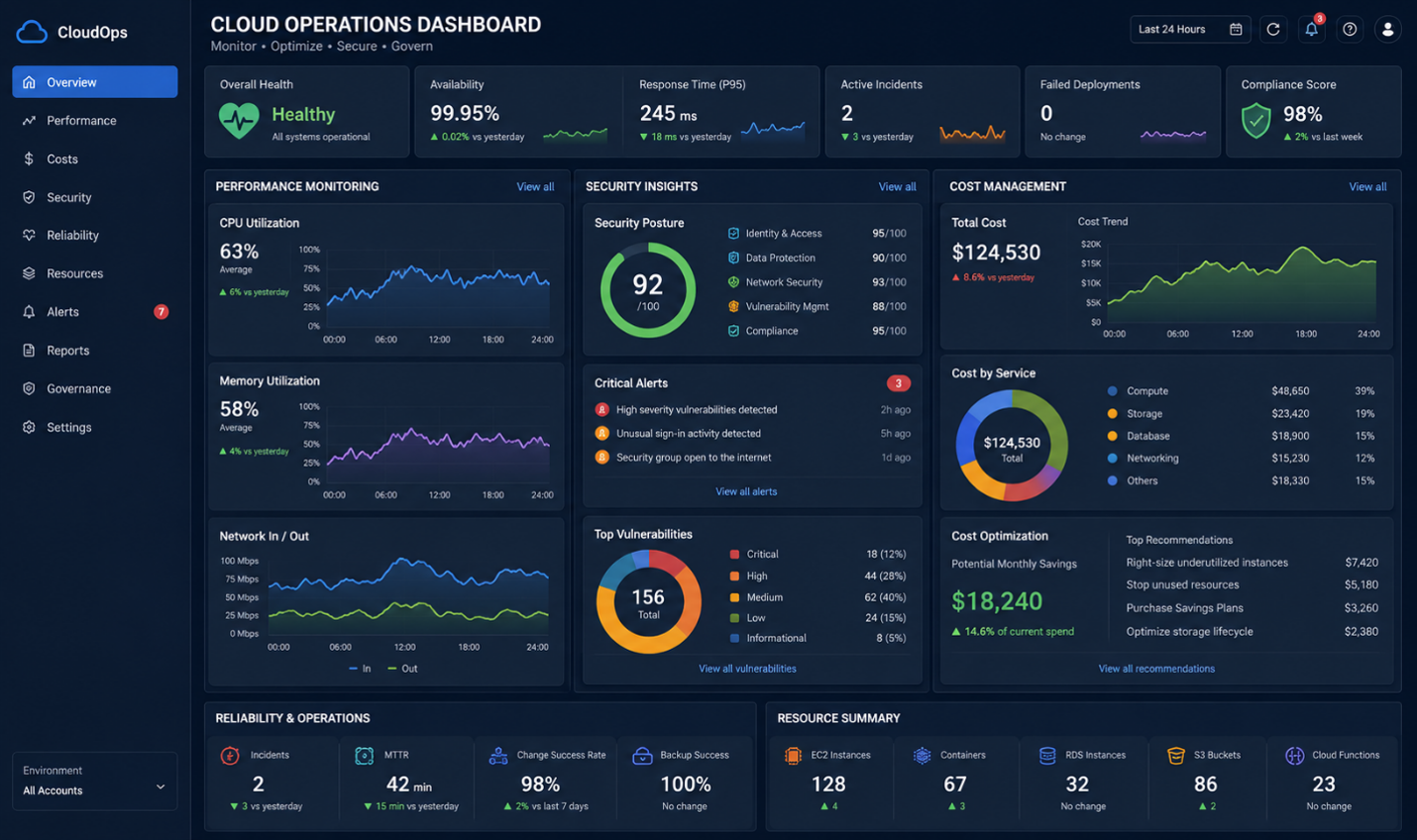
Fig 3: Cloud dashboard enables governance, monitoring, and continuous improvement.
Aligning Skills and Processes for Long-Term Success
Technology frameworks alone cannot guarantee successful outcomes. Organizations must also invest in people and skills.
Cloud teams require expertise across architecture, development, security, automation, operations, and governance. Structured training and certification programs help professionals stay current with evolving technologies and industry best practices.
When skilled professionals work within clearly defined frameworks, organizations can achieve greater consistency, improve operational performance, and deliver cloud solutions that support strategic business objectives.
Future of Cloud Computing
Successful Cloud Computing Programs require a combination of technology, governance, and skilled professionals. Organizations that establish a structured Development Framework can create secure and scalable solutions, while a mature Delivery Framework ensures those solutions are deployed consistently and efficiently.
Reliable Cloud Deployment practices further strengthen operational stability by reducing risk, improving visibility, and supporting continuous delivery. Together, these frameworks create a foundation that helps organizations manage complexity, maintain compliance, and adapt to evolving business requirements.
As cloud adoption continues to grow across industries, organizations that prioritize structured development and delivery processes will be better positioned to achieve sustainable outcomes and maximize the value of their cloud investments.
Upskill Your Teams with Enterprise-Ready Tech Training Programs
- Team-wide Customizable Programs
- Measurable Business Outcomes
About CloudThat
FAQs
1. What is a cloud development and delivery framework?
ANS: – A cloud development and delivery framework is a structured set of processes, standards, and governance practices that guide the design, build, test, deployment, and management of cloud solutions throughout their lifecycle.
2. Why are frameworks important for cloud projects?
ANS: – Frameworks help organizations maintain consistency, improve security, reduce operational risks, and ensure that cloud initiatives align with business goals. They also create repeatable processes that support scalability and long-term growth.
3. How does a Development Framework improve project outcomes?
ANS: – A Development Framework establishes standards for architecture, coding, testing, documentation, and security. These standards improve quality, reduce rework, and simplify maintenance across cloud environments.
4. What is the role of a Delivery Framework?
ANS: – A Delivery Framework governs how applications and infrastructure move from development environments into production. It focuses on automation, release management, change control, and operational readiness.
5. What are the key factors for successful Cloud Deployment?
ANS: – Successful deployments typically involve automation, consistent environments, integrated security controls, monitoring, rollback mechanisms, and post-deployment validation.
6. How can organizations continuously improve cloud program performance?
ANS: – Organizations can improve performance by monitoring operational metrics, reviewing deployment outcomes, refining governance processes, investing in training, and incorporating lessons learned into future projects.


WRITTEN BY Madhuri Abhijeet Joshi
Dr. Madhuri Joshi is a Microsoft Certified Trainer (MCT) and a renowned Subject Matter Expert with a Doctorate in Computer Science and Engineering. With over 23 years of experience in training and consulting, she has established herself as a trusted expert in DevOps and Cloud Computing technologies. She has worked extensively on a wide range of industry projects and has played a key role in designing custom training programs and project-based course outlines for enterprise technologies such as SAP and Red Hat OpenShift. As a technical coach for the Government of Maharashtra's Women Empowerment Program, Dr. Joshi has contributed significantly to upskilling and mentoring women in technology. Having trained over 7,000 professionals across the globe, she is highly respected for her clear, simple, and example-driven teaching style, especially when explaining complex technical concepts.


 PREV
PREV











Comments