

 Login
Login


 September 9, 2026
|
Voiced by Amazon Polly |
In many organizations, training success is often reported using a single number: course completion rates. If 95% of employees complete a mandatory learning program, it is usually considered a success. But does completion really mean learning happened? More importantly, does it indicate any measurable business impact?
As enterprise learning teams face increasing pressure to demonstrate value, relying solely on completion rates is no longer enough. Organizations investing in large-scale upskilling initiatives need metrics that connect learning efforts to workforce capability, productivity, and business outcomes.
This article explores why completion rates can become a vanity metric and highlights more meaningful approaches to measuring learning effectiveness.
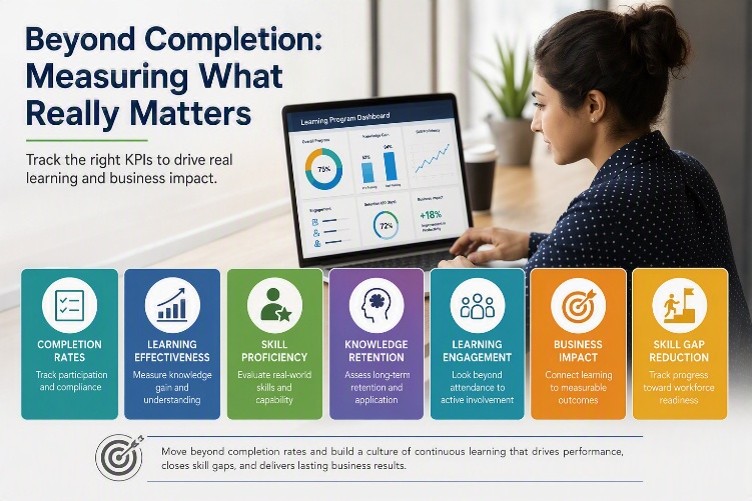
Fig 1: Measuring learning success beyond course completion rates.
Start Learning In-Demand Tech Skills with Expert-Led Training
- Industry-Authorized Curriculum
- Expert-led Training
Why Completion Rates Can Be Misleading
A completion rate simply indicates that learners have finished a course or learning path. It does not reveal whether they understood the content, retained knowledge, applied new skills, or improved job performance.
Consider these scenarios:
- An employee plays training videos in the background while working on other tasks.
- A learner completes an online course but forgets most of the concepts within a week.
- A certification program achieves a 100% completion rate, yet operational errors remain unchanged.
In all these cases, the learning management system records success, but business outcomes tell a different story.
While completion rates remain useful for monitoring participation and compliance, they should be viewed as an activity metric rather than a business impact metric.
The Problem with Vanity Metrics in Learning
Vanity metrics create a positive impression without providing actionable insights.
When learning leaders report only:
- Number of courses completed
- Training hours consumed
- Attendance percentages
- Learning platform logins
They may fail to answer the questions executives care about:
- Did employee performance improve?
- Were critical skill gaps reduced?
- Did customer satisfaction increase?
- Was productivity enhanced?
- Did training reduce operational risks?
Enterprise learning programs must move beyond measuring activity and focus on measuring outcomes.
1. Learning Effectiveness: Measure Knowledge Gain
One of the simplest ways to understand learning impact is to compare knowledge levels before and after training.
Pre-assessments and post-assessments provide measurable evidence of learning progress.
For example:
- Pre-training average score: 52%
- Post-training average score: 84%
This metric demonstrates a clear improvement in understanding rather than simply confirming course completion.
Organizations running technical, cloud, AI, cybersecurity, and data training programs often find knowledge gain metrics significantly more valuable than participation statistics.
2. Skill Proficiency: Measure Real Capability
Training should help employees perform tasks more effectively.
Instead of asking whether learners completed a course, ask whether they can demonstrate the required skill.
Examples include:
- Building a Power BI dashboard
- Creating prompts for Microsoft Copilot
- Deploying cloud infrastructure
- Writing secure code
- Performing data analysis
Managers, trainers, and technical assessors can evaluate skill proficiency using practical assignments, simulations, or project-based assessments.
Tracking skill proficiency helps organizations understand workforce readiness rather than course consumption.
3. Learning Effectiveness: Look Beyond Attendance
Engagement provides richer insights than completion alone.
Useful indicators include:
- Discussion participation
- Assignment submission rates
- Practice lab usage
- Peer collaboration
- Quiz attempts
- Voluntary Learning Activity
An employee who actively participates in exercises and discussions often gains more value than someone who merely completes a course.
Modern learning platforms increasingly provide analytics that help teams monitor meaningful learner engagement.
4. Knowledge Retention: Measure What Learners Remember
A critical challenge in enterprise learning is retention.
Research consistently shows that learners forget information when knowledge is not reinforced through practice and application.
Organizations can evaluate knowledge retention through:
- Follow-up quizzes after 30, 60, or 90 days
- Refresher assessments
- Practical projects
- Scenario-based evaluations
Retention metrics help determine whether training created lasting capability or temporary familiarity.
5. Business Impact: Connect Learning to Outcomes
The most valuable KPI is the one senior leadership cares about most: business results.
Depending on the training objectives, relevant indicators may include:
Operational Metrics
- Reduced error rates
- Faster issue resolution
- Improved compliance performance
- Increased process efficiency
Customer Metrics
- Higher customer satisfaction scores
- Reduced escalation rates
- Better service quality
Revenue Metrics
- Increased sales conversions
- Higher deal values
- Faster sales onboarding
Productivity Metrics
- Reduced task completion time
- Improved project delivery rates
- Increased automation adoption
When learning initiatives influence these outcomes, training moves from a cost center to a strategic business investment.
6. Certification and Credential Achievement
For technical learning programs, certifications often provide a reliable indication of competency.
Tracking certification success can reveal:
- Readiness for new technologies
- Adoption of industry best practices
- Workforce capability growth
- Benchmarking against industry standards
Professionals seeking structured AI learning paths can explore AI-3025: Work Smarter with Microsoft Copilot and AI course for hands-on exposure to Microsoft Copilot and practical business use cases.
7. Skill Gap Reduction: A Strategic KPI
Many enterprise learning initiatives begin with a skills assessment.
Rather than reporting course completions, organizations can measure:
- Existing skill gaps
- Desired competency levels
- Improvement over time
Organizations developing future-ready workforces often focus on structured capability-building programs that align learning outcomes with business goals. Companies like CloudThat’s Corporate IT Training Programs emphasize workforce readiness, skill-gap reduction, hands-on learning, and measurable training outcomes.
A Balanced Learning Measurement Framework
The most successful learning teams do not eliminate completion rates entirely. Instead, they place them within a broader measurement framework.
A practical dashboard may include:
- Completion Rates (Participation)
- Learning Effectiveness (Knowledge Gain)
- Skill Proficiency (Capability)
- Knowledge Retention (Sustainability)
- Learning Engagement (Involvement)
- Business Impact (Results)
- Skill Gap Reduction (Workforce Readiness)
Together, these KPIs provide a more accurate view of learning success.
Measuring Learning Impact
Completion rates are not inherently bad metrics. They help organizations track participation and compliance. However, when they become the primary measure of success, they can create a false sense of progress.
Modern enterprise learning programs should focus on learning effectiveness, skill proficiency, knowledge retention, and business impact to demonstrate real value. By moving beyond vanity metrics and adopting outcome-focused measurement, organizations can better justify learning investments, close critical skill gaps, and build a workforce prepared for future challenges.
Upskill Your Teams with Enterprise-Ready Tech Training Programs
- Team-wide Customizable Programs
- Measurable Business Outcomes
About CloudThat


WRITTEN BY Reshu Goyal
Reshu Goyal is a Microsoft Certified Trainer and Subject Matter Expert at CloudThat with over 10 years of experience in data analytics and visualization. She has trained 1,000+ professionals across Power BI, Microsoft Fabric, Advanced Excel and Tableau, delivering sessions for top clients like Microsoft, Deloitte and TCS. Reshu is known for her hands-on, learner-focused approach and her ability to turn complex data into actionable insights.


 PREV
PREV











Comments