

 Login
Login

 August 19, 2026
|
Voiced by Amazon Polly |
Artificial Intelligence is evolving from simple chatbots to intelligent agents capable of reasoning, planning, and taking actions autonomously. Azure AI Foundry Agent Service enables organizations to build, deploy, and scale AI agents that can interact with enterprise data, use tools, automate workflows, and collaborate across business applications. Microsoft provides a managed platform that supports multiple AI models, enterprise-grade security, observability, and seamless integration with Microsoft ecosystems.
Start Learning In-Demand Tech Skills with Expert-Led Training
- Industry-Authorized Curriculum
- Expert-led Training
What Are AI Agents in Azure?
An AI agent is an intelligent application that uses AI models to understand user requests, make decisions, access data sources, and perform actions to achieve a goal. Unlike traditional chatbots, AI agents can execute multi-step tasks, invoke tools, access enterprise knowledge, and operate autonomously when triggered by events.
Azure AI Foundry Agent Service provides a managed environment for creating these agents while handling infrastructure, scaling, security, and monitoring.
Key Features of AI Agents in Azure
- Managed Agent Runtime
Azure offers a fully managed runtime that enables organizations to deploy and scale AI agents without managing infrastructure, containers, or server configurations.
- Multi-Model Support
Developers can use models from the Azure AI Foundry catalog, including OpenAI models and other supported foundation models, allowing flexibility in selecting the right AI for different scenarios.
- Enterprise Knowledge Integration
Agents can access enterprise knowledge sources, including SharePoint, Microsoft Fabric, web search, and other connected systems, to deliver context-aware responses.
- Tool Calling and Automation
Azure AI agents can invoke tools, APIs, and business applications to perform actions such as retrieving data, updating records, generating reports, or triggering workflows.
- Memory and Context Retention
Built-in memory capabilities allow agents to retain context across conversations and workflows, enabling more personalized and accurate interactions.
- Security and Governance
Azure provides enterprise-grade security through Microsoft Entra ID, access controls, private networking options, and governance capabilities, ensuring responsible AI deployment.
- Observability and Monitoring
Organizations can monitor agent performance, trace actions, evaluate responses, and maintain compliance through integrated observability tools.
Business Use Cases of AI Agents in Azure
- Customer Support Automation
AI agents can resolve customer inquiries, retrieve account information, create support tickets, and provide personalized recommendations, reducing response times and improving customer satisfaction.
2. IT Service Management
Agents can automate password resets, incident management, system monitoring, and service desk operations, freeing IT teams to focus on strategic initiatives.
- Employee Productivity Assistants
Organizations can deploy internal assistants that access company knowledge bases, HR policies, project documentation, and collaboration tools to support employees.
- Financial Operations
AI agents can analyze financial data, generate reports, detect anomalies, and assist with compliance checks, improving efficiency and accuracy.
- Healthcare Intelligence
Healthcare providers can use AI agents to streamline patient communication, summarize medical records, schedule appointments, and support administrative workflows.
- Supply Chain Optimization
Agents can monitor inventory, track shipments, forecast demand, and automate procurement processes for enhanced operational efficiency.
Benefits of Using AI Agents in Azure
- Accelerated business process automation
- Improved operational efficiency
- Enhanced customer and employee experiences
- Enterprise-grade security and compliance
- Seamless integration with Microsoft services
- Scalable and cost-effective deployment models
Architecture
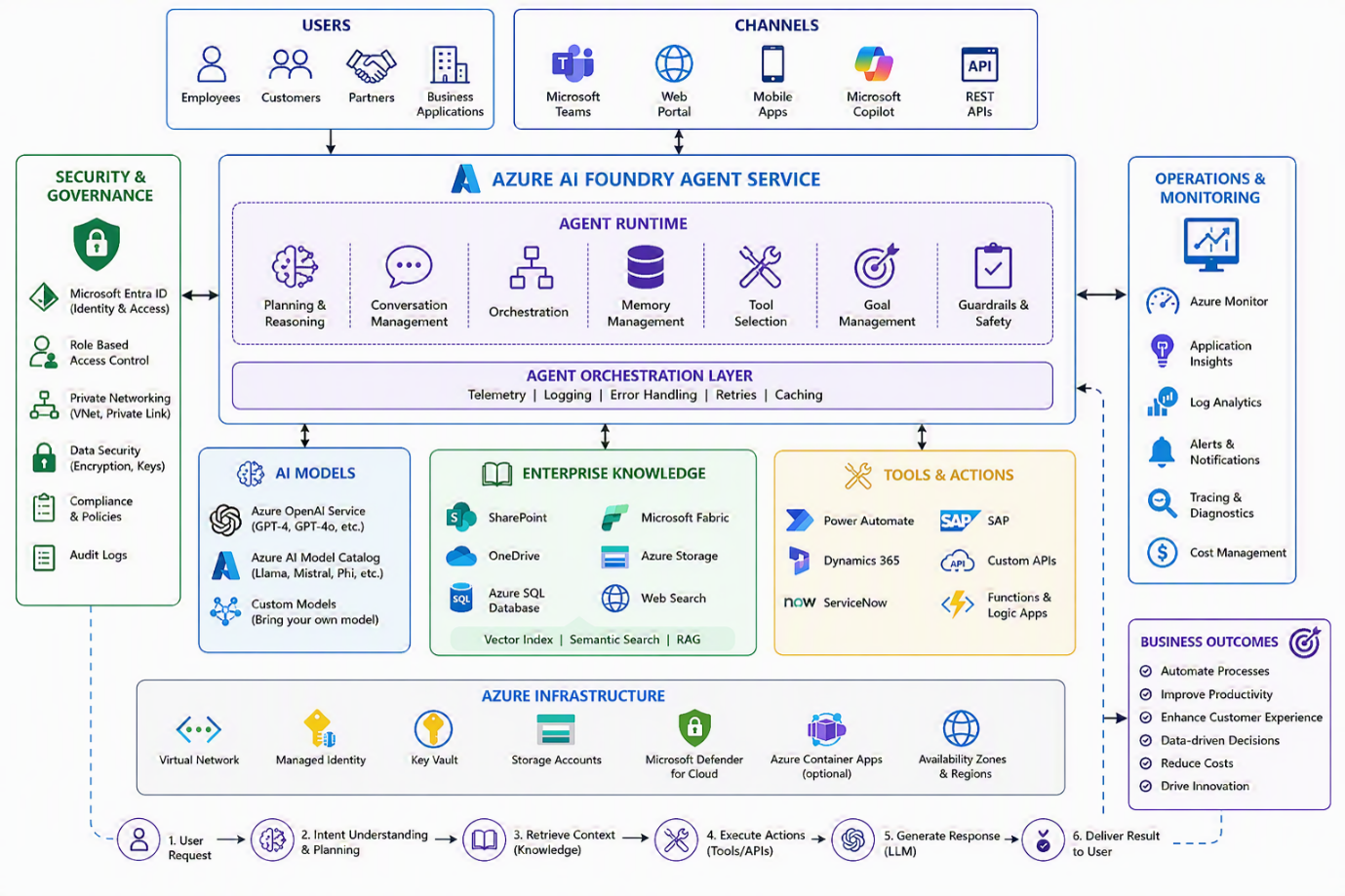
Fig 1: Azure AI Foundry Agent Service reference architecture.
Azure AI Foundry Agent Service architecture diagram showing:
- Users and Channels (Teams, Web, Mobile, Copilot, APIs)
- Azure AI Foundry Agent Service
- Agent Runtime and Orchestration Layer
- AI Models, Enterprise Knowledge, and Tools & Actions
- Security & Governance
- Operations & Monitoring
- Azure Infrastructure components
- End-to-end request processing flow
- Business outcomes
If you want to learn more about Agent in Microsoft, you can refer to Microsoft Certified: Azure AI Fundamentals – AI-901 and Microsoft Certified: Develop AI Apps and Agent on Azure – AI-103.
Azure AI Automation Future
AI agents in Azure represent the next generation of intelligent business applications. By combining advanced AI models, enterprise data integration, automation capabilities, and robust security, Azure enables organizations to build powerful agents that go beyond conversational AI. Whether supporting customers, employees, or business operations, Azure AI agents help companies drive innovation, improve productivity, and unlock new levels of automation. As businesses continue their AI transformation journey, Azure AI Foundry Agent Service provides a scalable, enterprise-ready platform for bringing intelligent agents into production.
Upskill Your Teams with Enterprise-Ready Tech Training Programs
- Team-wide Customizable Programs
- Measurable Business Outcomes
About CloudThat


WRITTEN BY Mahendra Patel
Mahendra Patel is Subject Matter Expert in Azure Infra/Arch at CloudThat, with a passion for empowering professionals through top-tier Microsoft training. As an MCT he brings over 13 years of rich experience in training, academics and research. He holds 18+ professional certifications across Microsoft ecosystem and has successfully trained over 2200+ professionals in Azure Solution Architect, Azure Administrator, Azure Network, PowerBI, Azure Security and AI Data Engineering. His hands-on, tool-driven approach to training is known for translating complex concepts into practical, real-world solutions.


 PREV
PREV










Comments