

 Login
Login


 June 19, 2026
|
Voiced by Amazon Polly |
Cloud computing is no longer just a trend; it has become the backbone of modern technology infrastructure. Yet, for many beginners, the journey from learning basic concepts to building real-world cloud skills can feel unclear and overwhelming. Certifications and theory alone are rarely enough to prepare learners for industry demands.
This is where cloud computing service providers play a crucial role. Beyond offering tools and platforms, they actively shape how professionals learn, practice, and apply cloud technologies in real scenarios. The transition from novice to confident cloud professional is often guided by the structured ecosystems, training programs, and real-world exposure that these providers enable.
In this blog, we explore how cloud service providers help build practical skills and accelerate career growth in cloud computing.
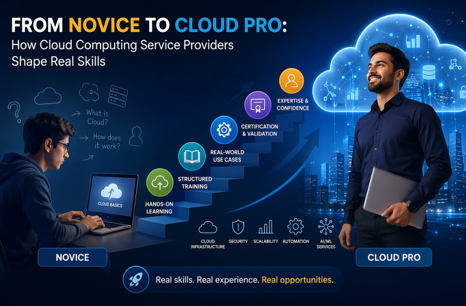
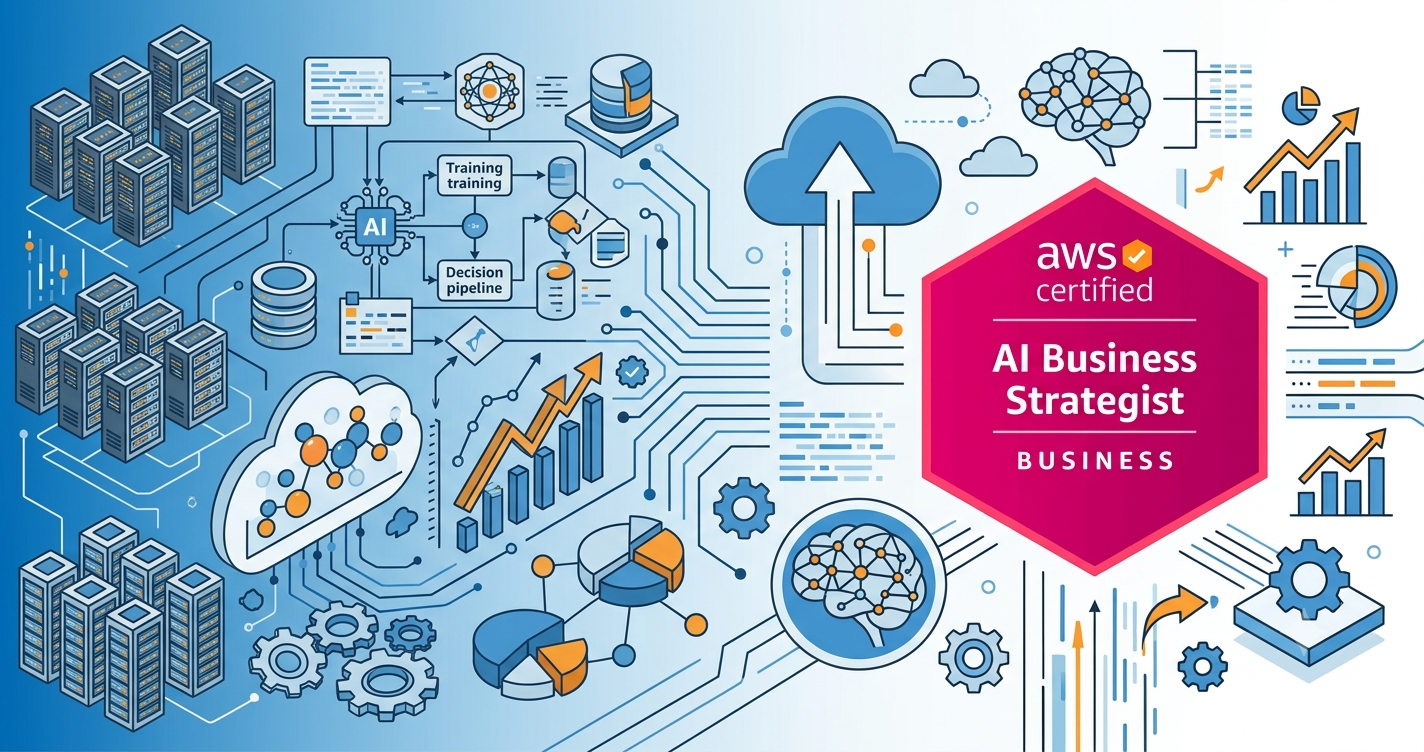
Fig 1: From beginner to cloud pro through real‑world training and skills development.
Start Learning In-Demand Tech Skills with Expert-Led Training
- Industry-Authorized Curriculum
- Expert-led Training
Understanding the Gap: Knowledge vs. Real Skills
Many learners begin their cloud journey through documentation, online courses, or certification paths. While this builds foundational understanding, a gap often remains between theoretical knowledge and practical implementation.
Some common challenges learners face include:
- Difficulty applying concepts in real-world environments
- Limited exposure to production-scale scenarios
- Lack of understanding of industry workflows and best practices
- Uncertainty about choosing the right tools for specific use cases
Cloud service providers address this gap by offering environments that simulate real-world applications, enabling learners to experiment, fail, and improve in a controlled setup.
Hands-On Learning with Real Infrastructure
One of the most impactful contributions of cloud providers is the availability of on-demand infrastructure. Instead of relying on local setups or simulations, learners can work directly with real cloud environments.
This allows learners to:
- Deploy applications on virtual machines and containers
- Configure networking, storage, and security policies
- Build scalable architectures based on actual workload demands
- Monitor performance and optimize systems
Such hands-on practice helps transform passive knowledge into actionable skills, making learners more confident when working on enterprise-level projects.
Structured Learning Paths and Certifications
Cloud service providers design structured learning paths that guide individuals from beginner to advanced levels. These paths are not random; they are aligned with real-world job roles such as:
- Cloud Administrator
- Solutions Architect
- DevOps Engineer
- Data Engineer
Each stage in the learning journey introduces progressively more tools, concepts, and scenarios. Certifications serve as milestones, but, more importantly, they validate practical understanding and problem-solving skills.
These structured programs ensure that learners are not just collecting certificates but developing relevant expertise.
Exposure to Industry Use Cases
Another key advantage is the exposure to real-world use cases. Cloud providers integrate case-based learning into their platforms, covering scenarios such as:
- Migrating applications from on-premises environments to the cloud
- Designing cost-optimized architectures
- Implementing disaster recovery strategies
- Enabling AI and data analytics workloads
By working on these scenarios, learners begin to think like professionals rather than just students. They learn how to approach problems, evaluate trade-offs, and design solutions that align with business requirements.
Ecosystem of Tools and Services
Modern cloud platforms offer a wide range of services, from compute and storage to AI, machine learning, and automation tools. Learning how these services interact is a critical part of becoming a cloud professional.
Cloud providers support this by offering:
- Integrated service ecosystems
- Pre-built templates and architectures
- Automation tools for deployment and scaling
- Documentation and guided tutorials
This ecosystem enables learners to move beyond isolated learning and understand how different components come together to form complete solutions.
Community, Support, and Continuous Learning
Cloud providers also foster strong learning communities. These communities include forums, documentation hubs, webinars, and knowledge-sharing platforms.
The benefits of engaging with these communities include:
- Learning from real-world challenges faced by others
- Staying updated with evolving technologies
- Accessing expert insights and best practices
- Finding solutions faster through shared knowledge
Continuous learning becomes essential in cloud computing, as the technology evolves rapidly. Service providers ensure learners have access to updated resources and ongoing support.
Bridging the Industry Readiness Gap
Ultimately, cloud service providers act as a bridge between learning and employment. By combining hands-on labs, structured training, real-world scenarios, and community support, they prepare individuals for actual job environments.
Professionals trained through these ecosystems are better equipped to:
- Handle production workloads
- Collaborate within DevOps-driven teams
- Optimize cloud costs and performance
- Ensure security and compliance
This practical readiness is what differentiates a beginner from a true cloud professional.
Build Future Cloud Skills
The journey from novice to cloud professional is not defined by theory alone; it is shaped by experience, experimentation, and real-world problem solving. Cloud computing service providers play a central role in enabling this transformation.
By offering hands-on environments, structured learning paths, practical use cases, and strong support ecosystems, they empower learners to build meaningful, industry-relevant skills.
For anyone starting in cloud computing, leveraging the resources provided by these platforms is one of the most effective ways to grow, not just in knowledge, but in real capability.
Upskill Your Teams with Enterprise-Ready Tech Training Programs
- Team-wide Customizable Programs
- Measurable Business Outcomes
About CloudThat


WRITTEN BY Keerthish N
Keerthish N is a Technical Content Writer with over 4 years of experience in technical content development and learning operations. He specializes in creating engaging content on cloud computing, AI, Azure, and AWS technologies. Known for simplifying complex concepts, Keerthish is passionate about knowledge sharing, emerging technologies, and process automation.


 PREV
PREV






Comments