

 Login
Login

 June 16, 2026
|
Voiced by Amazon Polly |
As organizations expand their cloud environments, maintaining consistent visibility and control becomes increasingly complex. One of the most critical yet often overlooked risks is Shadow IT, the presence of unmanaged or unapproved resources operating outside established governance frameworks.
These resources are typically provisioned by development teams or business units to accelerate innovation and improve agility. However, while they enable faster deployment, they simultaneously introduce significant gaps in
Without proper oversight, these assets remain outside centralized monitoring and policy enforcement, limiting the ability of security teams to detect, investigate, and respond to threats effectively. In large-scale environments, this lack of visibility directly impacts security operations, making it difficult to maintain consistent protection across all resources.
Start Learning In-Demand Tech Skills with Expert-Led Training
- Industry-Authorized Curriculum
- Expert-led Training
The Expanding Risk Surface of Shadow IT
Modern cloud platforms enable rapid infrastructure provisioning via portals, APIs, Infrastructure-as-Code (IaC), and automated pipelines. While this flexibility is a key advantage, it also increases the likelihood that resources will be deployed outside governance controls.
When Shadow IT exists within an environment, organizations often face:
- Lack of visibility into resource activity
- Absence of standardized security configurations
- Inconsistent identity and access management
- Absence of logging and monitoring integration
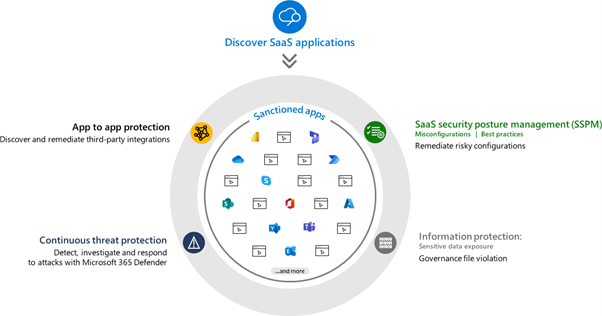
Fig 1: Microsoft Defender for Cloud Apps overview.
The challenge extends beyond simple misconfiguration. The real risk lies in assets that are completely invisible to security operations, making them prime targets for exploitation. These unmanaged resources often lack baseline security controls, increasing the likelihood of unauthorized access and data exposure.
Visibility Gaps and Their Impact on Threat Detection
Effective Threat Detection depends on continuous telemetry, log ingestion, and correlation across multiple data sources. These capabilities are foundational to modern SIEM and XDR solutions.
However, unmanaged resources disrupt this model. When assets are not onboarded to centralized monitoring platforms:
- Security events are not collected
- Alerts are not generated
- Suspicious activity remains undetected
This creates blind spots in the environment where attackers can operate undetected. It also impacts correlation engines, as missing telemetry prevents linking activities across identity, infrastructure, and application layers.
Solutions like Microsoft Defender for Cloud help address this challenge by continuously assessing cloud environments and identifying non-compliant or unmanaged resources, thereby extending visibility across workloads.
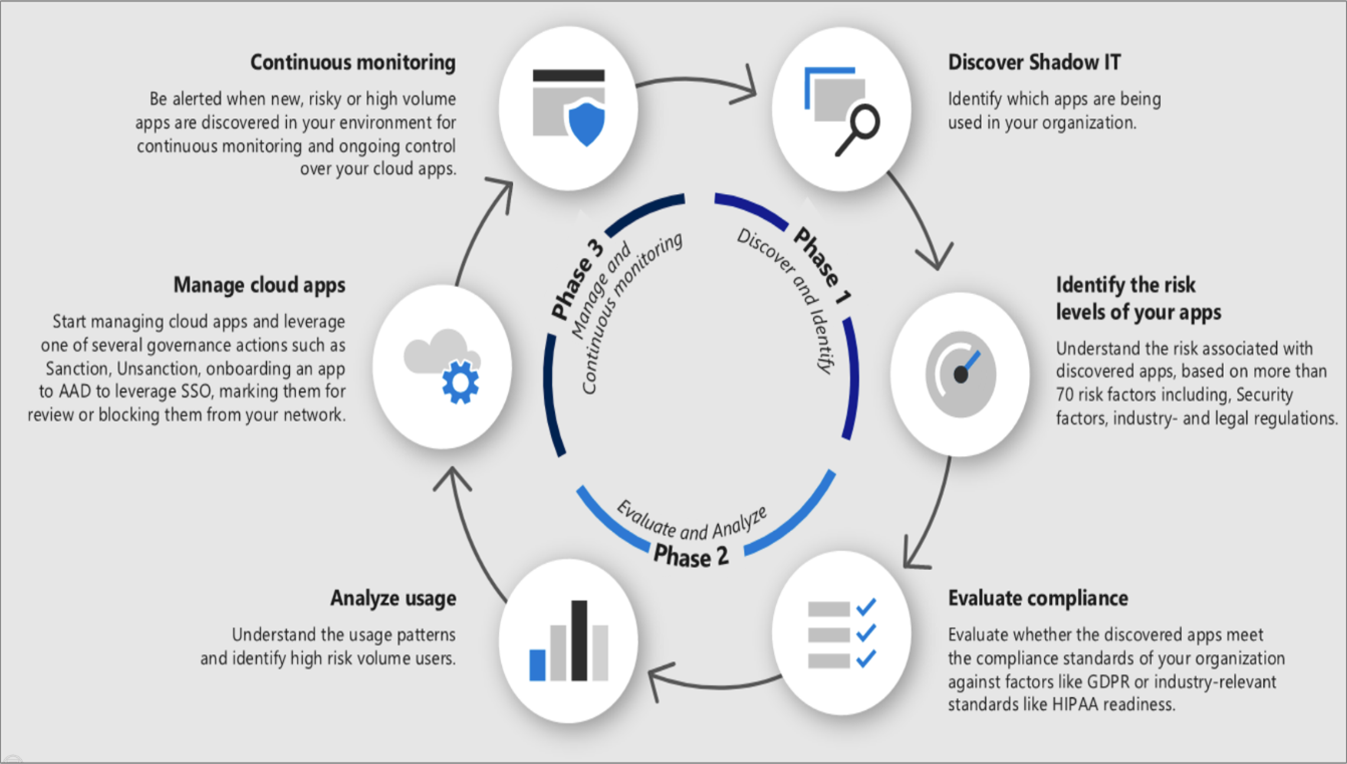
Fig 2: Shadow IT cloud discovery.
Strengthening Security Governance Across Environments
To mitigate risks introduced by Shadow IT, organizations must enforce strong Security Governance practices across all cloud assets. Organizations must establish and enforce consistent governance controls across all cloud assets to ensure visibility, compliance, and accountability.
This includes:
- Standardizing policies across subscriptions and resource groups
- Ensuring all resources are onboarded to centralized monitoring
- Continuously assessing compliance and configuration posture
- Enforcing security baselines for all deployed resources
By implementing governance controls, organizations can ensure that even newly created resources are quickly brought under visibility and control. Automated policy enforcement and continuous compliance monitoring further reduce the risk of unmanaged assets persisting in the environment.
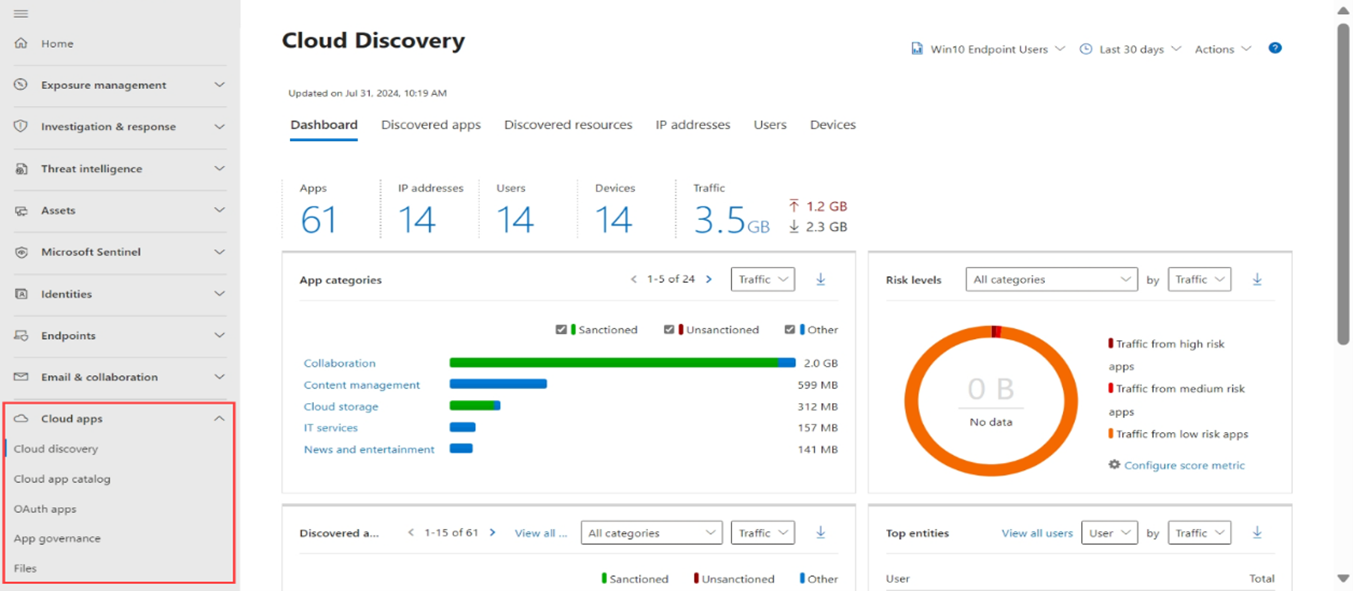
Fig 3: Microsoft Defender portal under Cloud Apps.
Correlation Challenges in Security Operations
Modern security operations rely on correlating signals across identity, infrastructure, and applications to detect attack patterns.
However, Shadow IT disrupts this correlation by introducing gaps in telemetry.
For example:
A compromised identity accesses an unmanaged storage resource.
Since the resource is not integrated with monitoring systems, no logs are generated.
Without telemetry, no alert is triggered.
This breaks the detection chain, delays incident response, and increases attacker dwell time, ultimately amplifying the impact of security incidents.
Building Skills for Modern Cloud Security
Addressing these challenges requires more than just deploying security tools—it demands strong expertise in cloud security operations and continuous monitoring strategies. Security professionals must be able to identify unmanaged assets, integrate them into centralized visibility platforms, and enforce consistent security controls across dynamic cloud environments.
This involves developing capabilities in:
- Advanced Threat detection and behavioral analysis
- Centralized security monitoring and investigation using SIEM platforms
- Effective incident response leveraging modern SIEM and XDR solutions
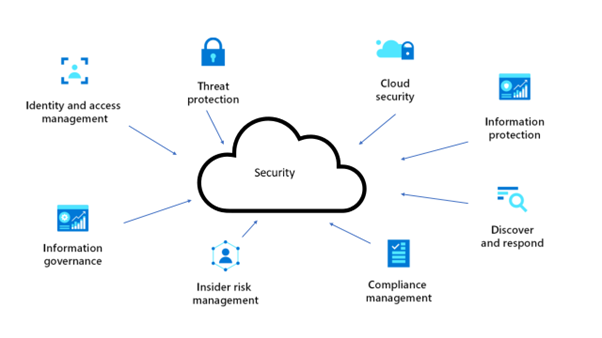
Fig 4: Security architecture design
Securing Every Asset
The rise of Shadow IT introduces significant visibility and control gaps in Cloud Security, allowing unmanaged resources to expand the attack surface and bypass critical security controls.
To mitigate these risks, organizations must strengthen Threat Detection by leveraging advanced analytics, behavioral insights, and integrated monitoring across both managed and unmanaged resources. At the same time, enforcing strong Security Governance ensures that all assets adhere to standardized policies, are continuously assessed, and are consistently integrated into monitoring frameworks.
By combining proactive detection with consistent governance controls, organizations can restore visibility, reduce operational risk, and establish a resilient Cloud Security posture that effectively safeguards all assets across the environment.
Upskill Your Teams with Enterprise-Ready Tech Training Programs
- Team-wide Customizable Programs
- Measurable Business Outcomes
About CloudThat


WRITTEN BY Navitha Wilson
Navitha Wilson is a Microsoft Certified Trainer and Subject Matter Expert in Azure Infrastructure and Architecture at CloudThat, with a strong focus on Microsoft Azure and Hybrid Infrastructure. With over 13 years of experience in training and academics, she has empowered 5,000+ professionals and learners through her expertise in Azure Administration, Networking and Security. She is also a Cisco Certified Network Professional (CCNP) in Routing and Switching, with robust hands-on experience across cloud and on-premises environments. Renowned for her ability to simplify complex technical concepts and deliver engaging hands-on sessions, Navitha consistently receives outstanding feedback from learners and is widely recognized as an exceptional trainer. Her training style blends deep technical knowledge with practical application, ensuring impactful and results-driven learning experiences. Navitha’s passion for technology and reading fuels her unique and inspiring approach to learning and development.


 PREV
PREV












Comments