

 Login
Login

 June 16, 2026
|
Voiced by Amazon Polly |
In today’s data-driven world, organizations are collecting more information than ever before. But collecting data is not the real challenge; making sense of it is. This is where Microsoft Fabric integration with AI becomes valuable. It brings together data storage, analytics, and artificial intelligence into a single platform, making it easier for businesses to work with their data in a meaningful way.
Unlike traditional systems where data is scattered across tools and platforms, Microsoft Fabric offers a unified environment. With Microsoft Fabric’s AI integration, users can go beyond simple dashboards and begin to understand patterns more deeply. This combination also supports AI-powered analytics, helping organizations move from reactive reporting to proactive decision-making.
Start Learning In-Demand Tech Skills with Expert-Led Training
- Industry-Authorized Curriculum
- Expert-led Training
Understanding the Basics
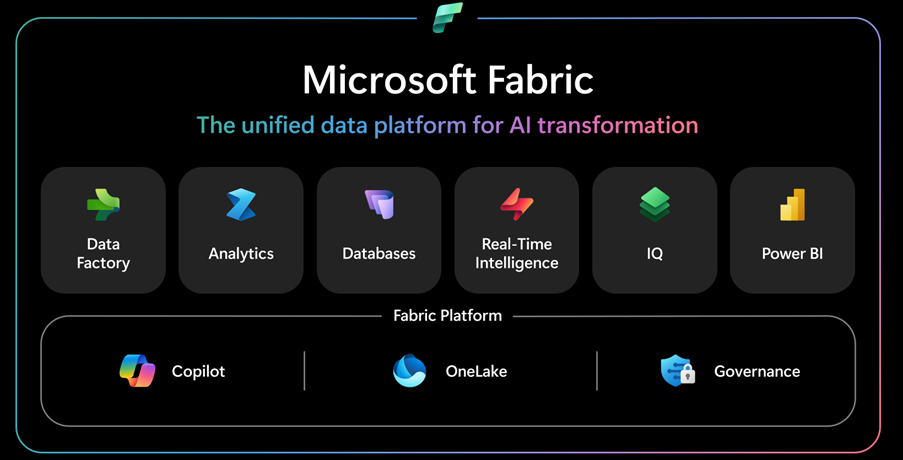
At its core, Microsoft Fabric is designed to simplify how data flows within an organization. It combines services such as data engineering, data warehousing, and business intelligence into a single ecosystem. When you introduce Microsoft Fabric integration with AI, the platform becomes more intuitive and responsive.
The idea behind Microsoft Fabric integration with AI is not to replace human decision-making, but to support it. AI helps identify patterns, suggest trends, and even automate repetitive tasks. This allows teams to focus on more important work rather than spending hours cleaning and analyzing data.
Why AI Matters in Data Platforms
AI is not just a trend; it’s becoming a necessary part of modern data systems. With increasing data volumes, manual analysis is no longer practical. This is where AI-powered analytics becomes essential, especially when used within a cloud data platform like Microsoft Fabric.
When using AI-powered analytics, businesses can:
- Detect patterns that are difficult to notice manually
- Predict future trends based on historical data
- Automate data preparation and reporting tasks
A strong cloud data platform supports these capabilities by providing scalability and flexibility. With Microsoft Fabric’s integration with AI, businesses can fully leverage both AI and cloud technologies.
Simplifying Data for Everyone
One of the biggest advantages of Microsoft Fabric is that it makes data more accessible. Not everyone in an organization is a data expert, and that’s okay. With AI integrated into the platform, even non-technical users can explore data and generate insights.
This is where data democratization plays an important role. It allows more people to access and work with data confidently. Through data democratization, organizations can break down barriers between technical and non-technical teams.
AI supports data democratization by simplifying complex processes. For example:
- Users can ask questions in simple language
- Reports can be generated automatically using AI-powered analytics
- Insights are presented clearly and simply
By combining data democratization with a cloud data platform, organizations can ensure that data is not limited to a few specialists.
Real-World Use Cases
The combination of Fabric and AI is already being used across industries. Here are a few practical examples:
- Healthcare
Hospitals use AI-powered analytics within a cloud data platform to analyze patient records and predict health risks. This supports early diagnosis and better treatment planning. - Finance
Banks rely on Microsoft Fabric integration with AI to monitor transactions and detect unusual patterns. This improves fraud detection and strengthens security. - Retail
Retailers use AI-powered analytics to forecast demand and manage inventory. A strong cloud data platform ensures that this data is always available and up to date.
In all these cases, the role of cloud data platform capabilities is critical. Microsoft Fabric provides the foundation, while AI adds intelligence on top.
Making Integration Simple
One concern organizations often have is the difficulty of integrating AI into their existing systems. Microsoft Fabric makes this process more manageable by providing built-in tools and connectors that work well within a cloud data platform environment.
Instead of making large changes all at once, teams can start small and expand gradually. Existing data can be migrated to Fabric in stages, and AI features can be introduced where they add the most value. This approach helps reduce disruption and allows teams to learn and adapt along the way.
By keeping the process flexible and practical, organizations can adopt AI at their own pace without feeling overwhelmed.
Challenges to Keep in Mind
While the benefits are clear, it’s important to approach implementation carefully. Even with Microsoft Fabric integration with AI, some challenges remain:
- Data quality issues
- Lack of proper governance
- Over-reliance on automated insights
A cloud data platform works best when the data is clean and well-organized. Similarly, while AI-powered analytics can provide useful insights, human review is still necessary.
Maintaining data democratization also requires proper controls. Access should be managed carefully to ensure data security while still promoting collaboration.
The Human Element
Even with advanced tools, people remain at the center of decision-making. Microsoft Fabric integration with AI should be seen as a support system rather than a replacement.
By using AI-powered analytics responsibly, teams can make better decisions without losing the human touch. A balanced approach that combines data democratization with a reliable cloud data platform leads to stronger outcomes.
Unlocking Smarter Data
The journey toward smarter data systems doesn’t have to be complicated. Microsoft Fabric integration with AI provides a practical way to bring data and intelligence together in one place. It simplifies processes, improves accessibility, and supports better decision-making.
By focusing on real use cases and keeping the approach simple, organizations can unlock the true value of their data. Whether it’s through AI-powered analytics, improving data democratization, or leveraging a modern cloud data platform, the goal remains the same: making data useful for everyone.
Upskill Your Teams with Enterprise-Ready Tech Training Programs
- Team-wide Customizable Programs
- Measurable Business Outcomes
About CloudThat


WRITTEN BY Atul Choudhary
Atul Choudhary is a Subject Matter Expert at CloudThat and a Microsoft Certified Trainer with over 15 years of IT industry experience. Specializing in Azure and Hybrid Cloud solutions, he holds multiple certifications including AZ-104, AZ-305, AZ-700, and AZ-800. Atul is known for delivering hands-on, scenario-driven training that bridges the gap between theory and real-world application. At CloudThat, he empowers professionals and organizations to upskill, modernize infrastructure, and accelerate cloud adoption. He is also a certified International Engineering Educator through IUCEE, committed to advancing global technical education.


 PREV
PREV











Comments