

 Login
Login


 December 18, 2025
|
Voiced by Amazon Polly |
Securing sensitive data is one of the most important responsibilities of modern data teams. Whether you’re building customer-facing applications or operating analytics pipelines, preventing unauthorized access to personal or confidential information is essential and not just for compliance, but for trust.
Dynamic Data Masking (DDM) is one of the most effective techniques for protecting sensitive information in real-time. When combined with Amazon Aurora PostgreSQL, it allows you to enforce data-level security without changing your underlying applications.
In this blog, we explore how dynamic data masking works in Aurora PostgreSQL, its significance and how to implement it with practical examples.
Start Learning In-Demand Tech Skills with Expert-Led Training
- Industry-Authorized Curriculum
- Expert-led Training
What Is Dynamic Data Masking?
Dynamic Data Masking (DDM) is a technique that hides sensitive data at query time based on user permissions. Instead of altering the actual data stored in the database, DDM ensures that unauthorized users see masked or obfuscated values, while authorized users can access the original data.
For example, columns like email, SSN or credit card numbers can be displayed in a masked format, such as:
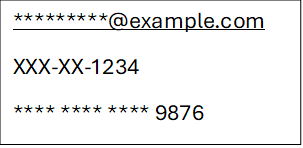
Dynamic Data Masking hides sensitive data for unauthorized users.
Dynamic Data Masking in Aurora PostgreSQL
While PostgreSQL does not include a built-in DDM feature (unlike SQL Server), Amazon Aurora PostgreSQL makes dynamic masking possible through PostgreSQL’s advanced security features, such as:
- Security-definer functions
- Row-level Security (RLS)
- Views and logical abstraction layers
- Policy-based access control
- Extensions like pgcrypto (for encryption)
By combining these tools, Aurora PostgreSQL can implement highly flexible and performant masking logic.
Why Use Dynamic Data Masking in Aurora PostgreSQL?
- Protect Sensitive Data
Mask personal, financial or healthcare data without modifying source tables.
- Support Compliance
DDM helps meet GDPR, HIPAA, PCI-DSS and other privacy requirements by enforcing data-access boundaries.
- Reduce Application Complexity
Masking rules reside in the database layer; therefore, there is no need to update every application that touches the data.
- Enable Safe Analytics
Analysts, developers and data scientists can use masked data without exposure to sensitive details.
Implementing Dynamic Data Masking in Aurora PostgreSQL
Below is a simple, practical example of implementing masking using:
- Row-Level Security (RLS)
- Views
- Masking functions
Step 1: Create a demo table
|
1 2 3 4 5 6 7 8 9 10 11 12 13 |
CREATE TABLE customers ( id SERIAL PRIMARY KEY, full_name TEXT, email TEXT, ssn TEXT, created_at TIMESTAMP DEFAULT now() ); |
Step 2: Insert sample data
|
1 2 3 4 5 |
INSERT INTO customers (full_name, email, ssn) VALUES ('Alice Carter', 'alice@example.com', '123-45-6789'), ('Bob Smith', 'bob@example.com', '987-65-4321'); |
Step 3: Create a masking function
|
1 2 3 4 5 6 7 8 9 10 11 12 13 14 15 16 17 18 19 20 21 22 23 24 25 26 |
CREATE OR REPLACE FUNCTION mask_email(email TEXT) RETURNS TEXT LANGUAGE plpgsql AS $$ BEGIN RETURN regexp_replace(email, '(^.).+(@.*$)', '\1****\2'); END; $$; CREATE OR REPLACE FUNCTION mask_ssn(ssn TEXT) RETURNS TEXT LANGUAGE plpgsql AS $$ BEGIN RETURN 'XXX-XX-' || right(ssn, 4); END; $$; |
Step 4: Create a masked view
|
1 2 3 4 5 6 7 8 9 10 11 12 13 14 15 16 17 18 19 20 21 22 23 24 25 26 27 |
CREATE OR REPLACE VIEW customers_masked AS SELECT id, full_name, CASE WHEN current_user = 'admin_user' THEN email ELSE mask_email(email) END AS email, CASE WHEN current_user = 'admin_user' THEN ssn ELSE mask_ssn(ssn) END AS ssn, created_at FROM customers; |
Step 5: Grant access to the masked view
|
1 |
GRANT SELECT ON customers_masked TO reporting_user; |
Performance Considerations
Dynamic masking can introduce overhead, depending on:
- Complexity of masking functions
- Query frequency
- Whether masking occurs on large datasets
Recommendations:
- Precompute simple masks via generated columns if possible
- Limit masking to sensitive columns only
- Use indexed unmasked data for joins and filters
Securing Data Dynamically
Dynamic Data Masking in Amazon Aurora PostgreSQL provides a practical and efficient way to secure sensitive information without changing your application logic. By leveraging PostgreSQL’s security features and Aurora’s managed environment, you can implement robust masking strategies that meet compliance requirements and protect data integrity.
Whether you’re enabling analytics, supporting customer operations or preparing for audits, DDM ensures that the right users see the right data at the right time.
Upskill Your Teams with Enterprise-Ready Tech Training Programs
- Team-wide Customizable Programs
- Measurable Business Outcomes
About CloudThat


WRITTEN BY Sindhu Priya M
Sindhu Priya M is a Technical Lead at CloudThat, specializing in Development, Infra-Management and DevOps. With 6+ years of experience in training and consulting, she has trained over 1000+ professionals to upskill in Architecture, Development and DevOps. Known for simplifying complex concepts, hands-on teaching, and industry insights, she brings deep technical knowledge and practical application into every learning experience. Sindhu's passion for development technology reflects in her unique approach to learning and development.


 PREV
PREV












Comments