

 Login
Login


 March 23, 2026
|
Voiced by Amazon Polly |
Overview
Amazon Web Services has introduced account-level regional namespaces for Amazon S3 general-purpose buckets, fundamentally changing how bucket names are scoped and managed. Traditionally, Amazon S3 bucket names were globally unique across all AWS accounts, creating operational friction for large enterprises, multi-account strategies, and automation pipelines.
For Cloud, Security, and FinOps leaders, this is a structural improvement in Amazon S3 governance and multi-account design, reducing operational overhead while aligning with modern landing zone patterns.
Pioneers in Cloud Consulting & Migration Services
- Reduced infrastructural costs
- Accelerated application deployment
The Legacy Constraint: Global Namespace Bottleneck
Historically, Amazon S3 enforced a global namespace model, meaning:
- Every bucket name had to be globally unique across AWS
- Naming collisions were common in large organizations
- Automation scripts required complex randomization (UUIDs, suffixes)
- Cross-account standardization was difficult
Example Problem:
A standard naming convention like:

It would often fail because another AWS customer anywhere in the world might already own it.
Enterprise Impact:
- Broken CI/CD pipelines due to naming conflicts
- Inconsistent naming standards across accounts
- Increased operational complexity in large-scale environments
- Difficulty in replicating environments (dev/test/prod)
What AWS Introduced: Account-Level Regional Namespaces
Key Change:
Amazon S3 bucket names are now:
- Unique within an AWS account + region
- No longer globally unique across all AWS

What This Enables:
- Reuse of bucket names across accounts
- Cleaner, predictable naming conventions
- Easier infrastructure automation
- Better alignment with AWS multi-account strategy
New Namespace Model:
- Each AWS account has its own namespace per region
- Same bucket name can exist in:
- Different accounts
- Different regions
Why This Matters: Enterprise Cloud Perspective?
- Standardization at Scale
Organizations can now enforce consistent naming:
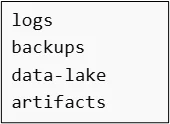
No need for:
- Random suffixes
- Environment-specific hacks
- Multi-Account Strategy Alignment
Modern AWS environments use:
- Control Tower / Landing Zones
- Separate accounts for workloads
This feature aligns perfectly with:
- Account isolation
- Decentralized ownership
- Repeatable infrastructure
- CI/CD & Automation Simplification
Previously:
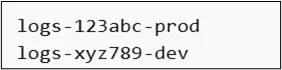
Now:

Benefits:
- Deterministic infrastructure
- Cleaner Terraform/AWS CloudFormation templates
- Reduced deployment failures
- Reduced Operational Friction
- No need to check global availability
- Faster provisioning
- Easier environment replication
Security & Governance Implications
Positive Impacts:
- Better account-level isolation
- Easier policy enforcement per account
- Cleaner AWS IAM policies referencing predictable bucket names
Example:
Instead of:

Considerations:
- Naming conflicts within the same account still apply
- Governance must ensure:
- Naming standards per account
- Tagging and ownership tracking
Migration & Adoption Strategy
No Immediate Migration Required
- Existing buckets continue to work unchanged
- Use for New Workloads First
- Adopt a new naming model in:
- New environments
- New applications
- Gradual Refactoring
- Optional:
- Rename or recreate buckets over time
- Align legacy naming with new standards
Design Principles for Implementation
- Keep Names Simple & Semantic
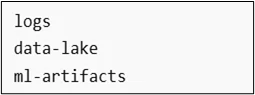
- Leverage Account Boundaries
- Use accounts for:
- Environment separation
- Business units
- Compliance zones
- Enforce Governance via Policy-as-Code
- SCPs (Service Control Policies)
- Naming conventions via IaC validation
- Tag Everything
Even with simpler names:
- Owner
- Cost center
- Environment
Conclusion
The introduction of account-level regional namespaces for Amazon S3 is a foundational improvement, not just a feature tweak. It removes a long-standing limitation that impacted automation, scalability, and governance.
For enterprises, this means:
- Cleaner architecture
- Faster deployments
- Better alignment with multi-account strategies
The real value isn’t just naming, it’s operational simplicity at scale.
Drop a query if you have any questions regarding Amazon S3 and we will get back to you quickly.
Empowering organizations to become ‘data driven’ enterprises with our Cloud experts.
- Reduced infrastructure costs
- Timely data-driven decisions
About CloudThat
FAQs
1. What changed in Amazon S3 bucket naming?
ANS: – Bucket names are no longer globally unique; they are now unique within an account and region.
2. Does this affect existing buckets?
ANS: – No. Existing buckets continue to work as before.
3. Can two AWS accounts have the same bucket name?
ANS: – Yes, as long as they are in different accounts (and/or regions).


WRITTEN BY Ayush Agarwal
Ayush Agarwal works as a Subject Matter Expert at CloudThat. He is a certified AWS Solutions Architect Professional with expertise in designing and implementing scalable cloud infrastructure solutions. Ayush specializes in cloud architecture, infrastructure as code, and multi-cloud deployments, helping organizations optimize their cloud strategies and achieve operational excellence. With a deep understanding of AWS services and best practices, he guides teams in building robust, secure, and cost-effective cloud solutions. Ayush is passionate about emerging cloud technologies and continuously enhances his knowledge to stay at the forefront of cloud innovation. In his free time, he enjoys exploring new AWS services, experimenting with technologies, and trekking to discover new places and connect with nature.


 PREV
PREV










Comments