

 Login
Login

 September 23, 2026
|
Voiced by Amazon Polly |
AI agents are transforming enterprise AI by moving beyond conversational assistance to intelligent task execution. While Large Language Models (LLMs) provide the reasoning capabilities behind modern AI, enterprise AI agents combine memory, enterprise data, external tools, and governance to automate real business workflows securely and at scale. This blog explores how AI agents differ from LLMs, the capabilities they require, how they integrate with enterprise systems, and where organizations are already using them to improve productivity and operational efficiency.
Start Learning In-Demand Tech Skills with Expert-Led Training
- Industry-Authorized Curriculum
- Expert-led Training
What changes are AI Agents bringing into the Enterprise
AI Agents are changing how enterprises approach automation and business operations.
Large Language Models (LLMs) have changed how organizations interact with AI. They can summarize documents, generate content, answer questions, and assist employees with everyday tasks. However, enterprise AI requires much more than generating intelligent responses. To deliver measurable business value, AI must understand context, access enterprise systems, interact with business applications, and perform tasks securely.
Unlike traditional AI assistants that primarily respond to prompts, AI agents can plan tasks, retrieve enterprise data, use external tools, collaborate with multiple systems, and execute workflows with minimal human intervention. They transform AI from an information assistant into an active participant in business operations. AI agents connect multiple enterprise systems to automate business workflows.
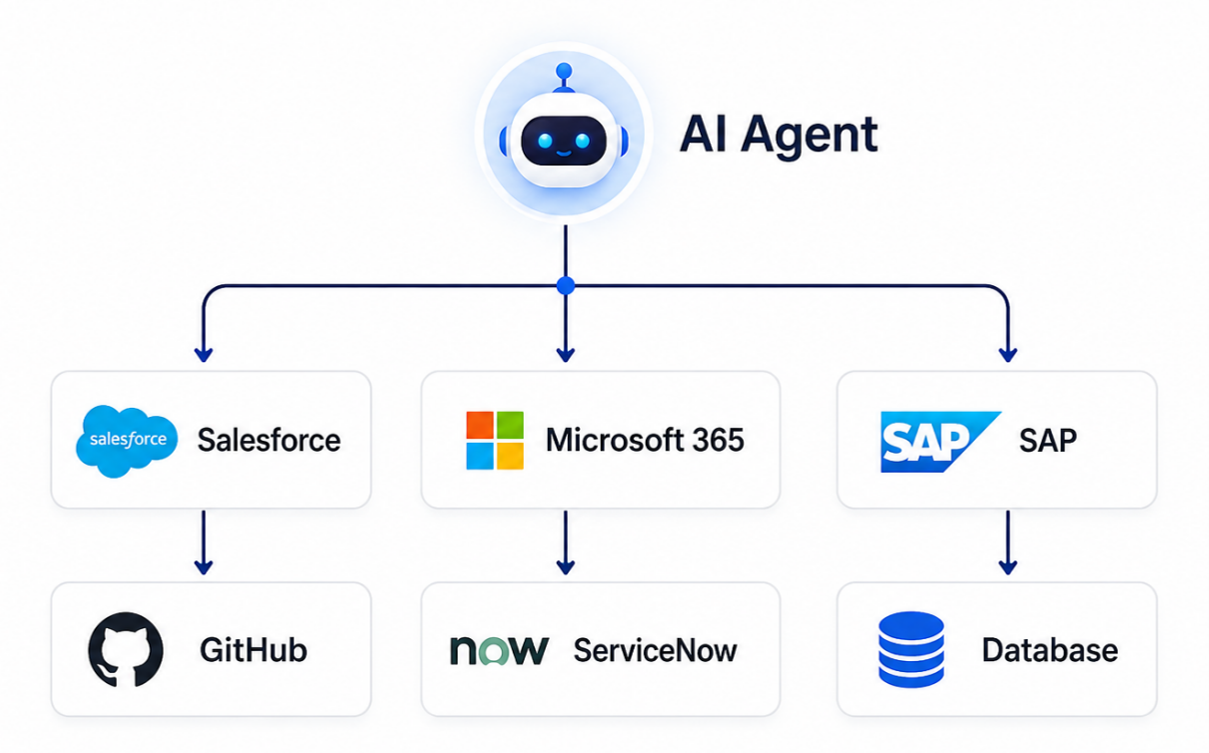
Fig 1: AI agents integrate enterprise systems to automate business workflows and decision-making.
As organizations invest in digital transformation, AI agents are emerging as a key technology for improving productivity, streamlining operations, and supporting better decision-making. However, deploying an LLM alone isn’t enough. Building enterprise-ready AI agents requires secure integrations, trusted enterprise data, memory, governance, and the ability to interact with business systems in a controlled and scalable manner.
Why Are AI Agents Becoming an Enterprise Priority?
AI agents are becoming an enterprise priority as organizations move beyond experimenting with AI and focus on solving real business problems. Instead of simply answering questions, businesses expect AI to automate workflows, retrieve information, coordinate tasks, and support employees across multiple functions.
According to McKinsey’s The State of AI report, 88% of organizations now use AI in at least one business function. Despite this widespread adoption, many companies are still in the early stages of their AI journey. Only about one-third have successfully scaled their AI initiatives, and just 39% report a measurable impact on their bottom line. This highlights a key challenge: not adopting AI, but integrating it effectively into day-to-day business operations.
As organizations move from experimentation to enterprise-wide deployment, the focus is shifting from standalone AI tools to solutions that can seamlessly fit into existing workflows. This is one of the primary reasons AI agents are gaining momentum.
Unlike traditional chatbots that mainly respond to user queries, AI agents can plan and execute multi-step tasks by interacting with multiple business applications. For instance, a customer service agent can retrieve customer records from a CRM, review previous support tickets, search internal documentation, and recommend the next course of action, all within a single workflow.
The benefits extend across departments. A sales agent can generate meeting briefs by combining CRM insights with recent email conversations. An HR agent can streamline employee onboarding by accessing company policies, scheduling training sessions, and answering common employee questions. Similarly, a finance agent can analyze financial reports, identify anomalies, and prepare summaries for decision-makers.
This evolution is closely tied to the rise of Agentic AI systems designed not only to generate responses but also to reason, plan, and complete tasks using enterprise tools and services. As a result, the success of enterprise AI is no longer determined solely by the capabilities of a Large Language Model. It depends on whether AI can securely access business data, integrate with enterprise systems, and operate within established governance and compliance frameworks.
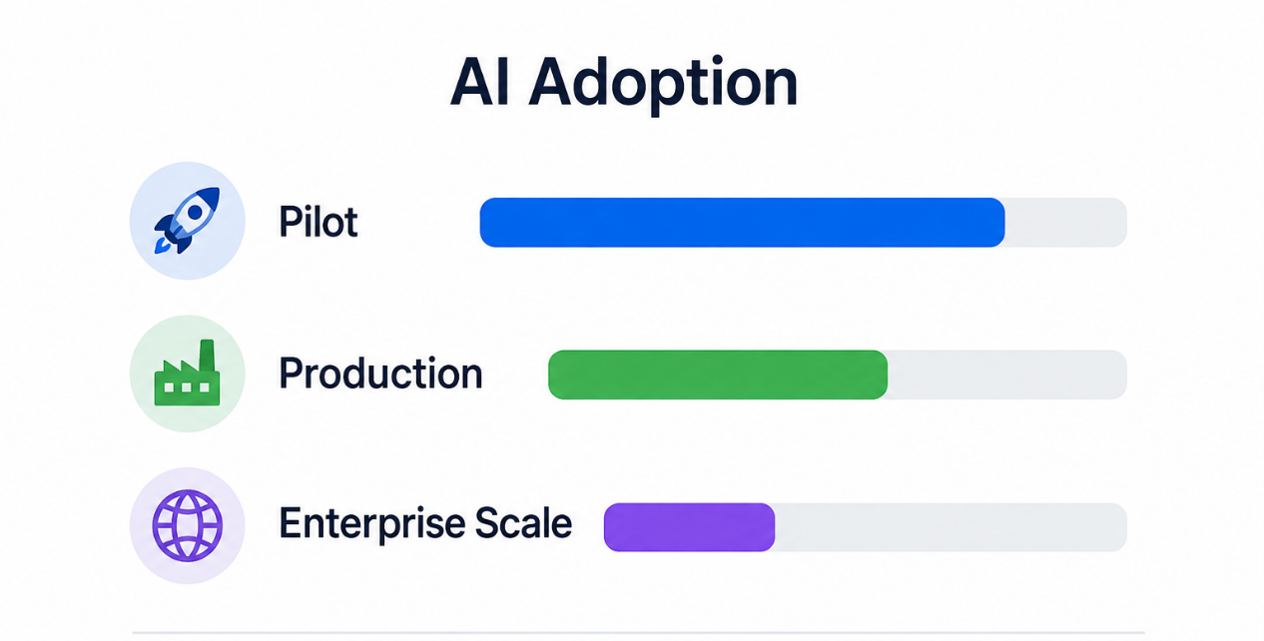
Fig 2: AI agents are accelerating enterprise AI adoption from pilots to scaled business use.
AI adoption is progressing rapidly across organizations, with many businesses beginning with pilot projects and gradually expanding to production and enterprise-scale deployments. AI agents are improving productivity, automating repetitive tasks, enhancing decision-making, and delivering better customer experiences. As AI adoption continues to mature, AI agents are emerging as the critical link between powerful language models and practical business execution, enabling organizations to transform AI from a conversational assistant into an active business collaborator.
What Makes an AI Agent Different from a Large Language Model?
LLMs are the foundation of many modern AI applications, but they are only one part of an enterprise AI solution. An LLM is designed to understand language, generate text, answer questions, and summarize information. An AI agent builds on these capabilities by combining reasoning with planning, memory, tool usage, and task execution.
In simple terms, an LLM can tell you what to do, while an AI agent can often help you do it.
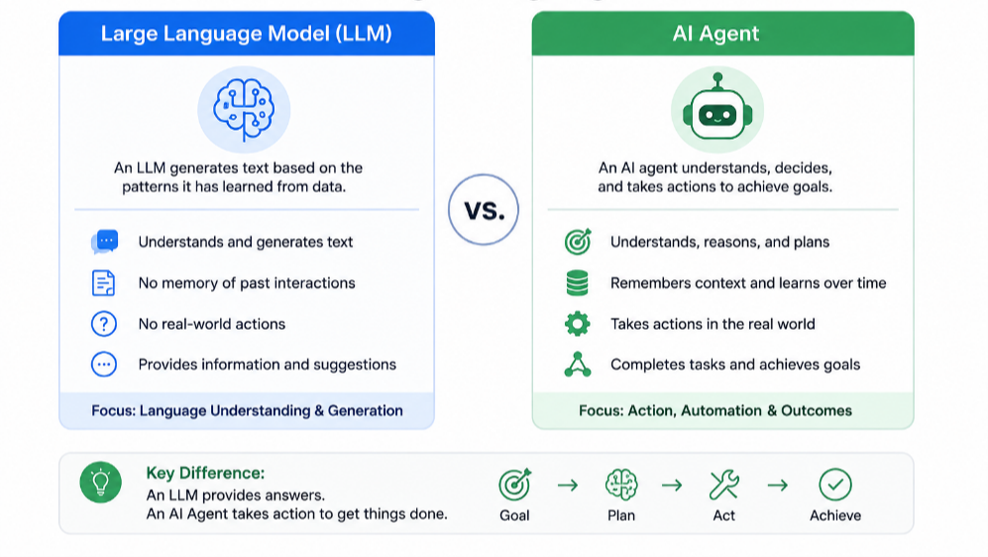
Fig 3: AI agents extend LLMs with planning, memory, and real-world task execution.
For example, if a sales manager asks an LLM to prepare for a client meeting, it can generate a checklist or summarize publicly available information. An AI agent, however, can retrieve customer details from the CRM, review recent email conversations, analyze previous meeting notes, identify open support issues, and generate a personalized meeting brief all within a single workflow.
The difference becomes clearer when comparing their capabilities.
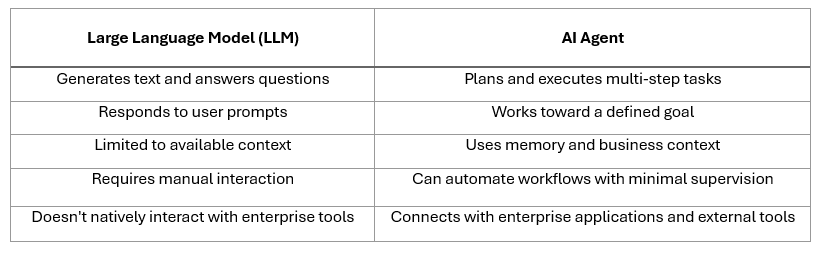
For enterprises, this distinction is important. While LLMs provide the intelligence to understand and generate language, AI agents combine that intelligence with business context and operational capabilities to deliver measurable outcomes.
Why Aren’t Large Language Models Enough for Enterprise AI?
While Large Language Models (LLMs) excel at generating human-like responses, enterprise AI requires capabilities that go far beyond conversation. Businesses need AI systems that can securely interact with enterprise applications, data, and workflows.
Some of the key limitations of standalone LLMs include:
- Limited access to enterprise data: LLMs cannot natively retrieve information from CRM systems, ERP platforms, financial databases, or internal knowledge repositories without secure integrations.
- No persistent memory: Most LLMs treat each interaction independently, making it difficult to retain context across long-running workflows or collaborate effectively over multiple tasks.
- Inability to execute business tasks: Enterprise workflows often require AI to search databases, send emails, create support tickets, update CRM records, or trigger approval processes. These actions require access to external tools and applications beyond the capabilities of a standalone language model.
- Security and governance challenges: Organizations need AI systems that operate under role-based access controls, comply with regulatory requirements, and adhere to enterprise security policies. These capabilities require additional governance and identity management frameworks.
- Lack of business context: Without access to enterprise systems and organizational knowledge, LLMs can generate responses but cannot make context-aware decisions based on real-time business information.
For these reasons, organizations are increasingly adopting AI agent architectures instead of relying solely on standalone LLMs. By combining language models with enterprise data, memory, tool integration, and governance, AI agents can securely automate workflows, support decision-making, and deliver measurable business outcomes.
What Do Enterprise AI Agents Need to Perform Real Business Tasks?
Building an enterprise AI agent requires much more than deploying a Large Language Model. To automate workflows and support business operations, AI agents need secure access to enterprise systems, reliable context, and the ability to interact with external tools while following organizational policies.
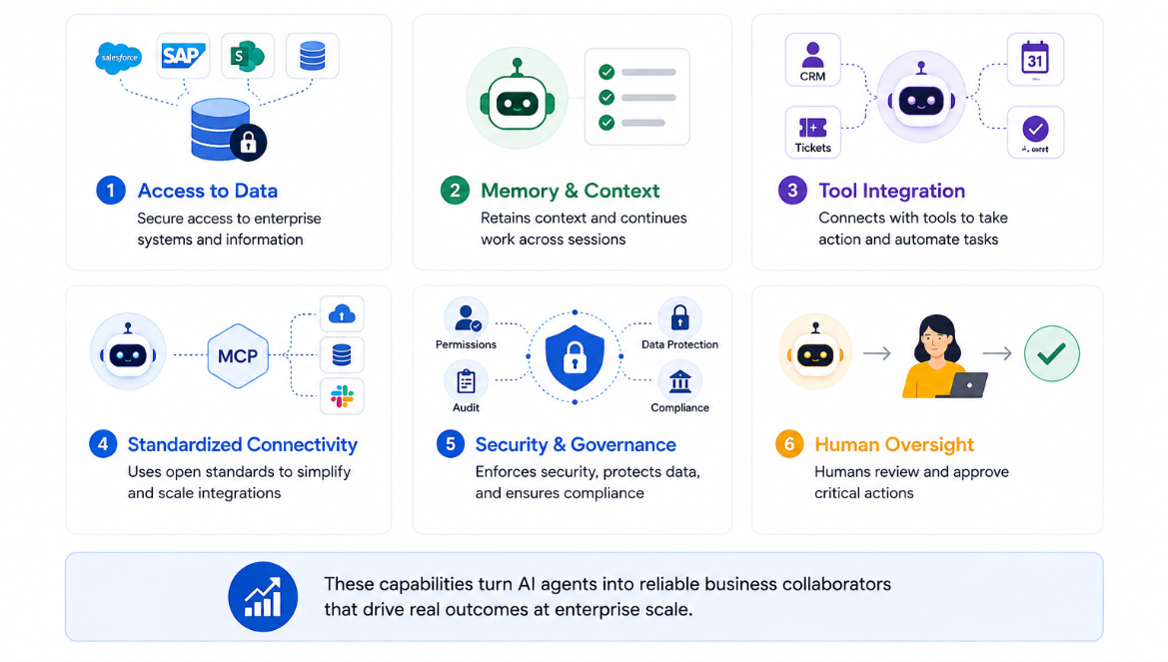
Fig 4: Core capabilities required for enterprise AI agents to perform secure, real-world business tasks.
The following capabilities are essential for building enterprise-ready AI agents.
Access to Enterprise Data
AI agents need secure access to business information stored across CRM platforms, ERP systems, document repositories, knowledge bases, and internal databases. Without enterprise data, even the most advanced language model can only provide generic responses.
Memory and Context
Enterprise workflows rarely happen in a single conversation. AI agents need memory to retain context, understand previous interactions, and continue tasks across multiple sessions. This enables more personalized and consistent experiences for employees and customers.
Tool Integration
Business tasks often require AI to interact with external applications. An enterprise AI agent should be able to retrieve customer records, create support tickets, schedule meetings, update CRM systems, or trigger approval workflows by securely connecting with enterprise tools.
Standardized Connectivity
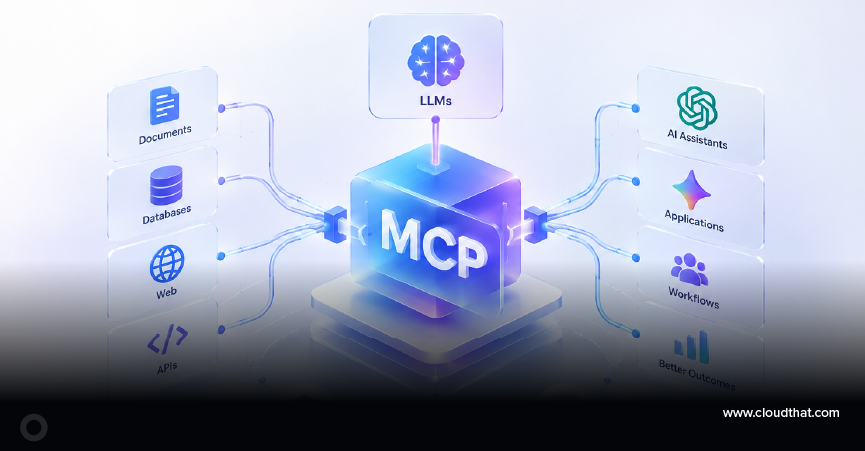
As organizations deploy multiple AI agents, managing individual integrations becomes increasingly difficult. Open standards such as Model Context Protocol (MCP) simplify this process by providing a standardized way for AI agents to communicate with enterprise applications and services.
Security and Governance
Enterprise AI must operate within clearly defined security boundaries. Organizations need AI agents that respect user permissions, protect sensitive data, maintain audit trails, and comply with regulatory and organizational governance policies.
Human Oversight
AI agents should support, not replace, human decision-making. Critical business actions should include human review and approval to improve accuracy, build trust, and ensure responsible AI adoption.
Together, these capabilities transform AI agents from conversational assistants into reliable business collaborators that can support enterprise operations at scale.
How Do AI Agents Connect with Enterprise Systems?
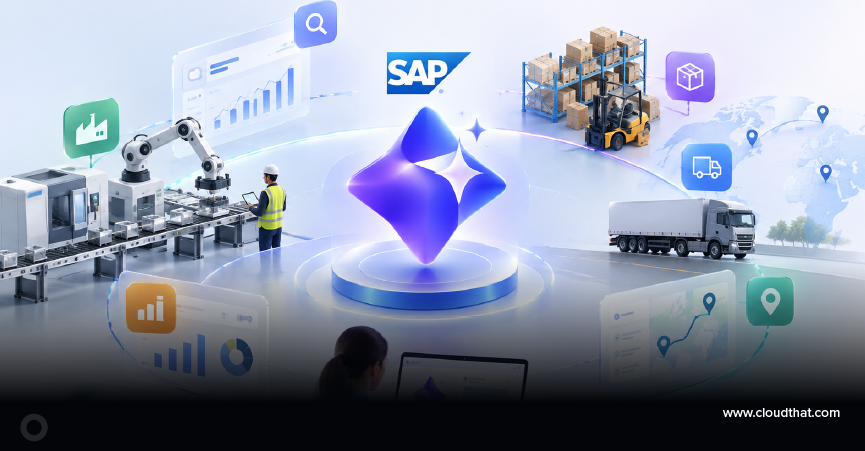
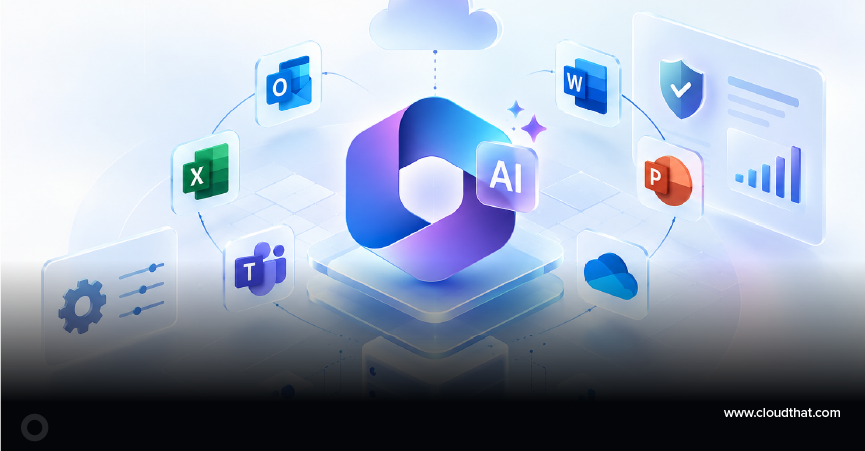
Enterprise AI agents deliver the most value when they can securely interact with the systems employees already use every day. This includes platforms such as Microsoft 365, Salesforce, SAP, ServiceNow, GitHub, SharePoint, and enterprise databases.
Connecting AI agents directly to every application, however, creates significant complexity. Each integration requires APIs, authentication, security reviews, and ongoing maintenance, making enterprise AI difficult to scale.
This is why organizations are adopting standardized integration approaches.
Technologies such as MCP provide a common communication framework that enables AI agents to securely discover and interact with approved enterprise resources. Instead of building custom integrations for every AI application, organizations can reuse standardized connections across multiple AI agents.
A typical enterprise workflow looks like this:
- An employee submits a request to an AI agent.
- The AI agent identifies the enterprise systems required to complete the task.
- MCP or secure APIs connect the agent to approved business applications.
- Information is retrieved securely based on user permissions.
- The AI agent analyzes the data and completes the requested task or provides a contextual response.
By standardizing connectivity, enterprises reduce development effort, strengthen governance, and create AI solutions that are easier to scale across business functions.
Where Are Enterprises Using AI Agents Today?
Organizations across industries are already using AI agents to improve productivity, automate repetitive work, and support faster decision-making. As AI capabilities continue to mature, these use cases are expanding rapidly.
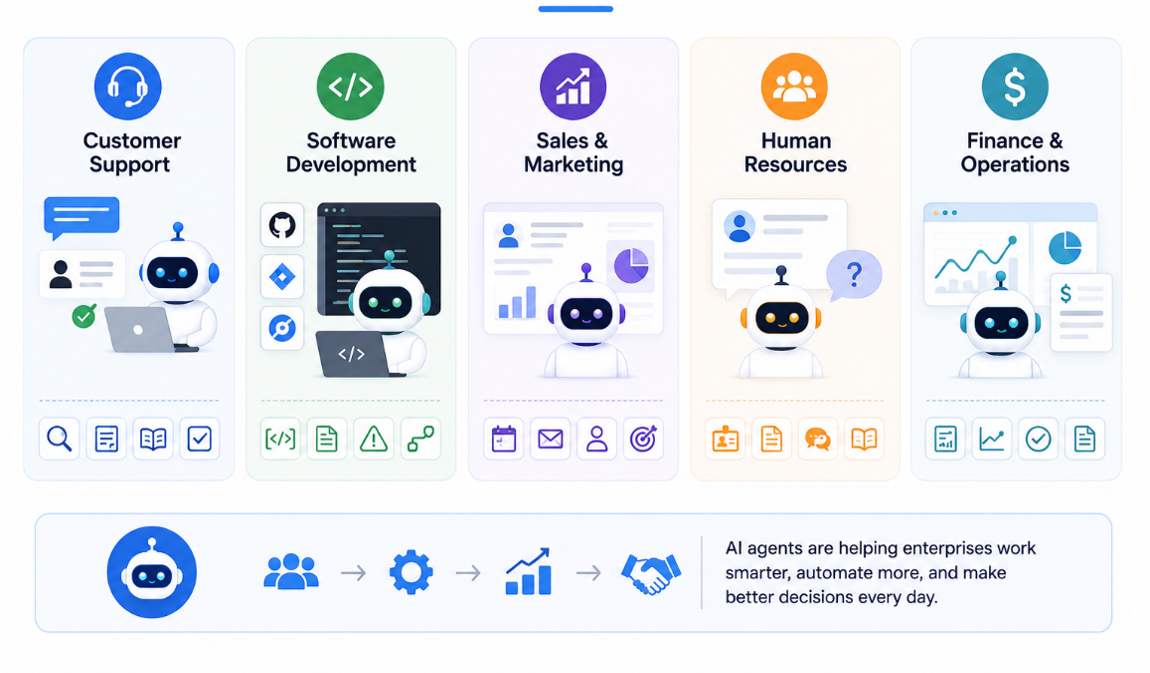
Fig 5: How enterprises use AI agents across business functions to boost productivity and automation.
Some of the most common enterprise applications include:
Customer Support
AI agents retrieve customer information, summarize previous interactions, search knowledge bases, and recommend the next best action, enabling support teams to resolve issues more efficiently.
Software Development
Development teams use AI agents to review code, summarize pull requests, retrieve documentation, identify open issues, and assist with software delivery across GitHub, Jira, and CI/CD platforms.
Sales and Marketing
AI agents help sales teams prepare meeting briefs, analyze customer interactions, generate personalized outreach, and prioritize opportunities using CRM insights.
Human Resources
HR teams use AI agents to streamline employee onboarding, retrieve company policies, answer routine HR questions, and improve access to internal knowledge.
Finance and Operations
Finance professionals use AI agents to consolidate reports, identify anomalies, automate routine approvals, and generate executive summaries that support faster business decisions.
As organizations continue to adopt AI across departments, AI agents are evolving from productivity tools into trusted digital collaborators that improve operational efficiency enterprise-wide.
How Training Helps Build AI-Ready Teams
Successfully adopting AI agents requires more than deploying the latest technology. Organizations also need professionals who understand AI architecture, cloud platforms, enterprise integration, security, and responsible AI practices.
Training helps bridge this skills gap through instructor-led training, hands-on workshops, and enterprise learning programs across Generative AI, Agentic AI, AWS, Microsoft Azure, Google Cloud, DevOps, Data Engineering, and Cybersecurity. These programs equip professionals with practical skills to design, deploy, and manage secure enterprise AI solutions.
By combining technical expertise with real-world implementation experience, CloudThat enables organizations to build AI-ready teams that drive successful AI transformation initiatives.
Is Your Enterprise Ready for AI Agents?
Enterprise AI is evolving beyond intelligent conversations toward intelligent action. While Large Language Models provide the reasoning capabilities behind modern AI, enterprise AI agents combine that intelligence with business context, enterprise data, external tools, and governance to automate real business workflows.
Organizations that invest in secure integrations, trusted data, responsible AI practices, and workforce upskilling will be better positioned to unlock the full value of AI agents. As AI adoption continues to accelerate, enterprise AI agents are expected to become a key component of digital transformation strategies, helping businesses improve productivity, streamline operations, and deliver better customer experiences.
As enterprise AI continues to evolve, organizations that invest in secure AI architectures, trusted data, responsible governance, and workforce upskilling today will be better positioned to unlock long-term business value from AI agents.
Upskill Your Teams with Enterprise-Ready Tech Training Programs
- Team-wide Customizable Programs
- Measurable Business Outcomes
About CloudThat
FAQs
1. What is an AI agent?
ANS: – An AI agent is an intelligent software system that uses a Large Language Model along with memory, enterprise data, external tools, and reasoning capabilities to perform tasks, automate workflows, and achieve specific business goals with minimal human intervention.
2. How is an AI agent different from a Large Language Model?
ANS: – A Large Language Model generates text and answers questions, whereas an AI agent can plan tasks, access enterprise systems, use external tools, and execute business workflows. AI agents combine language intelligence with action-oriented capabilities.
3. Can AI agents work without enterprise integrations?
ANS: – AI agents can generate responses without enterprise integrations, but they cannot perform meaningful business tasks. Secure access to enterprise data and applications is essential for delivering accurate, context-aware, and actionable results.
4. Why is Model Context Protocol (MCP) important for AI agents?
ANS: – Model Context Protocol (MCP) provides a standardized way for AI agents to communicate with enterprise tools and data sources. It simplifies integrations, improves interoperability, and enables organizations to scale AI deployments more efficiently.
5. Which industries benefit the most from AI agents?
ANS: – Industries such as healthcare, banking, retail, manufacturing, customer service, software development, and financial services are increasingly adopting AI agents to automate workflows, improve decision-making, and enhance operational efficiency.


WRITTEN BY Najmusseher
Najmusseher is a Subject Matter Expert in Azure AI/ML at CloudThat and a Research Scholar in Computer Science specializing in Artificial Intelligence and Deep Learning. With a strong academic background and a passion for innovation, her research focuses on AI-powered EEG-based seizure classification, driving impactful healthcare applications. Her passion for teaching reflects in her unique approach to learning and development. She has delivered training sessions and lectures to over 1000+ participants, ranging from students to industry professionals, combining technical expertise with an engaging teaching style. Najmusseher has published nine research papers, serves as a reviewer for reputed journals indexed in the Web of Science, and contributed a healthcare brain dataset to the UCI Machine Learning Repository. Her journey reflects a blend of academic rigor and practical industry expertise, making her a recognized contributor in Python, Data Science, AI and Deep Learning.


 PREV
PREV





Comments