

 Login
Login

 March 24, 2026
|
Voiced by Amazon Polly |
Artificial Intelligence has moved from research labs into production systems that power banking platforms, healthcare diagnostics, supply chains, and autonomous systems. As adoption accelerates, organizations are no longer looking for engineers who “know AI”, hey are looking for professionals who can build, optimize, and deploy models efficiently on modern hardware.
This is where the NVIDIA AI Certification is gaining serious attention. For many hiring managers and technical leads, it is quickly becoming the benchmark credential for validating practical, production-ready AI skills.
In this article, we examine why the NVIDIA AI Certification is emerging as the gold standard for Machine Learning Certification, how it aligns with real-world GPU computing, and why ML engineers are increasingly pursuing it as a competitive advantage.
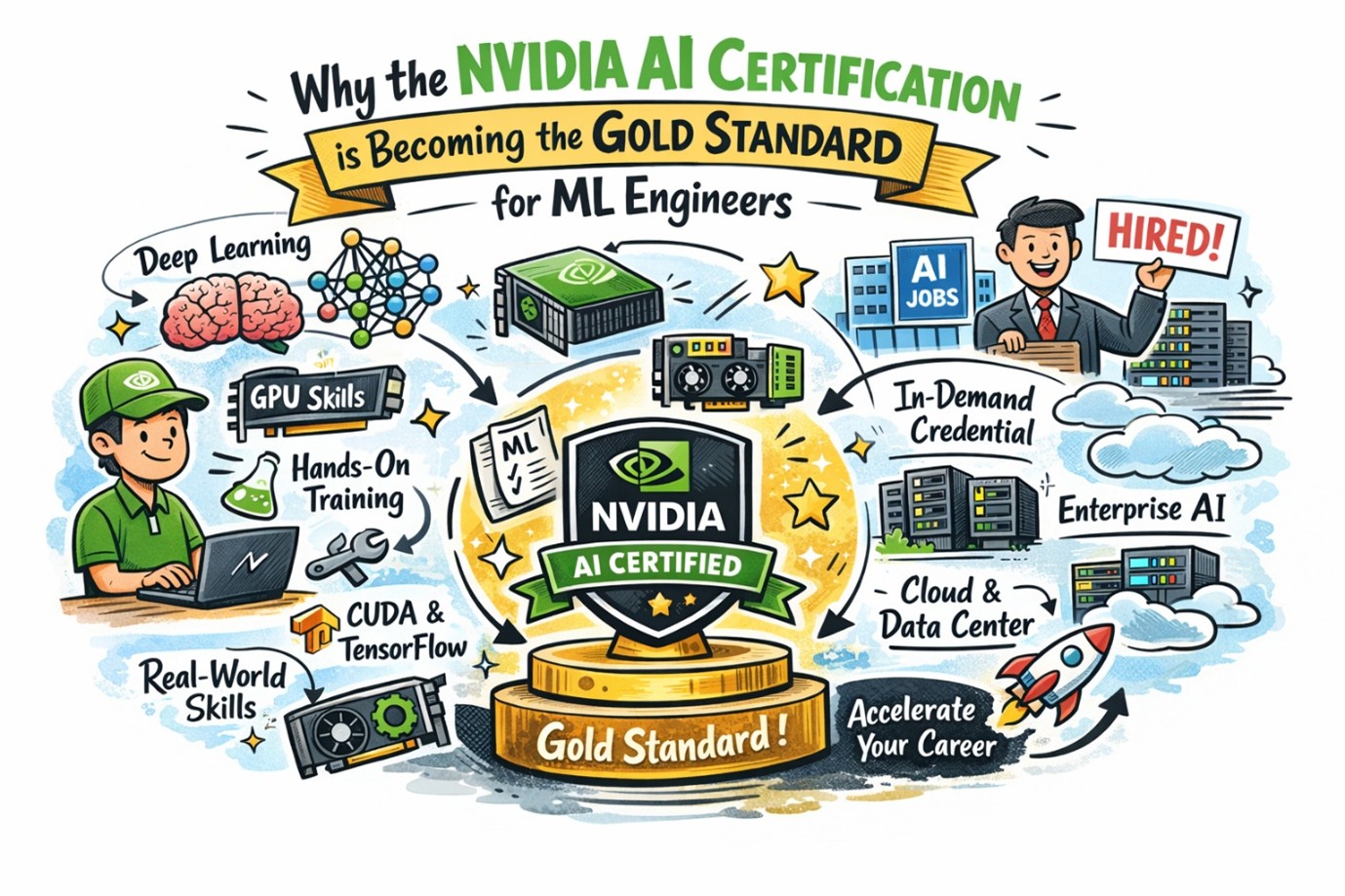
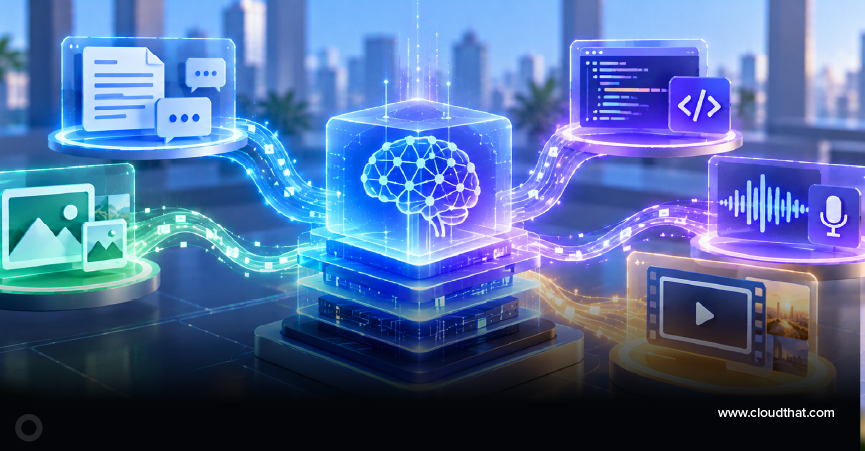
Fig 1: Why NVIDIA AI Certification is becoming the gold standard for ML engineers.
Start Learning In-Demand Tech Skills with Expert-Led Training
- Industry-Authorized Curriculum
- Expert-led Training
The Industry Shift Toward GPU-Centric AI
Over the last decade, AI workloads have shifted dramatically toward GPU acceleration. Training deep neural networks, fine-tuning large language models, and running high-performance inference pipelines are all computationally intensive.
In my experience working with enterprise AI teams, I’ve seen projects where model training time dropped from days to hours by restructuring workloads to improve GPU efficiency.
NVIDIA’s CUDA ecosystem dominates AI infrastructure across:
- Enterprise data centers
- Research labs
- Cloud AI platforms
- Autonomous systems
Because most production-grade AI systems run on NVIDIA GPUs, organizations prefer engineers who understand:
- GPU memory optimization
- Parallel computing fundamentals
- CUDA acceleration
- Model deployment pipelines
The NVIDIA AI Certification validates precisely these applied skills, not just theory.
Why Traditional Machine Learning Certification Programs Fall Short
Many certifications focus heavily on algorithms, model types, or high-level theory. While theoretical foundations are essential, production AI demands much more:
- Efficient training on GPUs
- Handling large datasets
- Optimizing inference latency
- Debugging distributed workloads
- Managing hardware-resource constraints
A conventional Machine Learning Certification may test your knowledge of regression or classification models. However, it rarely validates your ability to:
- Profile GPU utilization
- Optimize batch sizes for memory limits
- Implement distributed training
- Accelerate inference using TensorRT
That gap between theory and production readiness is exactly where the NVIDIA AI Certification stands out.
During a recent AI deployment workshop I conducted, participants could explain gradient descent perfectly, but few could interpret GPU utilization metrics effectively
What Makes the NVIDIA AI Certification Different?
The certification framework is closely aligned with real-world AI workloads. It emphasizes hands-on competence rather than conceptual familiarity.
Here’s what sets it apart:
Practical, Lab-Oriented Evaluation
Candidates work on applied scenarios involving:
- Deep learning model training
- Data preprocessing at scale
- GPU acceleration
- Model optimization
The evaluation focuses on doing, not memorizing.
Alignment with Enterprise AI Stacks
The certification connects directly with modern AI frameworks such as:
- PyTorch
- TensorFlow
- RAPIDS
- CUDA
This alignment ensures that certified engineers can transition smoothly into production environments.
Validation of GPU Computing Certification Skills
Organizations deploying AI at scale care about hardware efficiency. GPU time is expensive. Engineers who understand GPU optimization are highly valued.
The certification validates core GPU Computing Certification competencies such as:
- Efficient parallel execution
- Memory hierarchy understanding
- Performance tuning
This makes the credential highly relevant for enterprise AI teams.
Rising Employer Demand for AI Engineering Credentials
Hiring trends indicate a clear shift:
- Companies prefer certified AI engineers for high-impact roles
- Enterprise AI initiatives require validated deployment skills
- Cloud providers rely heavily on GPU-backed AI infrastructure
From a recruiter’s perspective, a Deep Learning Certification tied to NVIDIA carries weight because:
- It reflects alignment with dominant AI hardware
- It signals hands-on lab exposure
- It demonstrates readiness for production workloads
In competitive job markets, this differentiation matters.
The Certification and Career Acceleration
For ML engineers, the certification serves multiple career functions:
- Strengthens credibility in interviews
- Enhances confidence in GPU-based deployments
- Expands opportunities in AI infrastructure roles
- Opens doors in high-performance computing environments
In many cases, professionals transitioning from software engineering to AI engineering find that the NVIDIA AI Certification helps bridge the gap between experimentation and deployment expertise.
The Cloud and GPU-Driven AI Ecosystem
Today’s AI systems are rarely confined to a local workstation. They operate across:
- Hybrid cloud environments
- Multi-GPU clusters
- Containerized deployments
- Edge AI systems
Understanding how to scale models on GPU-backed infrastructure is no longer optional; it is expected.
Professionals preparing for advanced AI roles often combine foundational certifications with hardware-focused credentials. For instance, structured programs like CloudThat’s AI-focused learning paths complement GPU specialization.
You can explore advanced AI skill-building programs such as the
Microsoft Azure AI Engineer (AI-102) Certification Training
or structured AI foundations like the
Generative AI and Prompt Engineering Course
These programs help strengthen deployment, integration, and enterprise AI capabilities alongside GPU optimization skills.
Is the NVIDIA AI Certification Worth It?
For ML engineers serious about production AI systems, the answer increasingly appears to be yes.
It is particularly valuable if you:
- Work with deep learning workloads
- Deploy models on GPU infrastructure
- Build AI solutions at scale
- Want credibility in enterprise AI roles
Unlike broad certifications that validate conceptual AI knowledge, the NVIDIA AI Certification validates engineering depth, especially in GPU-accelerated AI systems.
Future of AI Engineering
The AI field is maturing. Employers are no longer impressed by theoretical familiarity alone. They want engineers who can build efficient, scalable, and optimized systems on modern infrastructure.
The NVIDIA AI Certification is gaining recognition because it reflects exactly that capability. It aligns with dominant AI hardware, validates hands-on expertise, and addresses the real performance challenges faced in production environments.
For ML engineers aiming to move beyond experimentation and into enterprise-grade AI deployment, this certification is increasingly seen not just as an add-on, but as a defining credential.
As AI systems continue to grow in scale and complexity, hardware-aware AI engineering is becoming a necessity. And that shift is precisely why the NVIDIA AI Certification is steadily becoming the gold standard for today’s ML professionals.
Upskill Your Teams with Enterprise-Ready Tech Training Programs
- Team-wide Customizable Programs
- Measurable Business Outcomes
About CloudThat


WRITTEN BY Kiran Dambal
Kiran Dambal is a Microsoft Certified Trainer at CloudThat and a passionate tech enthusiast, with expertise in Python, machine learning, deep learning, and a variety of other technologies. With over 3.5 years of experience in training, he has successfully trained numerous working professionals. Specializing in delivering technical training across diverse topics, he excels in providing personalized training tailored to the specific needs of customers and businesses. He has actively contributed to numerous projects involving machine learning, deep learning, NLP, data science and data analysis in Python, MLOps, Generative AI, Prompt engineering, Fine-tuning LLMs, RAG etc. Additionally, he has created multiple POCs with Azure AI, Azure OpenAI Services, and Azure DevOps.


 PREV
PREV








Comments