

 Login
Login


 September 21, 2026
|
Voiced by Amazon Polly |
When an application fails, a deployment breaks, or a cloud service becomes unavailable, organizations usually focus on fixing the technology. However, the real cause of prolonged outages is often not the platform itself but the people operating it.
As businesses adopt cloud computing, DevOps, AI-assisted development, and automation, managing modern IT environments has become increasingly complex. Without continuous learning and hands-on experience, even the most advanced technologies cannot prevent costly mistakes.
Downtime today affects far more than IT. It disrupts customer experiences, delays releases, reduces employee productivity, impacts revenue, and damages brand reputation. This raises an important business question: Can organizations afford the hidden cost of undertrained teams?
Start Learning In-Demand Tech Skills with Expert-Led Training
- Industry-Authorized Curriculum
- Expert-led Training
The Real Cost of Downtime
Downtime is no longer just an IT issue-it is a business issue.
When critical applications or cloud services become unavailable, organizations face multiple consequences:
- Lost revenue from unavailable services
- Reduced employee productivity
- Delayed customer transactions
- Higher incident response and recovery costs
- SLA violations
- Compliance risks
- Damage to customer trust and brand reputation
According to the ITIC 2024 Hourly Cost of Downtime Report, over 90% of medium and large enterprises estimate that a single hour of downtime costs more than $300,000, while 41% report losses between $1 million and $5 million per hour.
Similarly, Splunk’s “The Hidden Costs of Downtime 2026” found that large enterprises lose an average of $300 million annually due to unplanned outages.
The message is clear: downtime directly impacts business performance, not just IT operations.
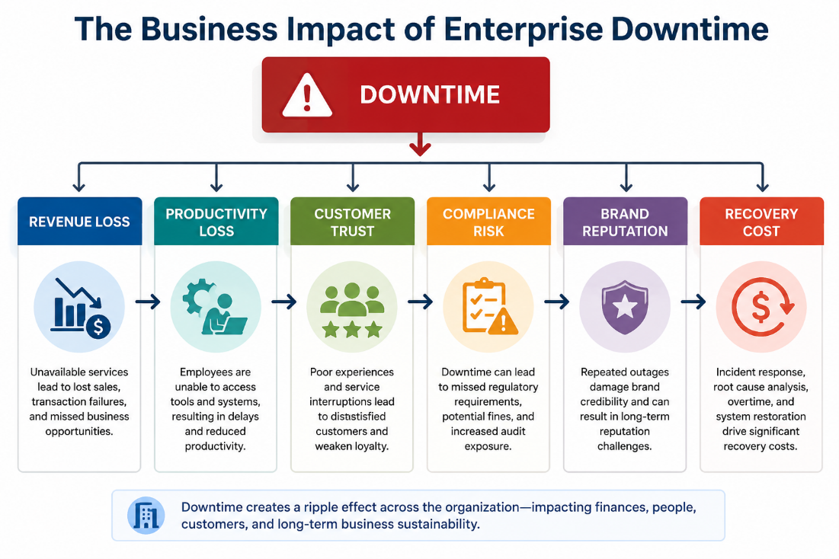
Fig 1: The Business Impact of Enterprise Downtime
Why Skills Matter
Technology failures rarely happen in isolation. Many incidents result from configuration mistakes, failed deployments, delayed responses, or inconsistent operational practices.
According to the Uptime Institute Annual Outage Analysis 2024, nearly 40% of organizations experienced a major outage caused by human error over a three-year period. Meanwhile, Deloitte’s 2026 Global Human Capital Trends report states that although 85% of business leaders consider workforce adaptability critical, only 7% believe their organizations are effectively helping employees continuously build new skills.
As cloud platforms, Kubernetes, CI/CD pipelines, cybersecurity, and AI become more sophisticated, capability gaps create significant operational risk. Organizations may invest heavily in cloud platforms, observability, security, and automation, but these technologies deliver value only when teams know how to use them effectively.
Simply put, better technology cannot compensate for insufficient skills.
Where Undertraining Creates Business Risk
Capability gaps affect nearly every area of enterprise technology:
- Cloud Operations – Misconfigured networking, IAM, storage, or infrastructure can easily lead to outages or security exposures.
- DevOps and CI/CD – Incorrect deployment pipelines, failed rollbacks, or poorly tested automation can introduce production issues within minutes.
- Cybersecurity – Human errors, such as exposed credentials, excessive permissions, or delayed patching, remain major contributors to security incidents. IBM’s Cost of a Data Breach Report 2024 highlights the growing financial impact of these mistakes.
- AI and Automation – AI accelerates productivity but also accelerates mistakes when teams fail to validate AI-generated outputs or establish proper governance.
- Incident Response – The difference between a 30-minute outage and a three-hour outage often depends on how quickly teams diagnose issues and execute recovery procedures.
Better Tools Alone Aren’t Enough
Modern organizations have access to AI copilots, Infrastructure as Code, observability platforms, automated deployments, and cloud-native monitoring. Yet downtime continues to occur.
The reason is simple: tools automate execution-they do not replace technical judgment.
For example:
- A deployment pipeline can automatically release an incorrectly configured application.
- Infrastructure as Code can consistently deploy insecure configurations.
- AI coding assistants can generate functional but vulnerable code.
- Monitoring tools can generate alerts, but engineers still need expertise to identify the true root cause.
The most resilient organizations invest in both technology and workforce capability because the two are inseparable.
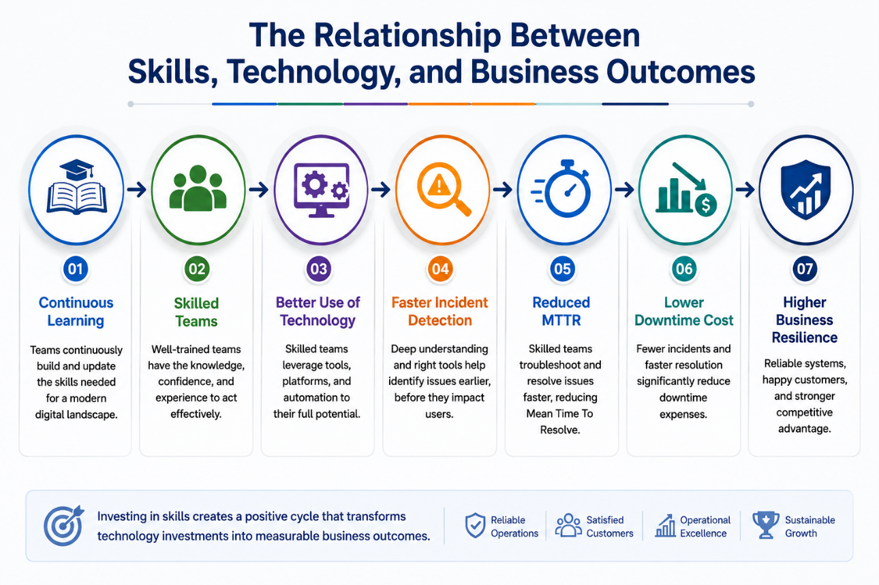
Fig 2: The Relationship Between Skills, Technology, and Business Outcomes.
Turning Training into Business Resilience
Leading organizations increasingly view technical training as a resilience strategy rather than an employee benefit.
Some of the most effective approaches include:
- Hands-on technical labs that allow teams to practice with realistic cloud and DevOps environments.
- Incident simulations that prepare engineers for real production failures.
- Continuous upskilling through workshops, technical communities, and practical exercises.
- Capability assessments that measure operational readiness, troubleshooting, secure deployment practices, and automation skills-not just certifications.
The objective is not simply to earn credentials but to improve real-world operational outcomes.
From Training Cost to Business Investment
Instead of treating training as an operational expense, organizations should compare it against the cost of a single production outage.
Downtime can lead to:
- Lost customer transactions
- Delayed releases
- Higher support costs
- SLA penalties
- Reputation damage
- Customer churn
Even modest improvements in deployment quality or incident response can significantly reduce these risks over time.
Rather than asking, “How much does technical training cost?”, organizations should ask, “What is the cost of not having the right skills during our next critical incident?”
Can your organization afford the cost of downtime-or the cost of being undertrained?
Modern enterprises rely on skilled professionals to maximize the value of cloud platforms, DevOps, cybersecurity, AI, and automation. Capability Development Framework combines structured learning with hands-on enterprise scenarios to help organizations strengthen workforce capabilities, improve operational resilience, and reduce the business impact of downtime.
Building Operational Resilience
Technology continues to evolve rapidly through cloud computing, AI, automation, and modern DevOps practices. Yet one constant remains: people make the decisions that keep systems running.
Organizations that continuously develop technical capabilities reduce operational risk, recover faster from incidents, strengthen customer trust, and improve long-term business resilience.
Training should no longer be viewed as a discretionary expense. It is a strategic investment in reliability, innovation, and sustainable growth.
Upskill Your Teams with Enterprise-Ready Tech Training Programs
- Team-wide Customizable Programs
- Measurable Business Outcomes
About CloudThat


WRITTEN BY Rohit Tiwari
Rohit Tiwari is a Senior Subject Matter Expert (SME) at CloudThat, specializing in Multi-Cloud Infrastructure, Solutions Architecture, DevOps and Generative AI. A Microsoft Certified Trainer (MCT) and Google Cloud Authorized Trainer (GCI), Rohit is recognized among the Top 100 MCT Quality Award winners (January 2025) for excellence in All Courses and Microsoft Data & AI Courses. With 19+ years of global experience in training, software development, and quality assurance, he has trained over 20,000 professionals globally across Azure, AWS, GCP, and modern cloud-native architectures. He holds 65+ industry certifications, in Azure, AWS, GCP, Oracle Cloud (OCP), and in Databricks, demonstrating his unmatched expertise in cloud infrastructure design, security, and cost optimization. Known for simplifying complex multi-cloud and AI concepts with hands-on, real-world insights, Rohit brings deep technical expertise and practical application into every learning experience. His passion for mentoring and building transformative cloud learning journeys reflects in his dedication to enabling professionals and enterprises to innovate with confidence.


 PREV
PREV








Comments