

 Login
Login


 June 18, 2026
|
Voiced by Amazon Polly |
In the modern enterprise, Microsoft 365 (M365) has evolved far beyond its roots as a suite of productivity applications. It is now the operational backbone for millions of organizations, serving as a unified ecosystem for collaboration, security, and identity management. For IT administrators, the challenge has shifted from simply “keeping the lights on” to orchestrating a sophisticated, secure, and scalable cloud environment.
Start Learning In-Demand Tech Skills with Expert-Led Training
- Industry-Authorized Curriculum
- Expert-led Training
The Art of M365 Administration: Moving Beyond the Basics
Administering M365 is no longer just about resetting passwords or managing licenses. It is about maintaining a robust security posture while ensuring seamless user access. The modern administrator must focus on three core pillars:
- Identity and Access Management (IAM)
With the shift to hybrid and remote work, identity is the new perimeter. Microsoft Entra ID (formerly Azure AD) is the heart of your environment. Administrators should prioritize implementing Conditional Access policies. By evaluating signals like user location, device health, and sign-in risk before granting access, you create a “Zero Trust” architecture that protects corporate data without hindering user productivity.

Fig 1: Zero Trust identity and access management with Entra ID.
- Security and Compliance
The days of relying solely on a firewall are over. Modern administrators must lean heavily into Microsoft Defender for Office 365 and Microsoft Purview. These tools help you protect against sophisticated phishing attacks, manage data lifecycle policies, and ensure regulatory compliance (e.g., GDPR, HIPAA) through automated labeling and eDiscovery.
- Proactive Monitoring
Do not wait for users to report issues. Leverage the M365 Admin Center’s “Service Health” dashboard and the “Reports” section. Analyzing usage trends not only helps optimize license costs but also provides insights into adoption rates, helping you identify departments that may need additional training or resources.
Migrating to the Cloud: Strategic Use Cases
While the move to the cloud is often viewed as inevitable, a successful migration requires a clear business case. Here are the most compelling use cases for shifting your infrastructure to the M365 cloud:
- Eliminating Legacy Technical Debt
For organizations still running on-premises Microsoft Exchange or SharePoint servers, the “End of Life” countdown is a major driver. Migrating to Exchange Online and SharePoint Online instantly removes the burden of patching hardware, managing backups, and worrying about physical server failures. It allows IT teams to pivot from hardware maintenance to value-added business initiatives.
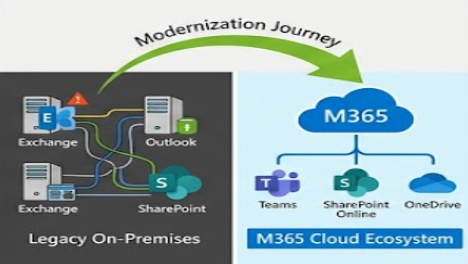
Fig 2: Modernizing from on‑prem systems to Microsoft 365 cloud.
- Enabling the “Work from Anywhere” Mandate
If your workforce is distributed, on-premises infrastructure is a bottleneck. Cloud migration provides the necessary latency reduction and secure remote access required for Teams collaboration and OneDrive file sharing. When data resides in the cloud, employees access it with the same experience whether they are at the office or on a mobile device in a coffee shop.
- Enhancing Security Posture
It is difficult and expensive for a mid-sized organization to maintain the level of security required by physical data centers. Microsoft invests billions annually in its cloud security. By migrating, you inherit these enterprise-grade security protocols, including advanced threat protection and global threat intelligence, which are far more effective than what most individual companies can implement in-house.
- Operational Agility and Scalability
Cloud environments provide the agility to scale up or down instantly. Whether you are acquiring a new company or adjusting to seasonal staffing, M365 enables rapid provisioning of accounts and resources without capital expenditure on hardware.
Optimizing Microsoft 365 Success
The transition to M365 is not merely a software update; it is a fundamental shift in IT strategy. For administrators, success lies in mastering the intersection of identity, security, and compliance. For business leaders, the move to the cloud offers a path to greater resilience, stronger security, and a more collaborative, productive workforce. As the cloud continues to evolve, the most successful organizations will be those that treat their M365 tenant not as a static mailbox, but as a dynamic asset to be optimized and secured.
Upskill Your Teams with Enterprise-Ready Tech Training Programs
- Team-wide Customizable Programs
- Measurable Business Outcomes
About CloudThat


WRITTEN BY Naved Ahmed Khan
Naved Ahmed Khan is a Research Associate with over 5+ years of experience in Cloud. He is an MCT and also the winner of Top 100 MCT Quality Awards Winner for 2024-25. Naved is known for adding humor into his training making it engaging and fun. He has a passion for IoT services because of his roots in Electrical & Electronics Engineering and his habit of reading fictional novels add an imaginative punch into his training method. With 12 certifications in Azure, he has trained over 1000+ individuals across different verticals like Infra & Architect, Security, Data and AI. His core skillset lies in Networking, Security, Python and Powershell.


 PREV
PREV









Comments