

 Login
Login


 March 24, 2026
|
Voiced by Amazon Polly |
The cloud has changed how businesses build and scale systems. At the same time, artificial intelligence is redefining how organizations generate insights and automate decisions. For many professionals, this convergence creates a natural career evolution—from Cloud Architect to AI Engineer.
If you already work with AWS Cloud Architecture, you are well-positioned to transition into Machine Learning on AWS roles. The journey does not require abandoning your existing expertise. Instead, it involves extending architectural thinking into intelligent systems design.
Start Learning In-Demand Tech Skills with Expert-Led Training
- Industry-Authorized Curriculum
- Expert-led Training
Why Cloud Architects Are Well Positioned for AI Roles
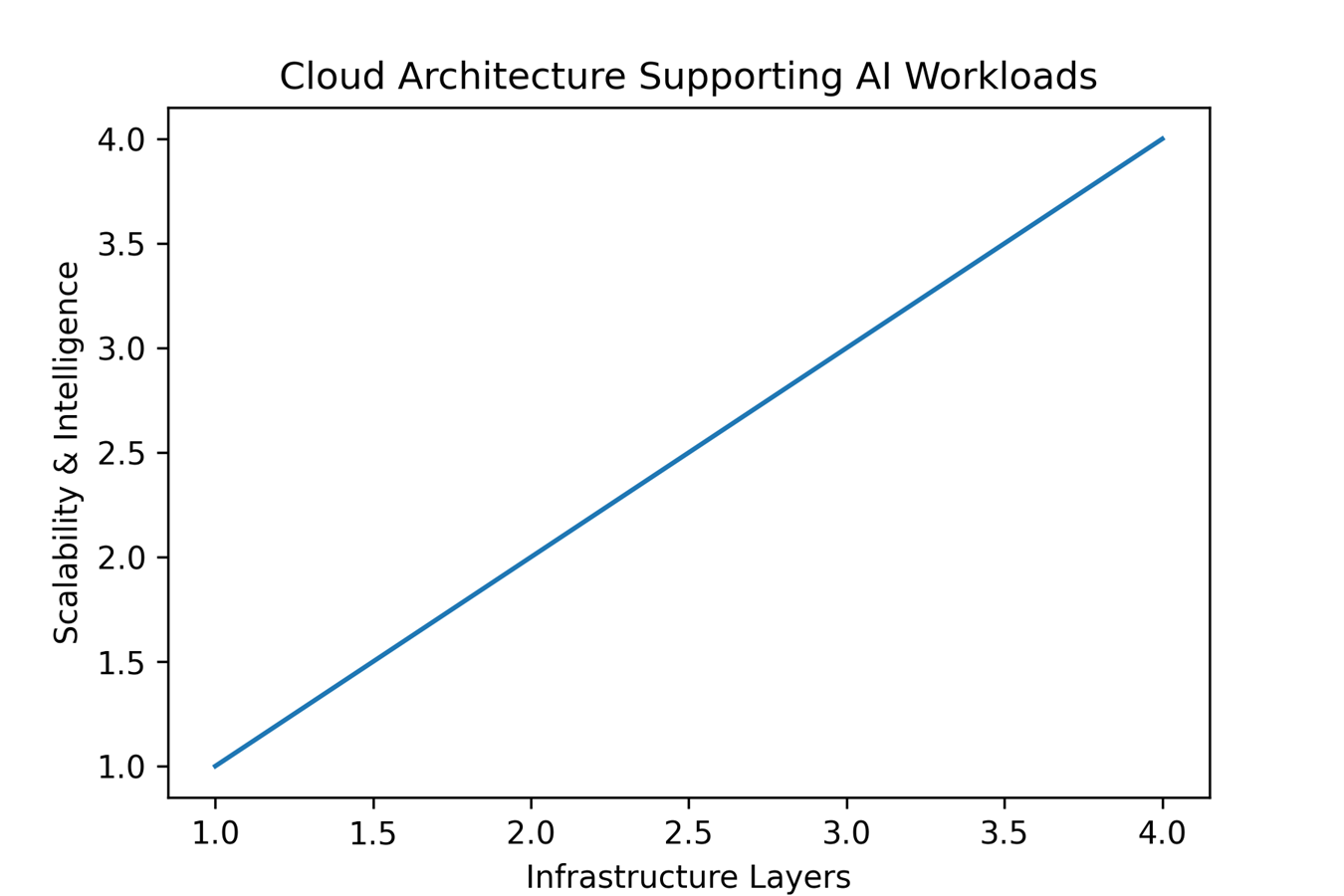
A Cloud Architect designs scalable, secure, and cost-efficient distributed systems. These same principles apply directly to AI workloads. Machine learning systems rely on robust data pipelines, reliable compute infrastructure, and secure deployment environments.
An AI system is more than just a trained model. It includes data ingestion pipelines that collect raw information, storage and processing layers that prepare data for analysis, training environments where models learn patterns, deployment infrastructure that serves predictions, and monitoring systems that track performance and compliance.
Architects who already understand networking design, IAM policies, autoscaling, and cost optimization possess a strong foundation for managing these AI-driven environments.
Source: AWS Architecture Center (aws.amazon.com/architecture)
Understanding the Machine Learning Lifecycle
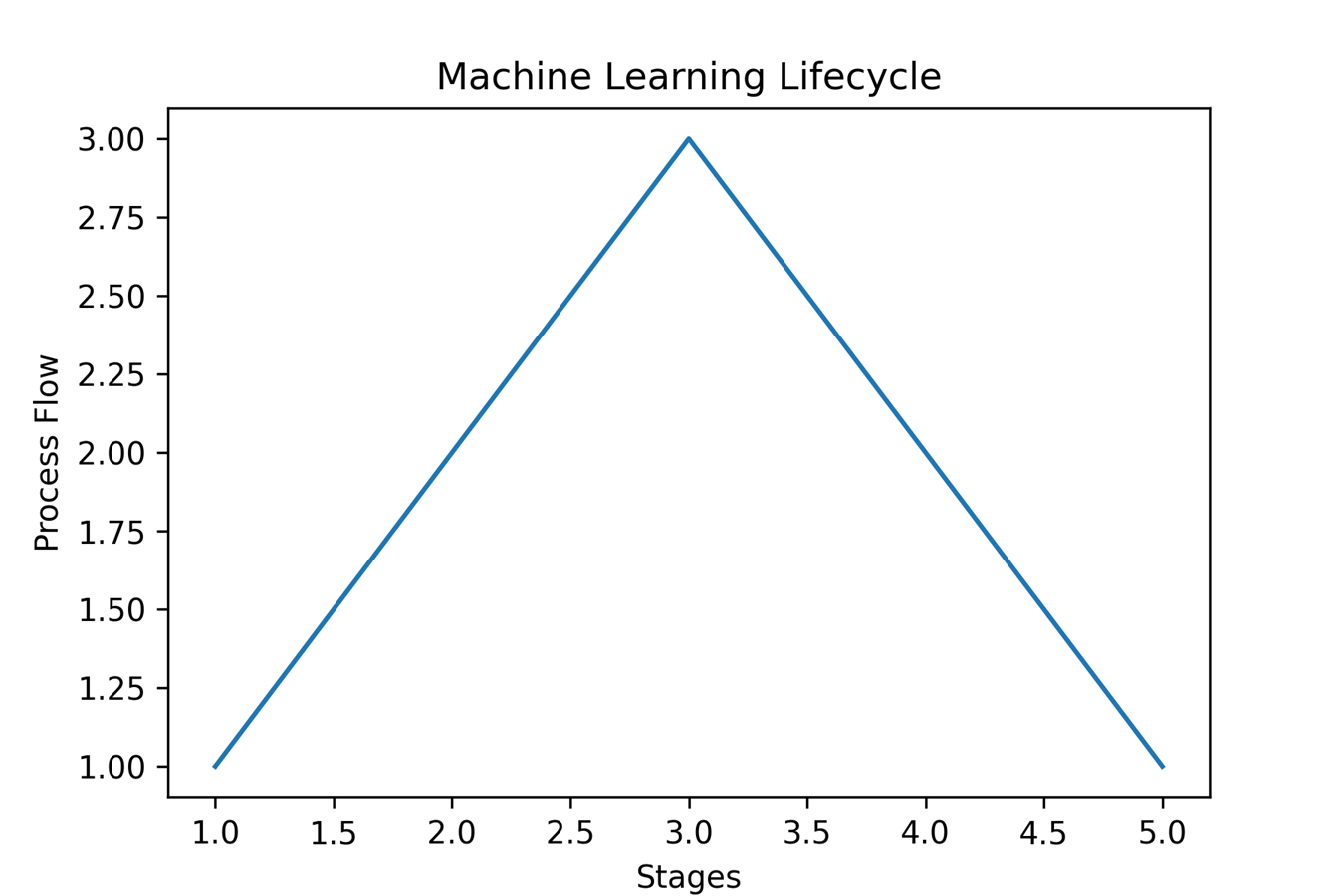
To transition successfully, Cloud Architects must understand the machine learning lifecycle. This lifecycle begins with data preparation, where raw datasets are cleaned and structured. It then moves to model training and hyperparameter tuning, followed by deployment and continuous monitoring.
Services such as Amazon SageMaker integrate with core AWS components like S3, IAM, and CloudWatch, enabling architects to manage the full pipeline within a unified ecosystem.
Source: AWS Machine Learning Documentation (docs.aws.amazon.com)
Blending Infrastructure Thinking with Intelligence Thinking
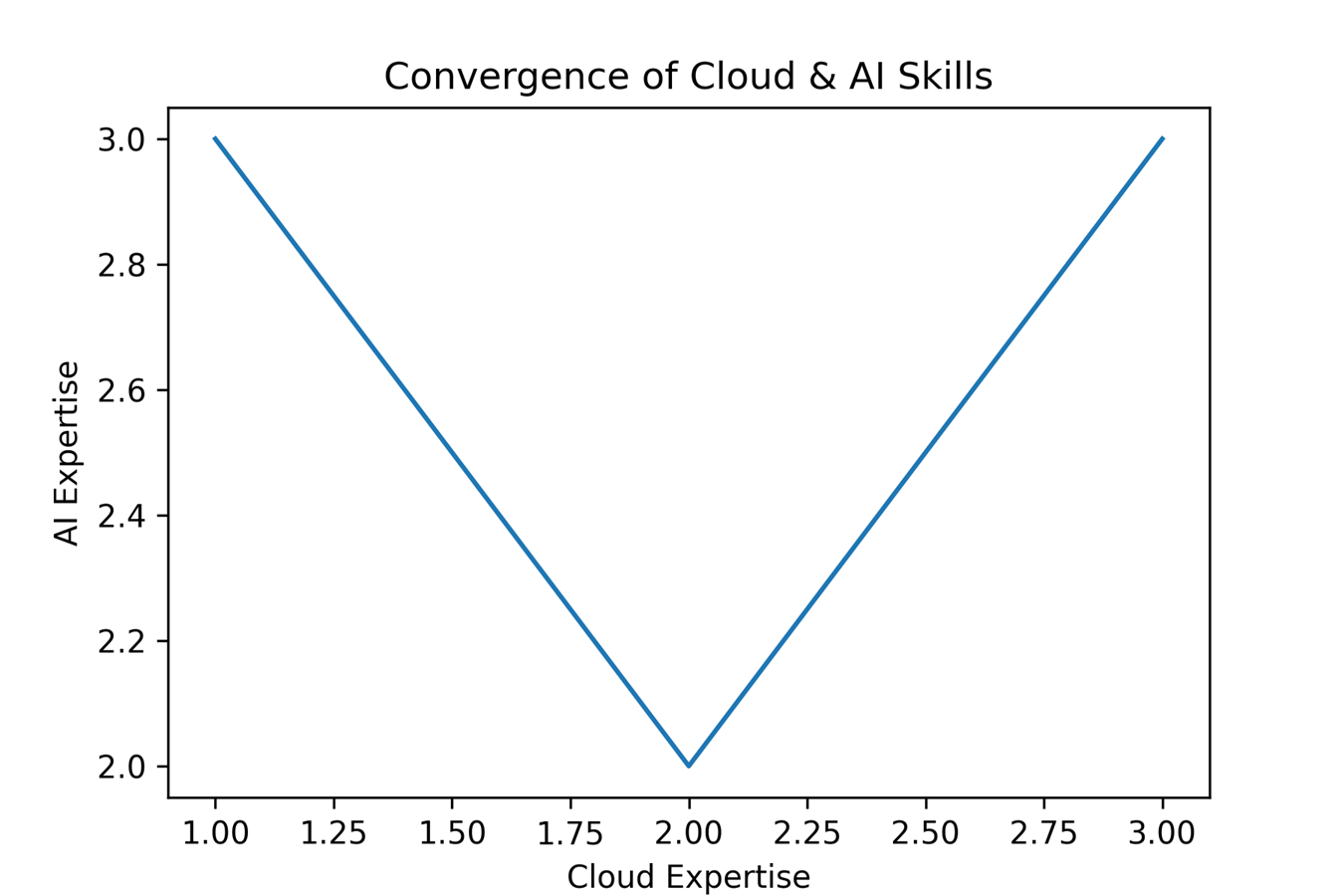
Cloud Architects think in terms of availability zones, redundancy, and cost efficiency. AI Engineers, on the other hand, focus on model accuracy, feature engineering, and performance metrics.
The most effective professionals combine both perspectives. For example, designing GPU-based training clusters requires cost forecasting and performance balancing. Similarly, deploying inference endpoints demands autoscaling strategies and latency monitoring.
Professionals who understand only infrastructure may be limited to deployment roles. Those who understand only machine learning may struggle with scaling to production.
Source: AWS Training & Certification (aws.amazon.com/training)
Career Outlook and Practical Transition Steps
Industry demand for professionals skilled in both cloud computing and artificial intelligence continues to grow. Organizations seek individuals who can design scalable systems while also managing AI model lifecycles.
Industry reports consistently show growth in both cloud and AI roles. According to Statista’s cloud computing insights, enterprise cloud adoption continues to rise globally. At the same time, organizations are embedding AI into customer service, fraud detection, healthcare diagnostics, and predictive analytics.
Professionals can begin by building small machine learning projects on AWS, strengthening Python skills, and studying distributed training patterns. Over time, exposure to real-world AI deployment scenarios builds confidence and depth.
Structured learning pathways, such as specialized Machine Learning on AWS certification programs, help bridge conceptual gaps without shifting focus away from architectural strength.
Conclusion
The journey from Cloud Architect to AI Engineer is less about changing careers and more about expanding capability. Architects already understand distributed systems, scalability, cost optimization, and security- principles that underpin AI workloads.
By adding expertise in Machine Learning on AWS, strengthening data engineering fundamentals, and understanding model lifecycle management, professionals can position themselves at the intersection of cloud and intelligence.
As organizations continue integrating AI into cloud-native environments, those who combine AWS Cloud Architecture with machine learning expertise will play a central role in designing the next generation of intelligent systems.
Upskill Your Teams with Enterprise-Ready Tech Training Programs
- Team-wide Customizable Programs
- Measurable Business Outcomes
About CloudThat


WRITTEN BY Sameer Karadkar
Sameer Karadkar is a Technical Lead at CloudThat, specializing in AWS DevOps and Development. With 14 years of experience in AWS, he has trained over 1000+ professionals/students to upskill in AWS DevOps and Development. Known for simplifying complex concepts, hands-on teaching, industry insights, he brings deep technical knowledge and practical application into every learning experience. Sameer's passion for teaching reflects in unique approach to learning and development.


 PREV
PREV









Comments